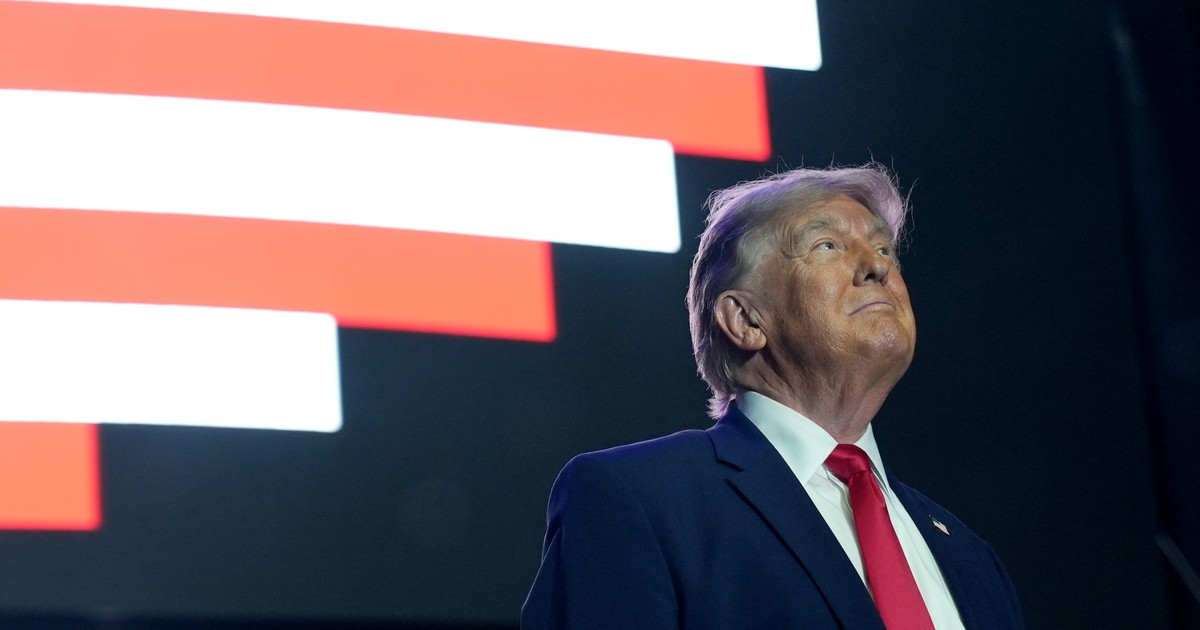
President Trump doubled down on the SAVE America Act and renewed calls to remove the Senate parliamentarian after the Supreme Court’s recent Watson v. Republican National Committee ruling on counting ballots postmarked before Election Day.
President Trump used the Oval Office briefing to restate that the SAVE America Act is his top legislative priority and to press for stronger verification of who can vote in federal elections. He framed the Supreme Court decision about ballots received after Election Day as another reason the bill needs to pass. The tone was direct and focused on restoring confidence in election rules.
The court held that ballots received after Election Day can be counted if they were postmarked beforehand, a result Mr. Trump called “a little bit surprising” when asked in the Oval Office. That ruling, he said, strengthens the argument for tighter safeguards on voting. For him, the response is straightforward: require clear proof of citizenship and restrict mail voting except for narrowly defined exceptions.
Trump repeated his push to use procedural tools to get the bill through the Senate, discussing the filibuster and reconciliation as options to bypass the 60-vote threshold. He argued terminating the filibuster would let Republicans pass the measure with a simple majority. Republicans who want secure, honest elections see changes to Senate rules and reconciliation as practical ways to deliver on that promise.
“The SAVE Act is even more important, and it’s the right, you have to be a citizen of our country,” he said, insisting on strict proof of eligibility. He maintained that common-sense steps like photo voter ID and documentary citizenship verification will bring back trust in outcomes. The president also floated attaching parts of the plan to other must-pass legislation to overcome procedural hurdles.
“It’s held up in the Senate, and frankly, if you terminated the filibuster, you just need 50 votes, and you have 53 and then you have JD [Vance], so the Democrats are going to terminate the filibuster, but if you did reconciliation, you could do it with 50 votes,” he told reporters.
https://x.com/townhallcom/status/2071680896479228293
The SAVE America Act would mandate documentary proof of citizenship to vote in federal contests and require photo voter ID, while sharply limiting mail ballots to service members, the disabled, the ill, or those out of town. The bill has cleared the House several times but faces a tougher path in the Senate, where a small number of Republicans are not on board. Democrats oppose it vigorously, which is why procedural strategy is now central to the debate.
“You have to show you’re a citizen of our country […] voter ID by photo, photo voter ID, and no mail-in ballots unless you’re the military disabled, you’re ill, or you’re away, or even on a vacation,” the president continued, spelling out the basic provisions he wants. He argued these measures are simple to administer and will reduce disputes after elections. Supporters say straightforward verification will stop confusion and fraud claims.
Reconciliation carries its own limits under the Byrd Rule, so House and Senate leaders are exploring creative paths to make elements of the SAVE plan eligible for that process. One idea floated by leadership involves structuring a grants program to fit reconciliation constraints. That notion has generated internal pushback from members who worry about legal and procedural exposure.
Rep. Anna Paulina Luna weighed in from the House, filing an amendment she described as focused on voter ID and citizenship proof and clarifying limits on reconciliation. “My amendment for voter ID + Proof of Citizenship has been officially filed to be considered for an amendment to the [National Defense Authorization Act.] It is amendment 1388,” Luna posted to X. “It is NOT possible to add the SAVE America Act to reconciliation. It would fail miserably with the Byrd Rule.”
House allies who want the measure on major bills argue leadership can still exert control over whether an amendment reaches the floor. The discussion has become as much about procedure and who calls the shots as it is about the policy itself. That makes the role of the Senate parliamentarian especially consequential to whether reconciliation or other tactics can be used.
Trump again targeted Senate Parliamentarian Elizabeth MacDonough, noting her long tenure and appointment history while insisting leadership has the power to replace her. “I can’t imagine where you keep a woman that was put there by Harry Reid and Barack Hussein Obama,” Trump said, repeating criticism that ties the parliamentarian to past Democratic leaders. He argued a new appointee could change rulings that currently block parts of the bill.
Others in the GOP urged a steadier approach, acknowledging the parliamentarian’s rulings often swing both ways. “And, as is typically the case, the parliamentarian rulings break both ways, and you know, we lose a few, we win a few, but that’s been true when the Democrats have been in the majority too,” Senate Majority Leader John Thune said, emphasizing the technical nature of the job. He added that the role demands fairness and a deep understanding of complex Senate rules.