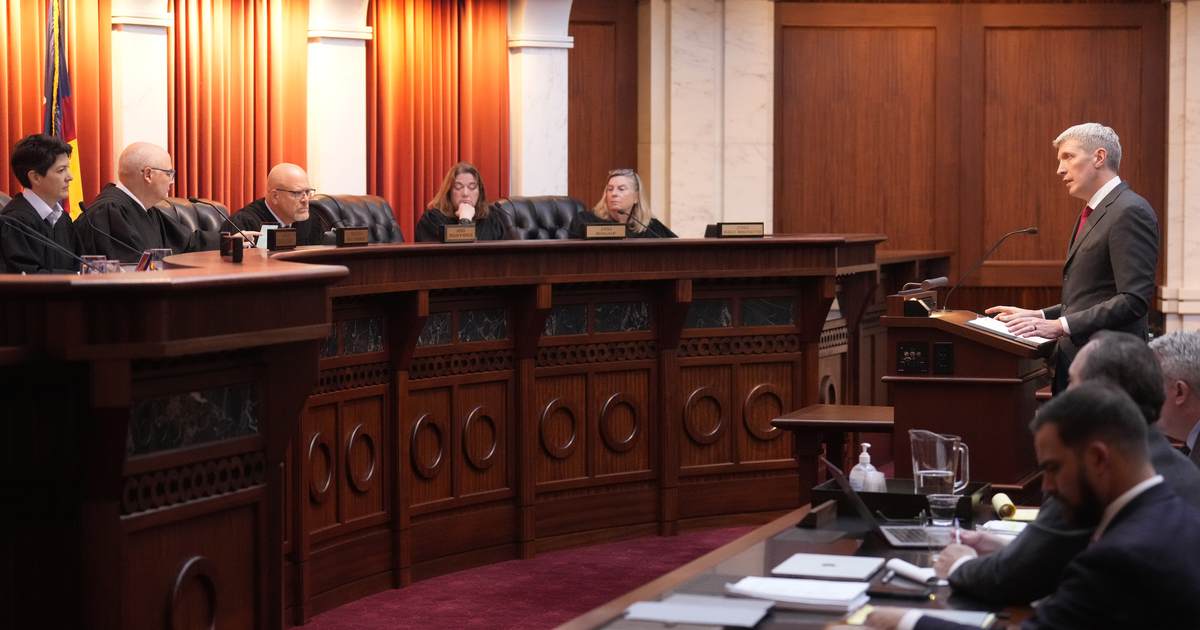
Colorado’s highest court unanimously rejected a Democratic-drawn congressional map and a related ballot measure, ruling the plan violated the state constitution and the single-subject rule, keeping the state’s delegation balanced as legal fights over redistricting continue nationwide.
Colorado’s Supreme Court, with justices appointed by Democrats, struck down the party’s attempt to end the independent redistricting commission and the proposed map that would have reshaped the state’s congressional delegation. The court found the measure ran afoul of the state constitution and a requirement that ballot initiatives be limited to a single subject. That unanimous decision is a clear setback for Democrats who hoped to flip more seats before 2028.
The court didn’t only throw out the Democratic plan. It also invalidated two Republican measures aimed at influencing the map, applying the same constitutional standards across the board. That suggests the ruling was rooted in legal principle rather than partisan preference, even if the consequences favored maintaining the current balance. In short, the mapmakers on both sides got knocked back by the state’s highest bench.
https://x.com/NewsWire_US/status/2071639594022379607?ref_src=twsrc%5Etfw
Had the Democratic proposal stood, party operatives expected to pick up three additional U.S. House seats, a swing that would have mattered at the national level. Instead, Colorado’s delegation will remain split evenly at four Republicans and four Democrats. Only one district, CO-08, is widely seen as a true toss-up heading into future elections, leaving both parties with a narrow pathway to gains.
This defeat follows a string of legal losses for Democrats in redistricting fights elsewhere. Virginia’s recently proposed map was declared illegal by that state’s supreme court, and the U.S. Supreme Court’s move to strike certain racial gerrymander aspects of the Voting Rights Act cleared the way for southern states to redraw lines. Those developments have opened opportunities for Republican lawmakers in the region to reshape districts in ways that could expand GOP representation.
For Democrats, the Colorado ruling was meant to be damage control — a chance to stop the erosion of seats that has hit the party across multiple states. It was an aggressive play: overturn the independent process and push a partisan map through the ballot box. The court’s response undercut that strategy and preserved the independent commission’s role, at least for now.
Republicans will argue this confirms the strength of constitutional limits on ballot measures and the usefulness of independent commissions in preventing blatant partisan gerrymanders. From a GOP perspective, the decision helps keep Colorado from tipping further left at the congressional level. Party strategists see this as a moment to double down on legal and legislative tactics that solidify the gains already in motion elsewhere.
Legal experts point out that courts are increasingly the arena where these fights are decided, not legislatures or public debate alone. That makes the selection of judges and the wording of ballot initiatives critical. Small technicalities like the single-subject rule or constitutional language can determine whether an entire plan goes into effect or is tossed out months of work and political energy later.
Practically speaking, politicians and activists on both sides now face a familiar path: more litigation, more targeted campaigns, and a scramble to craft maps and measures that will survive judicial scrutiny. For Democrats, that means rethinking how to pursue gains within tighter legal boundaries. For Republicans, the win in Colorado is a reminder that legal clarity can block aggressive partisan moves and sometimes preserve the status quo.
The broader picture is a patchwork of state outcomes, with courts, commissions, and legislatures all playing roles. While some states have handed advantages to one party or the other, Colorado’s decision keeps its current balance intact and signals that future attempts to alter the commission or push sweeping ballot measures will face steep legal hurdles. Expect both parties to keep testing the limits of redistricting law as they jockey for advantage in the years ahead.