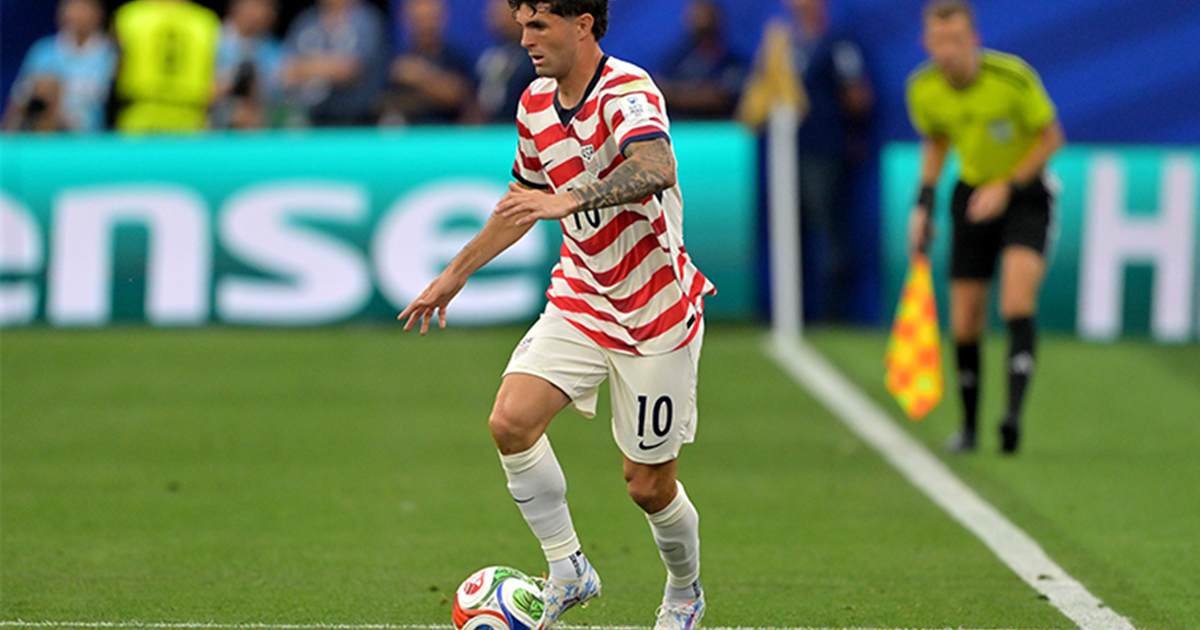
Germany’s shock exit to Paraguay has cracked the tournament wide open and put a new spin on the U.S. team’s chances, after a mix of convincing wins, strategic rests, and late-game drama shifted expectations.
The U.S. Men’s National Team has turned heads with a 4-1 win over Paraguay earlier in the group stage, a result that looked impressive on paper and in the stands. That performance raised hopes, but skeptics pointed to the perceived weakness of the opponent to dismiss the result. Those doubts were put into sharp relief when Paraguay stunned Germany in a Round of 32 exit, showing how quickly narratives can bend in this tournament.
The team also suffered a narrow 3-2 loss to Turkey, conceded by a last-minute goal after the coach chose to rest several starters. Playing backups to avoid injuries and suspensions is a familiar tournament tactic, and it explains some lineup choices that confused fans and pundits. Context matters when judging results on a single night, especially in a compact, high-stakes schedule.
https://x.com/usmntonly/status/2071738758391619834
Beyond the U.S., this World Cup has produced multiple shocks that underline the unpredictability of modern international soccer. Cabo Verde drew with Spain, Ghana held England to a stalemate, and the Democratic Republic of the Congo managed a draw against Portugal. Those outcomes erased the assumption that historic reputations guarantee safe passage through the knockout rounds.
Japan nearly forced Brazil into extra time in an earlier match, showcasing how disciplined, organized squads can frustrate traditional powerhouses. When smaller or less-heralded teams execute game plans with discipline, the favorite’s margin of error shrinks fast. That pattern makes every matchup dangerous and every supposed favorite vulnerable to a single tactical misstep.
For the U.S., form and timing matter more than headline rankings. Beating Paraguay 4-1 gave the team confidence and demonstrated attacking potential, while the Turkey match exposed depth questions when rotation is used. Those contrasting performances show both why optimism exists and why caution is warranted when projecting deep tournament runs.
Looking ahead, the U.S. faces Bosnia in the next round, a fixture that will test whether the squad can sustain pressure against a technically solid opponent. From there, the bracket shapes up as one of the tougher routes to the final, demanding consistency, smart rotation, and a bit of tournament luck. Every game will likely require strategic tweaks and high-level execution.
Coaches and analysts will point to match management as a decisive factor as the knockout phase unfolds. Managing minutes, handling travel and recovery, and deciding when to deploy star players are all choices that ripple across multiple games. Teams that balance risk and reward effectively tend to last deeper into a tournament where margins are thin.
Fans should also watch momentum and belief, intangible factors that often tilt close matches. An upset early in the knockout rounds can galvanize a squad and inject confidence across the locker room. Conversely, favorites that stumble might find themselves under pressure they never anticipated.
From a tactical angle, underdogs that press aggressively and defend compactly have found success against more possession-oriented teams in this event. Transition play, set-piece efficiency, and clinical finishing have become decisive, especially when games are decided by a single moment. Teams that execute those details consistently are the ones advancing.
Media narratives tend to anchor to reputations, but the results on the pitch keep proving those narratives fragile. This tournament’s list of surprises has already forced a rethink about who can realistically challenge for the title. Rankings and preseason predictions are useful, but not final.
There’s a symbolic layer to the U.S. campaign this year that resonates with many supporters. The timing has prompted some hopeful thinking around national milestones, and the idea has even been floated in celebratory tones: The U.S. really might take it all in our 250th birthday.
Whether that happens remains to be seen, but one thing is clear: the path to the final is no longer reserved for a predictable handful of nations. Upsets have made the bracket more fluid, and every team with discipline, tactical clarity, and composure now has a plausible route forward. Stakes are high and surprises are frequent, so attention to detail will decide the next phase.