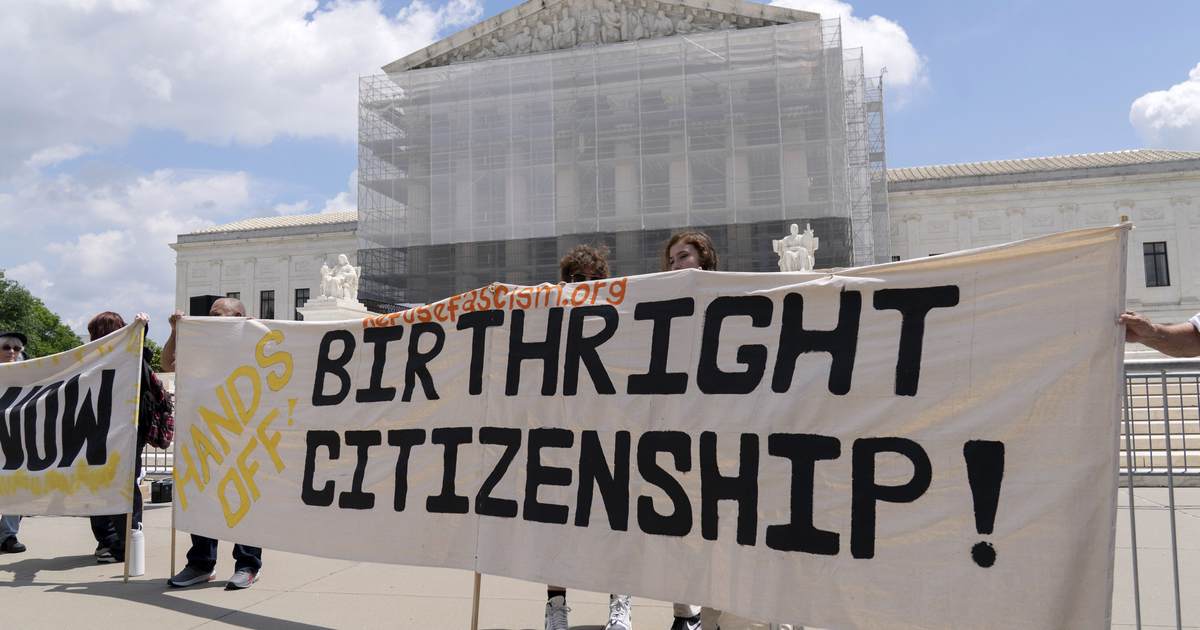
The Supreme Court is poised to deliver its ruling on birthright citizenship at 10 am, and conservatives are bracing for a decision that could go against the Trump administration’s 2025 executive order.
Jeff will have the full story when the rulings drop at 10 am, and many on the right are watching this one closely. The high court is set to rule on whether the 14th Amendment’s citizenship clause still guarantees U.S. citizenship to virtually everyone born here. President Trump signed an executive order intending to end birthright citizenship on Jan. 20, 2025, and that order has already been tossed by lower courts.
Those lower court losses set the stage for a tense Supreme Court showdown, and observers at oral arguments saw warning signs. Amy Howe at SCOTUSblog reported that from her observations at oral arguments, the Court seems inclined to rule against the Trump administration. That sense of unease is why conservative circles are preparing for bad news even before an opinion appears.
On Jan. 20, 2025, President Donald Trump signed an executive order that would end birthright citizenship – the guarantee of U.S. citizenship to virtually everyone born in this country. Trump’s order has never gone into effect; since then, every federal court that has considered a challenge to the order has struck it down. After just over two hours of oral arguments on Wednesday, before an audience that included (at least for part of the morning) Trump himself, a majority of the Supreme Court seemed likely to do the same.
Ratified in 1868, the 14th Amendment includes a provision known as the citizenship clause, which confers citizenship on anyone “born … in the United States, and subject to the jurisdiction thereof.” The provision was originally added to the Constitution to overrule the Supreme Court’s infamous 1857 decision in Dred Scott v. Sandford, holding that Black people whose ancestors were brought to this country and sold as enslaved persons were not entitled to any protection from the federal courts because they were not U.S. citizens. But for more than a century, the clause has been understood to confer citizenship on almost everyone born in the United States, subject to only a few narrow exceptions.
Trump floated the prospect of ending birthright citizenship during his first term in office, but he encountered resistance even within his own party. Trump did not give up on the idea, and on the first day of his second term he signed an executive order, Protecting the Meaning and Value of American Citizenship, to do so. The order ended birthright citizenship for the children of undocumented immigrants, as well as those of immigrants who are in the United States legally but temporarily – for example, on a student or work visa.
Conservatives point to a couple of small but telling signs that have fed the worst fears about the outcome. No barricades were set up around the Supreme Court ahead of the decision, a detail some see as the justices signaling confidence in voting to preserve the existing interpretation. And unlike past blockbuster cases, there have been almost no leaks, which in this era of activist law clerks many expected would spill early if the Court were leaning one way.
https://x.com/EndWokeness/status/2071772025283019146?ref_src=twsrc%5Etfw
That lack of leaks has a double meaning for those on the right: it suggests the majority may be trying to avoid a public backlash, but it also means the final ruling could land like a sucker punch. The mood among conservative activists and Republican operatives is tense and impatient; they view the case as more than legal theater, seeing it as a direct challenge to immigration policy and national sovereignty.
Legal minds on the right are also mapping out next steps even before the opinion appears, from legislative fixes to executive options if the Court rules against the administration. Few expect an easy path forward if the decision upholds the lower courts, and the immediate focus will be on holding the line politically and preparing messaging to rally voters who back stricter immigration controls.
The ruling will arrive soon, and it will matter not just for one policy but for how Americans think about citizenship and the Constitution. Whatever the outcome, commentators on the right are ready to press the case that elected leaders — not judges — should decide how the nation defines its people and its borders.
We’ll find out soon.