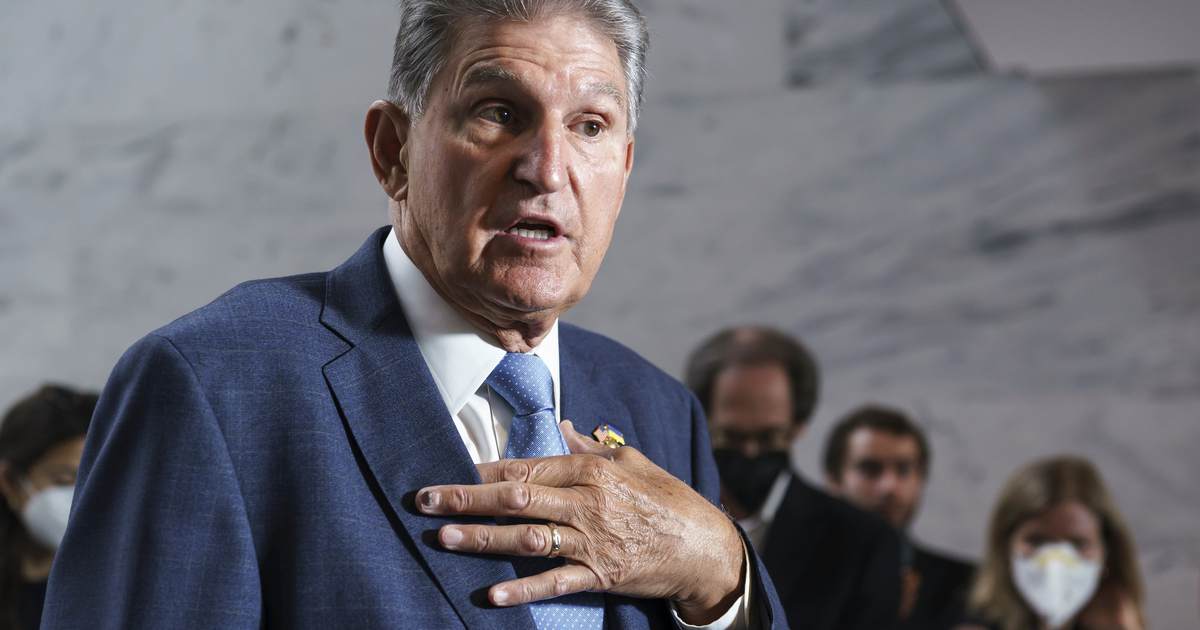
Joe Manchin’s reaction to a recent survey about Democrats captured a lot more than just a punchline; it exposed how far the party has drifted from the voters who built it and why his break from the Democrats felt inevitable to many on the right.
Senator Joe Manchin has long been an outlier: a conservative-leaning Democrat who played to a West Virginia electorate that values industry, independence, and common-sense politics. His record on energy and skepticism toward federal overreach made him a frequent target of progressive activists, and over time his positions looked more like the voters he represented than the national party line. That tension finally boiled over into his public departure from the Democratic fold.
The new survey that showed 62 percent of Democrats preferring socialism to capitalism was the kind of data point that clarifies trends most pundits talk about vaguely. For people who follow elections and policy, it confirmed what conservatives have argued for years: the modern Democratic coalition is shifting toward ideological experiments that alienate the center and rural America. Politicians who actually win statewide races in places like West Virginia are rare in a party increasingly dominated by coastal priorities.
Manchin’s reaction to the survey was blunt, unscripted, and authentically West Virginian: he treated the idea of a socialist-leaning Democratic Party as not just politically unwise but culturally unrecognizable. He framed the survey as evidence that the national party had abandoned pragmatic governance in favor of ideological purity. That kind of plain talk plays well to voters who want leaders to cut through spin and defend traditional American institutions.
https://x.com/DSA_Watch/status/2071564386200920289
If they do, then there isn’t a Democratic Party left. That’s crazy. That is crazy. That is absolutely insane…I can’t put up with that crazy shit. That’s nuts.
Manchin did not couch his disgust in polite political language; he said the shift was one of the reasons he walked away. For Republicans, his exit was a long-anticipated symptom of a party that no longer welcomes the kinds of voters necessary to win national contests without abandoning working-class America. Conservatives see his critique as validation that the leftward lurch is both a political liability and a cultural rejection of the nation’s middle.
He also warned repeatedly that Democrats were losing touch with rural voters, a point he says he raised directly with leaders in Washington. Manchin’s argument was simple: ignore the concerns of coal miners, small business owners, and independent-minded voters at your peril. For those voters, lifestyle and economic realities matter more than abstract policy labels, and the Democratic Party’s tilt has made it harder for pragmatic candidates to compete.
That shift has consequences beyond winning or losing elections. It affects policy debates in Washington and the kinds of solutions that get proposed for real problems like energy reliability, job creation, and cost of living. From a Republican perspective, watching a major party embrace ideological extremes opens up opportunities to reclaim the middle by offering practical, market-based answers to everyday challenges.
Manchin’s decision to look toward independent voters and reject a narrowly focused party brand makes tactical sense in this environment. Independents and moderate conservatives have long been the swing voters who decide tight contests, and courting them can force more reasonable compromises. Republicans view that path as the sensible route to preserving national unity and practical government, not the ideological purgatory that comes with transforming a major party into a regional movement.
What matters now is how both parties respond to the realities on the ground: whether Democrats recalibrate to win back working-class and rural trust, or whether they keep pushing a vision that appeals to a narrower coalition. Republicans are watching closely and sharpening messages that emphasize economic freedom, energy security, and local control as the antidote to the kind of radicalism the survey highlights.