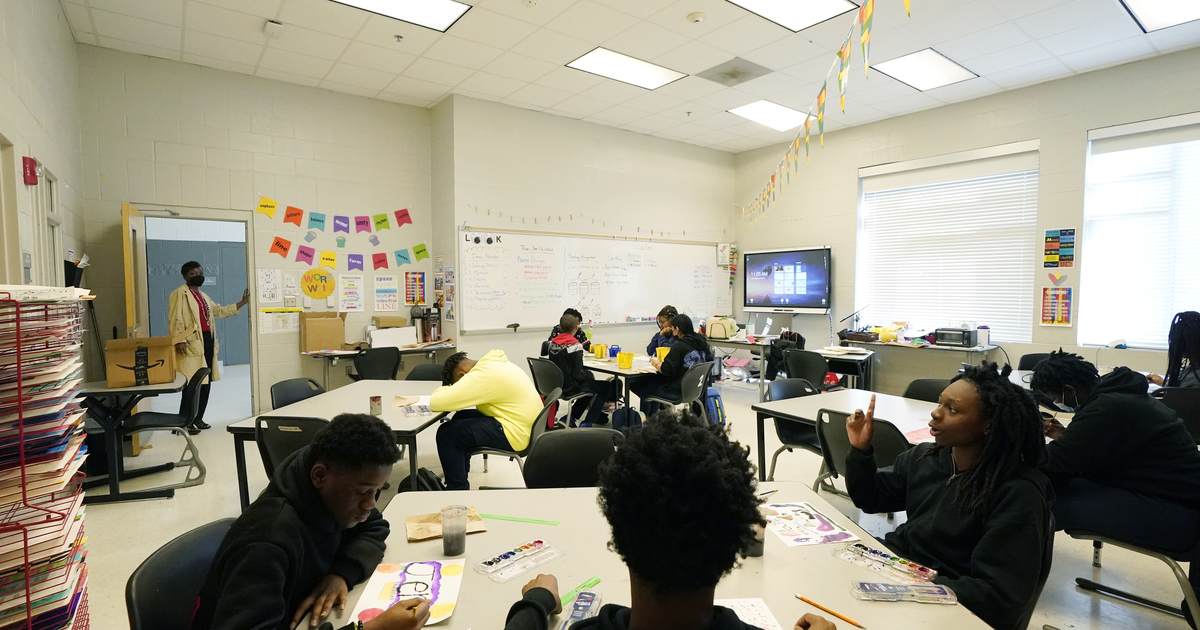
California Public Schools Promote Leftist Indoctrination
This piece argues that California’s education policies and national left-wing trends have reversed priorities, pushing cultural experimentation over basic literacy and harming the very students they claim to help.
The Smithsonian controversy and the White House report “Saving America’s Story” are the opening beats in a broader critique of modern education and cultural policy. What was framed as “white supremacy culture training” at a national museum became an example of how institutions have embraced ideology over facts. That shift matters because it signals priorities that trickle down into classrooms and curricula across the country.
At the center of the critique is a pattern: cultural signaling and grievance politics taking precedence over teaching kids to read, write, and do math. The article points out that institutions and activists often label ordinary habits like hard work and rational thinking as features of “white supremacy culture.” That redefinition, critics say, reframes basic skills as cultural offenses rather than civic goods.
From there the argument turns to how Leftist policies interact with outcomes in public schools, especially for Black students. Milwaukee Public Schools is used as a data point: the district spends roughly $19,000 per student yet posts alarmingly low proficiency rates in math and reading. The claim is simple: more spending on its own, absent a return to fundamentals, will not fix dismal test scores.
The piece highlights California as an example where policy choices appear particularly harmful, noting state per-student spending of $28,282 and the grim reality for many Black students. Only about 28 percent of Black students statewide read on grade level in some measures, with alternative data suggesting numbers closer to 18 percent. Math proficiency is also low, and 8th-grade scores slid between 2019 and 2024.
Part of the argument blames prolonged school shutdowns during COVID, but the critique extends to ongoing curricular and disciplinary choices that prioritize identity-based frameworks. The writer argues that some educators and unions adopted political priorities that turned classrooms into activism hubs, rather than focusing on phonics, numeracy, and classroom discipline.
Mississippi is presented as a counterexample, where a return to basics like phonics is linked with better reading outcomes. The state spends about $13,000 per student and reports roughly 52 percent of Black students reading on grade level. The comparison is used to make a political point: outcomes, not slogans, should drive education policy.
The article takes particular aim at activists pushing to normalize Black English in preschool, arguing that such moves risk institutionalizing lowered expectations. It frames the effort as yet another example of policies that, although billed as supportive, could hinder children’s long-term academic and economic prospects. An embed token appears here to mark the original multimedia location:
Activists are pushing for Black English to be legitimized in preschool as a way to build children’s literacy skills in California.
The Black Californians United for Early Care & Education (BlackECE) is part of a movement to challenge “harmful language hierarchies and affirm Black English as a legitimate, rule-governed language rooted in Black history, culture, and community.”
The movement also seeks to “address how language bias shows up in early learning spaces–and how it can be dismantled.”
“I don’t want my son to walk into any room and feel like his voice is not valued or his perspective can’t be heard because he’s not saying it one way or the other,” the co-founder of BlackECE Ashley Williams told PBS.
She also remembered how speaking Black English is full of slangs and grammatical errors so it came with a lot of embarrassment.
BlackECE is a nonprofit organization centered around a 10-point policy plan that seeks to gain reparations and help Black children, families, and workers.
California released a plan promoting early dual language learning and calling on the state’s education system to support bilingual children in their development in 2020, but the advocacy group believes that Black vernacular should be included.
Another point raised is discipline and expectations. The Cherry Creek School District example is cited to argue that some administrators excuse disruptive behavior among minority students as merely “culturally appropriate,” to the detriment of the whole class. That approach, critics say, undercuts teachers and sacrifices order and learning under the guise of cultural sensitivity.
The writer argues this pattern is not accidental but political. Democrats, teacher unions, and activist groups are characterized as having an incentive to maintain a dependent electorate, with lowered expectations and identity-centered policy serving that aim. The claim is sharp: policies that produce an educational underclass also produce political advantages.
Personal anecdotes are used to underline the point, including a recollection about Black students being mocked for “acting white” when they pursued education. Those stories are placed alongside policy critiques to suggest a cultural problem that reaches beyond curricula into family and neighborhood dynamics.
In tone and conclusion the piece is unapologetic: critics should call out policies that harm children regardless of their stated intent. The central demand is straightforward—return classrooms to rigorous basics, defend standards and discipline, and stop masking failure with fashionable rhetoric. An earlier multimedia reference remains as originally placed:
The Real Side
Posts categorized under "The Real Side" are posted by the Editor because they are deemed worthy of further discussion and consideration, but are not, by default, an implied or explicit endorsement or agreement. The views of guest contributors do not necessarily reflect the viewpoints of The Real Side Radio Show or Joe Messina. By publishing them we hope to further an honest and civilized discussion about the content.
The original author and source (if applicable) is attributed in the body of the text.
Since variety is the spice of life, we hope by publishing a variety of viewpoints we can add a little spice to your life. Enjoy!