The U.S. carried out a new round of strikes on multiple Iranian military sites tied to attacks and threats against shipping in the Strait of Hormuz, continuing a campaign meant to protect freedom of navigation and to degrade Tehran’s ability to menace commercial and military vessels.
U.S. Central Command says it completed a fresh wave of offensive strikes late Sunday, targeting dozens of locations across Iran and around the Strait of Hormuz. Officials describe the operation as a defensive, precision effort to blunt Iran’s ability to harass international shipping and U.S. forces in the region. The actions follow a string of incidents in the waterway and mark another escalation in a longer campaign against Tehran’s destabilizing behavior.
These strikes are being framed as retaliation for repeated Iranian moves to assert control over a vital maritime corridor used by global commerce. In recent days the Islamic Revolutionary Guard Corps engaged commercial traffic along undesignated routes and attacked multiple vessels, prompting a swift American response. The pattern has been one of intermittent ceasefires followed by renewed aggression, and commanders say the strikes are intended to stop that cycle.
https://x.com/CENTCOM/status/2076495252454584794
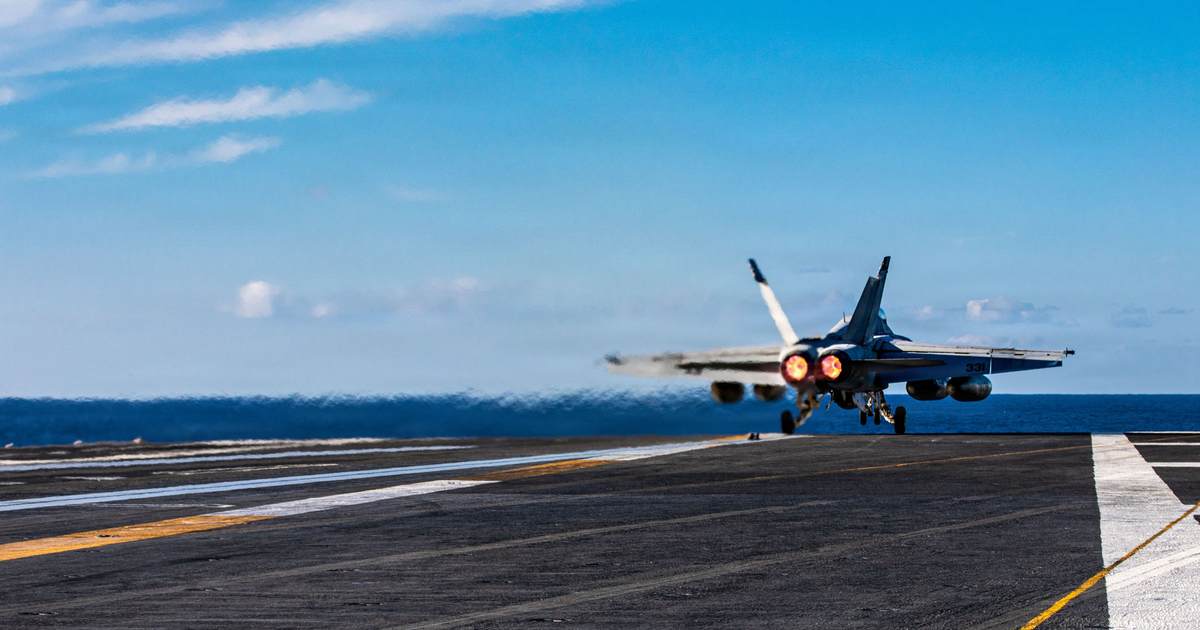
“U.S. Central Command (CENTCOM) completed a new wave of offensive strikes against Iran, July 12, hitting dozens of targets at multiple locations with precision munitions to degrade Iran’s ability to continue attacking international shipping flowing through the Strait of Hormuz,” CENTCOM wrote on X. “CENTCOM forces struck Iranian military air-defense systems, coastal radar sites, missile and drone capabilities, and small boats using U.S. fighter aircraft, naval vessels, one-way attack aerial drones, and one-way attack sea drones for the first time.”
“The Strait of Hormuz is a vital maritime corridor for global trade,” CENTCOM added. “Iran does not control it. U.S. forces are postured and prepared to ensure that freedom of navigation remains available to commercial shipping despite Iran’s continued unwarranted aggression, harassment, threats, and arbitrary declarations.”
Reports indicate many of the same systems struck in this round were hit before during a campaign known as Operation Epic Fury, suggesting Tehran has been repairing and rearming between strikes. That ability to rebuild during ceasefires is a familiar problem for military planners and a reason commanders have pushed for sustained pressure. Observers who track this activity say the persistence of Iranian capabilities shows the regime has not been sufficiently degraded.
Washington and Tehran signed a memorandum of understanding weeks earlier that included a pledge to keep the strait open, but Iran’s recent behavior made those promises hollow to many in U.S. defense circles. The memorandum did not stop Iranian forces from closing or contesting access to shipping lanes, and the new strikes were positioned as enforcement of maritime norms. For U.S. officials, words without consequences only invite more attacks on commerce and sailors.
From a Republican viewpoint, the current posture is a correction after years of ineffective deterrence by others. American forces are now acting with firmness to prevent Iran from turning the Strait of Hormuz into a tool of coercion and blackmail. That resolve, backed by precision strikes and a mix of air and sea assets, is presented as the clearest way to protect U.S. interests and allied trade routes.
Iran’s use of small boats, coastal radars, missiles, and both aerial and sea drones complicates the threat picture and requires a layered response. CENTCOM says the campaign used fighter aircraft, naval platforms, and one-way attack drones for the first time in this mix. Those capabilities are meant to impose costs and reduce the regime’s freedom to fire on commercial traffic without consequence.
Still, questions remain about what comes next, and whether Tehran will shift tactics or escalate further to test American resolve. Negotiations never resolved the underlying hostility, and many U.S. policymakers argue diplomatic engagement without credible military options simply buys time for Iran to rebuild. The new strikes are thus intended to be practical, not symbolic: they are meant to make attacks harder and costlier to carry out.
The situation in the Gulf is dangerous but purposeful action aims to keep shipping lanes open and American forces safer. The strikes are a reminder that deterrence requires follow-through, and that permissive pauses for an adversary can become opportunities to rearm. For those watching the region, the message is clear: the United States will act to defend maritime commerce and will not allow arbitrary closures of a key global passage.
Editor’s Note: For decades, former presidents have been all talk and no action. Now, Donald Trump is eliminating the threat from Iran once and for all.