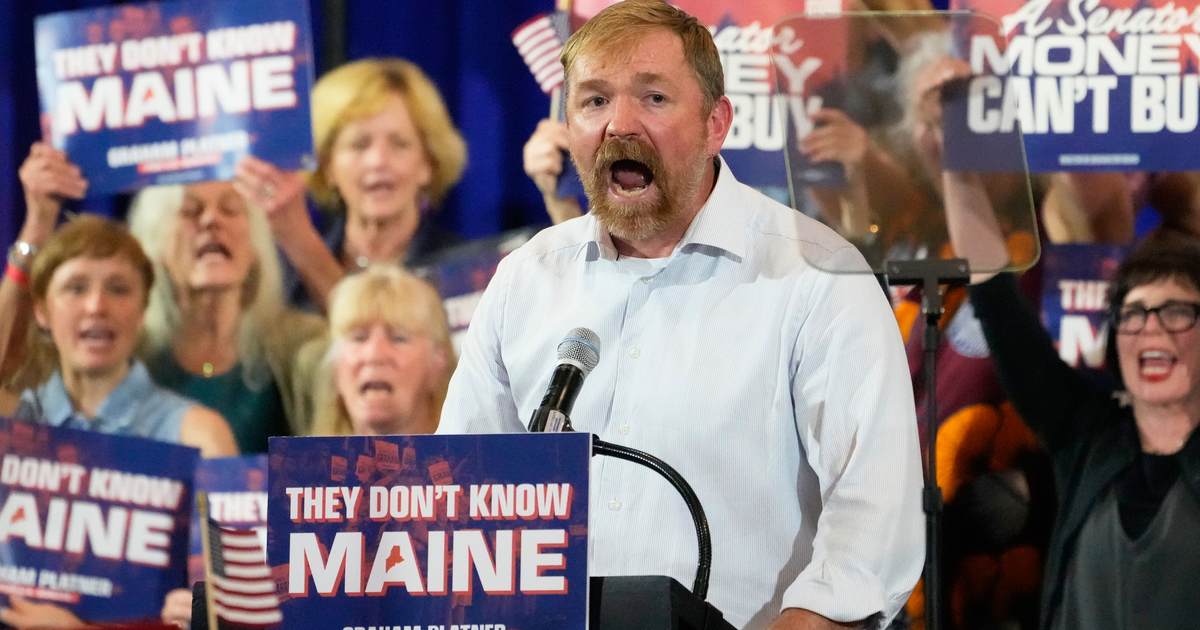
The sudden collapse of Graham Platner’s Maine Senate bid after a 2021 rape allegation has thrown Democrats into a chaotic scramble to name a replacement, with deadlines and a July 25 convention looming and several candidates making tone-deaf remarks that underline poor vetting and political disarray.
Graham Platner’s campaign imploded after Jenny Racicot accused him of rape in 2021, and those allegations have dominated the fallout. Reports that Platner’s staff contacted former girlfriends as part of opposition research only deepened the controversy, turning what might have been a policy fight into a scandal-driven collapse. With his exit, Democrats in Maine must scramble to patch a gaping hole in their effort to unseat Sen. Susan Collins (R-ME).
Deadlines are tight: candidates must file a letter of intent by July 20 to start gathering the signatures they’ll need, and a replacement will take shape at a convention on July 25 where 601 delegates will pick a new nominee. That compressed timetable favors whoever can mobilize party activists fast, not necessarily the best general-election candidate. The process looks less like careful selection and more like damage control under a hard deadline.
It’s become a complete circus for the Democratic side, and some of the public remarks have been jaw-dropping. One contender, Jordan Wood, held a press event where he blamed New York political elites for Platner’s collapse while seeming to gloss over allegations of rape, claims of domestic abuse, graphic posts, troubling online associations, and even reports of a Nazi tattoo. He even said, “yeah, you know, I agree with a lot of what that Nazi oyster farmer accused of rape had to say.”
https://x.com/RNCResearch/status/2076725590883791141
That kind of endorsement by association is political malpractice; voters notice when candidates defend or shrug at serious accusations. Aligning with someone mired in such grotesque allegations hands Republicans a clear contrast to run on—competence, judgment, and standards matter. For Maine Democrats, tolerating or repeating those talking points only deepens the crisis and hands the messaging to Collins.
He later said that efforts to hold those accountable for the state’s reported Medicare fraud schemes are racist:
The Medicare and Medicaid accountability issues in Maine have been messy and politically charged, and the debate over them has been weaponized by both sides. Reporting has explored claims involving a Somali-run health services provider and the broader questions about oversight and fraud, which leave communities demanding answers. Democratic candidates who paint investigations as racist risk appearing to defend bad actors instead of defending patients and taxpayers.
Susan Collins stands to benefit from this implosion because Republicans can point at Democratic chaos and poor candidate judgment as evidence that the other side is not ready to govern. A party that can’t settle on a replacement without embarrassing public statements hands incumbents a narrative about stability versus recklessness. That dynamic was predictable the moment the allegations surfaced and the scramble began.
The clock is unforgiving: letters of intent by July 20, signatures to be gathered immediately afterward, and a convention that will settle the matter on July 25. With only 601 delegates deciding the replacement, internal party machinery and activist networks will determine the nominee more than broad voter choice. What happens in those few days will shape the fall campaign and the messages each side carries into the general election.
This episode exposes more than one flawed vetting process; it reveals how a rush to nomination and poor handling of serious allegations can turn a winnable contest into a defensive scramble. The fallout will continue to unfold as delegates meet and candidates jockey for position, and Maine voters will watch how their party handles both the accusations and the choice of who gets to oppose Sen. Collins. The political consequences of these decisions will matter well beyond the next few headlines.