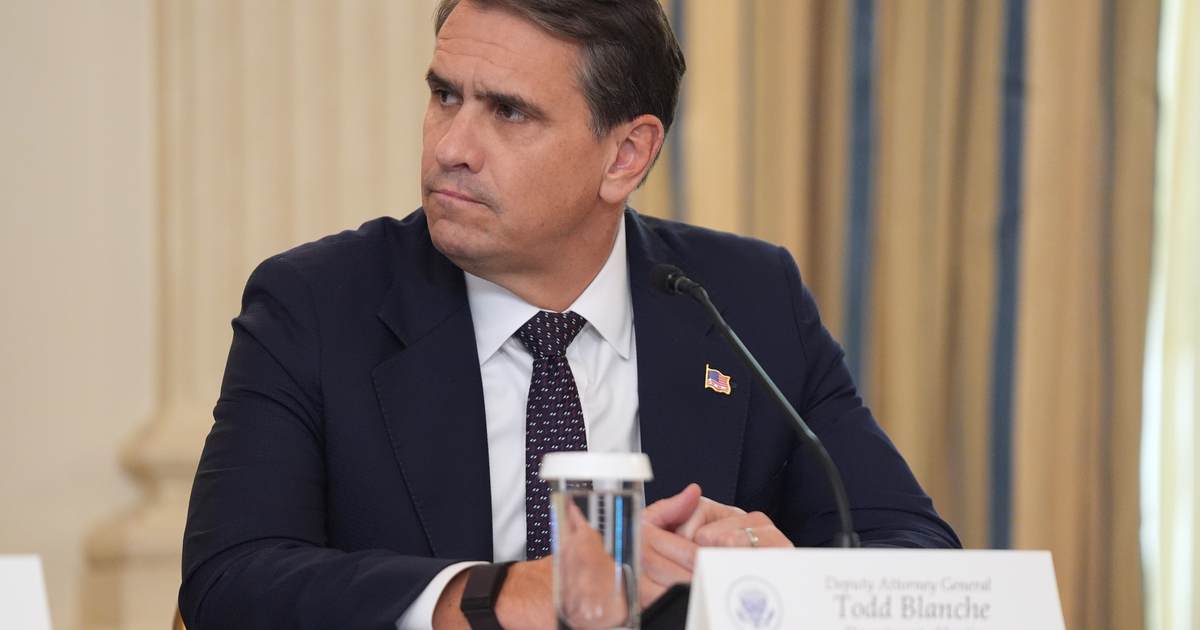
Acting Attorney General Todd Blanche faced a bruising Senate Judiciary Committee hearing where senators pressed him on Ghislaine Maxwell, his past ties to Donald Trump, and how the Justice Department will confront sanctuary cities, with the session shaping the road to a full Senate confirmation vote.
Todd Blanche appeared before the Senate Judiciary Committee under a tight spotlight, answering tough questions about high-profile prosecutions and policy priorities. The hearing covered the Epstein case, Maxwell’s treatment, the limits of presidential influence, and federal efforts against cities that block immigration cooperation. Senators from both parties drilled down on specifics while probing Blanche’s approach to law enforcement and prosecutorial independence.
In his opening remarks Blanche leaned into public safety as a core theme and framed his tenure in straightforward terms. “Every senator here has constituents who just want to be safe,” Blanche said in his opening statement. “We are keeping America safe, and we are just getting started,” he later added, stressing promises to support cops and protect communities.
Lawmakers did not shy away from the thorny questions about Jeffrey Epstein and Ghislaine Maxwell, or about Blanche’s prior private work for former President Trump. Senators also raised public-safety topics like urban crime task forces and fraud enforcement initiatives in cities such as Memphis. The exchanges mixed legal detail with partisan pressure as committee members tried to pin down how Blanche would balance independence with the president’s agenda.
Sen. John Kennedy pushed directly on the potential for improper orders, asking pointedly, “Has he ever asked you to do anything illegal?” Blanche answered, “No,” and Kennedy followed with, “Would you do it if he asked you?” Blanche later replied with a clear refusal to compromise legal duties, telling senators he would not follow unlawful directions. Kennedy said afterward that “it just seems to me that no fair-minded person could conclude that you’re not qualified.”
Democrats raised the Maxwell matter forcefully, pressing whether the Justice Department had discussed pardons, clemency, or relocating her to another prison. Blanche repeatedly denied that such conversations took place and pushed back on any suggestion of improper influence. “This is why your nomination should fail. The attorney general’s client is not the president, it’s the American people,” Booker said.
The hearing produced some cross-aisle criticism of how the probes were being framed, with Sen. Thom Tillis calling out what he viewed as hypocrisy. “President Biden did everything that you’re accusing President Trump of doing,” Tillis said, forcing the room to confront similar tactics across administrations. “Let’s just be real here, people, if we’re going to criticize one administration: Look in the mirror before you do it,” he added, urging balanced scrutiny.
On immigration enforcement, Sen. Eric Schmitt pressed Blanche about action against jurisdictions that shield illegal immigrants from federal agents, asking, “Will you use every tool that you have in your toolbox to go after these sanctuary jurisdictions?” Blanche answered affirmatively, saying, “I mean, absolutely […] there are thousands of examples of our law enforcement agents being put at risk.” He illustrated the problem by noting situations where federal officers must arrest someone in a public place because local policies prevent pickup from jails, even when a final order of deportation exists.
Blanche faced questions about his career and how his prior private representation of President Trump might affect his independence, but he emphasized his duty to the law and to federal investigators. Committee members also queried him about plans to target fraud and to bolster crime-fighting partnerships in troubled cities. The nominee reiterated a commitment to use existing authorities to support local law enforcement and to protect federal agents working alongside state and local partners.
Committee debate at times grew heated as senators from both parties exchanged barbs while trying to clarify legal standards and policy direction. Republicans focused on law-and-order credentials and pushing back against what they called selective outrage, and Democrats kept returning to the Maxwell and Epstein lines of inquiry. The hearing set the immediate terms of the confirmation fight as the committee moves toward a vote that will determine whether Blanche’s nomination reaches the full Senate.
https://x.com/RapidResponse47/status/2077404543185232355