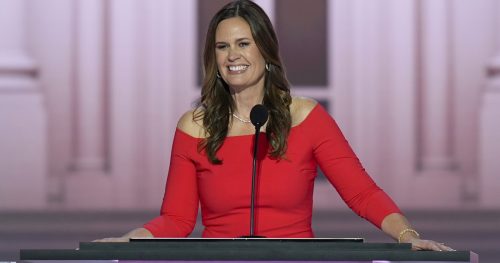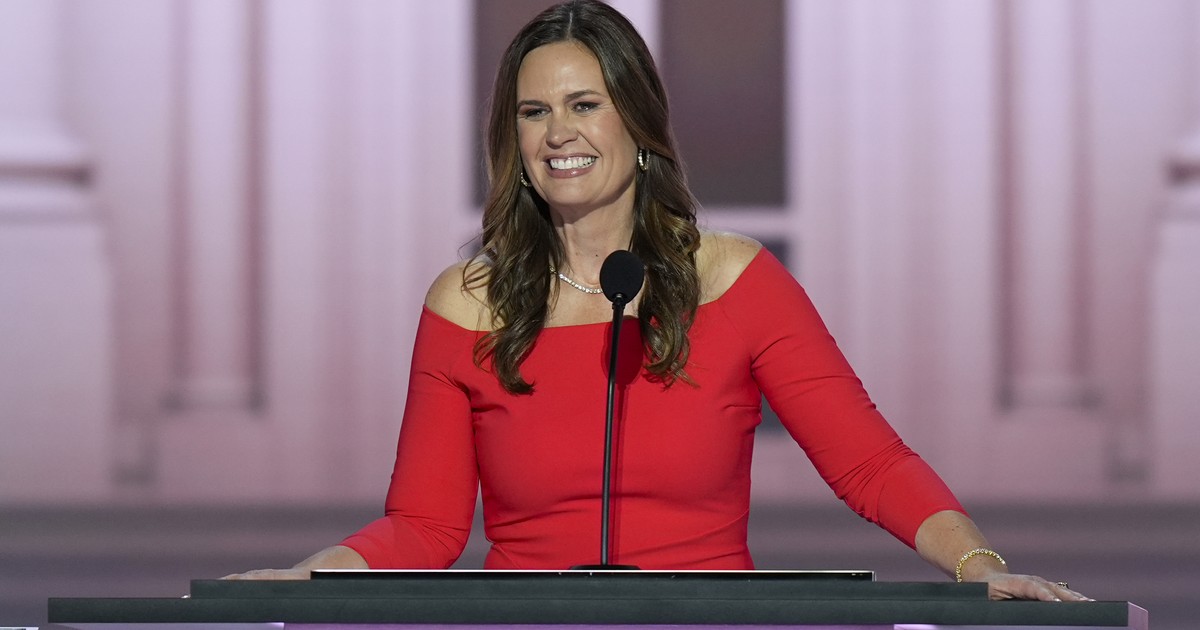
Arkansas’s school-choice experiment is posting real gains on state tests, and the governor credits a funding model that puts money directly into families’ hands while also investing in public schools and teachers.
Arkansas’s Education Freedom Accounts are drawing attention because the state is seeing measurable improvements in student performance, according to Governor Sarah Huckabee Sanders. In a Fox News interview, Sanders tied rising test scores to the expansion of universal school choice and the LEARNS Act, which gives families more control over where their children learn. The accounts provide families with $8,000, roughly 90 percent of the foundation funding a public-school student would receive, and those funds can be used for private school tuition, charter schools, or homeschooling expenses.
“We had about 50,000 kids that have participated during the last school year, and have signed up for the upcoming year. That means that the money is truly following the students. We are empowering parents to make the best decisions about where and how their kids can be educated,” Sanders said.
Sanders stressed parental authority over schooling and spoke from her own life when she said, “I’m a mom, I have three kids…all three of them learn differently, so we can’t expect that a one-size-fits-all system is gonna work for every student.” “Every single kid can learn when given the right resources, the right environment, and the right opportunity,” she said. Those are blunt, practical points that drive the policy and help explain why families are opting in at scale.
https://x.com/SarahHuckabee/status/2077197339316350981
The data the governor cites are striking on their face: since the LEARNS Act launched, proficiency across subjects and grade levels has climbed by more than 20 percent since 2024, and the share of students performing at the very lowest levels dropped by about 17 percent. Those are broad, state-level shifts and they suggest the combination of flexible funding and targeted investments is moving the needle. When money follows students, schools and families can try approaches tailored to the learner instead of being locked into a single standardized delivery.
Arkansas didn’t treat school choice as a lone policy tossed at the problem and left to test itself. The state paired choice with historic investments in public classrooms, raises for teachers, and district-level supports. Literacy coaches were placed in struggling schools and a merit incentive fund was created to reward and retain high-performing teachers. That dual-track approach — empowering families while shoring up public school capacity — is central to the argument that reform can be practical and politically durable.
On the national scene, the movement toward options is growing beyond Arkansas. Federal proposals like the Educational Choice for Children Act and other initiatives aim to expand tax incentives and scholarships that support choice programs, and roughly 1.3 million students nationwide are already enrolled in some form of school choice. That scale matters: when families vote with enrollment and resources, policymakers notice, and the debate shifts from theory to results.
Critics will always worry about trade-offs, but the Arkansas rollout shows you can increase parental flexibility while investing in teachers and targeted supports for struggling schools. The relevant question for other states is not ideological purity but whether a package of reforms produces better outcomes for kids and gives parents real options. For Republican policymakers focused on tangible wins, these numbers and policy choices are worth watching.
As Arkansas heads into another school year with tens of thousands of students in the program and fresh data to study, educators and lawmakers outside the state will be tracking outcomes, staffing changes, and whether gains persist. The experiment will keep offering lessons on how funding, accountability, and parental choice interact in the classroom.