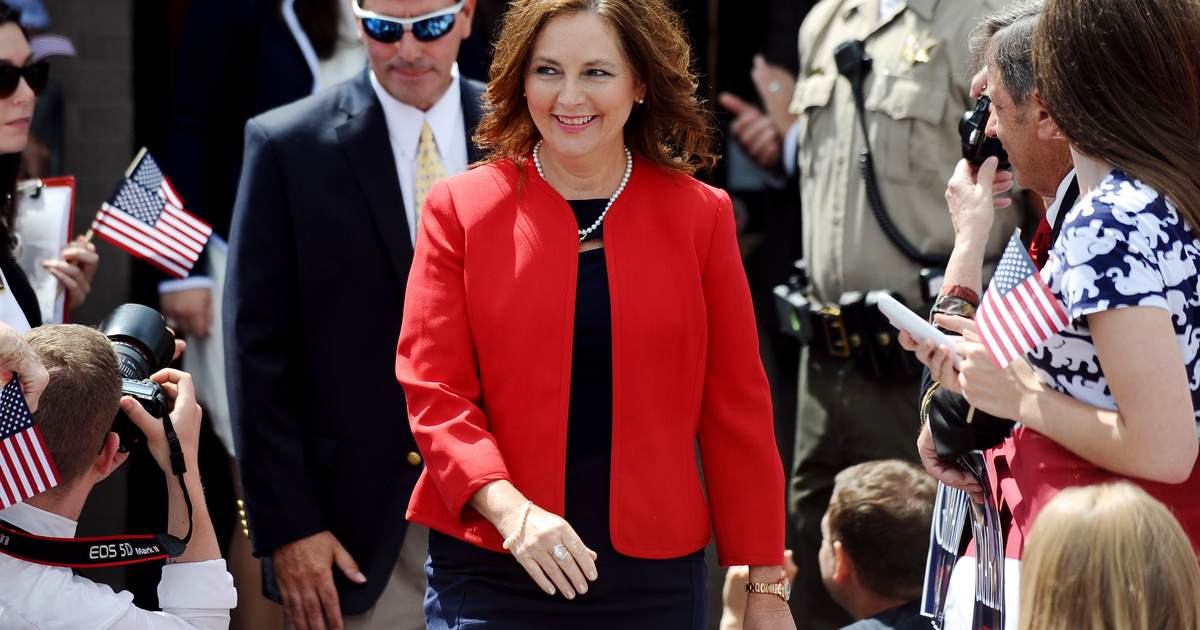
Sen. Darline Graham Nordone, sworn in to finish her late brother Lindsey Graham’s term, is weighing a run for a full U.S. Senate seat as a wide Republican field forms ahead of the special primary next month and party leaders quietly take stock.
Sen. Darline Graham Nordone (R-SC) was sworn in this week to serve out the remainder of her brother’s term, which runs until January, and sources say she is weighing a longer campaign. A source familiar confirmed to Townhall that “Darline has been having conversations about running in the special election.” That confirmation has set off quick calculations inside state and national GOP circles about the shape of the primary.
Reports say one of those conversations reached into the White House, and several inside-the-party actors are already talking strategy and messaging. The special primary next month to choose the Republican nominee for the November ballot is expected to draw a very large field, with multiple sitting members of Congress and statewide figures weighing bids and endorsements. The speed of decisions will matter more than usual.
Sen. Tim Scott commented on the possibility this week, asking bluntly, “why not her would be my question” when reporters raised the prospect of Graham Nordone mounting a campaign. He added, “As a South Carolina voter, I want someone who represents the best of us,” and noted he “doesn’t have a specific candidate in mind” as of Wednesday. Scott’s tone signaled openness to a candidate who can carry conservative principles while appealing across the state.
Scott also flagged the practical reality every campaign will face: the economy. He noted that affordability — the rising cost-of-living — will likely be the dominant issue on the campaign trail, which means a nominee must be ready with concrete messaging on inflation, jobs, and budgets. Republican strategists see that as an advantage if candidates emphasize competence, lower taxes, and protection of paychecks.
If Graham Nordone decides to run and secures the GOP primary, she would likely face Democrat Annie Andrews in November. The Cook Political Report currently rates the race as “Solid Republican,” a label that reflects both South Carolina’s GOP tilt and the momentum of conservative organization in the state. That rating does not remove the need for a disciplined campaign; it simply frames the general as a GOP opportunity to hold the seat.
https://x.com/burgessev/status/2078104548153897019
After her appointment by Gov. Henry McMaster, Graham Nordone offered a personal pledge that tied her choice to family and duty, saying, “Lindsey’s always been there for me. And now I will be there for him.” She added, “My brother was the most amazing person, outstanding leader, and just a genuinely good man.” Those words underline why many voters and donors will be watching how quickly sympathy and respect translate into political momentum.
Several Republicans are already in the mix or are being discussed as possible entrants, including Reps. Russell Fry, Ralph Norman and Nancy Mace. Each name brings different strengths: a regional base, a hardline conservative profile, or an ability to attract attention and fundraising. That variety is why the primary could become a test of who best channels the Graham legacy while staking out clear conservative priorities.
Lindsey Graham’s absence is a substantive loss for Senate conservatives and for national foreign policy debates where he played an outsized role for years. He had been a prominent voice on global crises and served as chair of the Senate Budget Committee, a post that will now presumably be led by Sen. Ron Johnson. The committee shift matters to Washington power dynamics and to how the GOP frames spending and fiscal discipline going forward.
Funeral arrangements for the late senator had not been released publicly as of Friday, and the coming days will shape both the state’s mourning and the practical politics around succession. Republicans in South Carolina face a moment that blends respect for a long-serving figure with the immediate task of picking a nominee capable of defending conservative principles, stewarding national security priorities, and speaking to pocketbook concerns at the kitchen table.