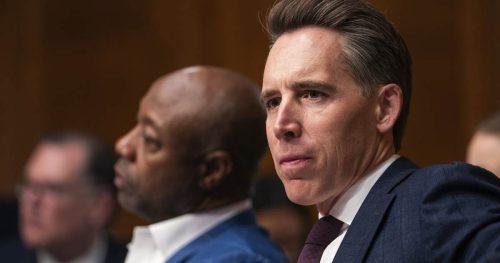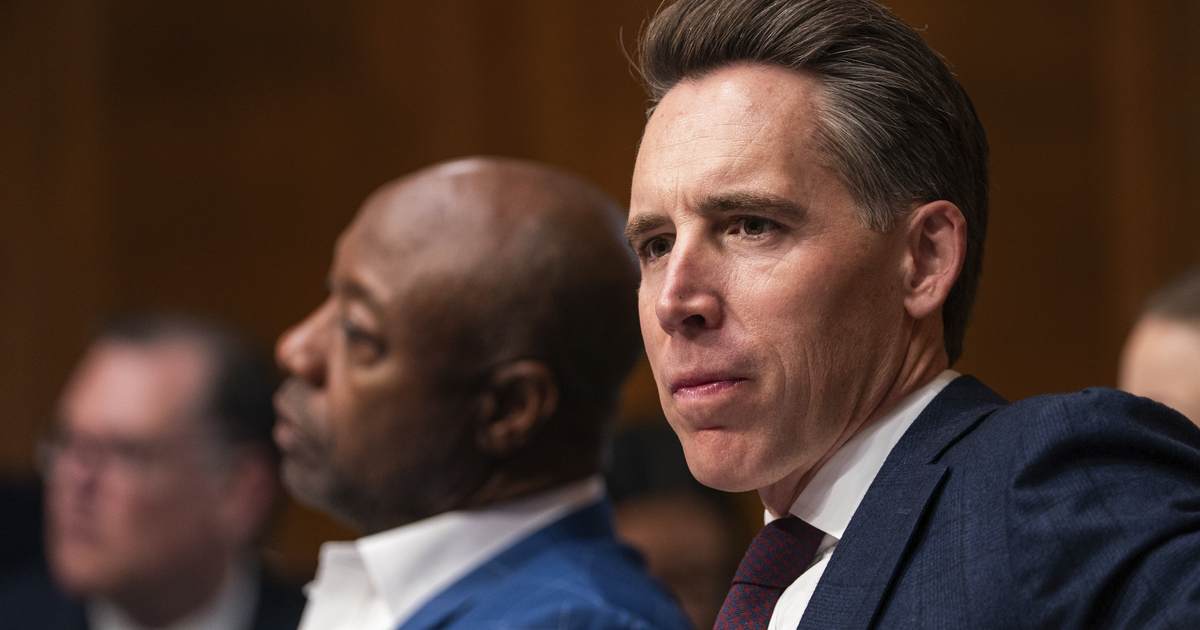
Sen. Josh Hawley publicly challenged former U.S. pardon attorney Liz Oyer for pushing clemency recommendations that would have wiped out federal death row and for advocating mercy for Dylann Roof despite his racially motivated massacre.
Sen. Josh Hawley (R-MO) confronted Liz Oyer during a Senate hearing after reports showed she urged President Biden to clear federal death row. Hawley pressed that recommendation hard, arguing it substituted the judgment of prosecutors, juries, and victims with partisan mercy.
Hawley quoted Oyer directly in committee: “You recommended that the President of the United States, Joe Biden, grant clemency to all 40 federal death row inmates, all of them, clear them out, correct?” Oyer replied, “Sir, as I told Chairman Grassley, I’m not free to discuss the recommendation. Well, that’s what your memo says,” and the exchange grew tense.
Hawley pointed out language from her own memo, including the line, “disparity and undue severity of sentence, which are present in many, if not all of these cases, have been recognized as grounds for clemency.” He then summarized the practical outcome of that stance: “And you went on to recommend in that memo and a series of other memos that are now recorded and public record that the president of the United States grant clemency to murderers, rapists, and the most horrible offenders. All of them. Clear death row completely out.”
The senator did not let her dodge the toughest case. He raised Dylann Roof by name and bluntly reminded the room: “Dylann was a neo-Nazi who murdered 9 African-American worshipers at a Bible study in Charleston, South Carolina, 2015. Do you remember this case?” Oyer answered simply, “I do remember it very well.”
Hawley made the victims visible in the hearing, showing images and detailing motive: “I would hope you did. Here’s his victims. You want to look at them? There they are. 9 of them at a Bible study. In a church, killed in cold blood,” he said. “The DOJ knew from day one that he had decided— I’m going to quote from the prosecutors— decided to attack African Americans because of their race. He further decided to attack African American worshipers in a black church in order to make his attack more notorious.”
He cut to the core of Oyer’s memo and the public outrage it caused: “And yet you recommended that he be granted clemency, live at the expense of taxpayers for the rest of his life, substitute your judgment for that of the American judicial system. Do you stand by that recommendation today?” Oyer deflected: “Sir, I’m not going to comment on the recommendations that I made, but I can tell you that Mr. Roof is going to die in prison as—”
Oh, he’s going to live in prison for a very long time because of you, because of your recommendations. And here’s what you said in your memo of October 30th, 2024. You said that actually Roof is not a compelling candidate for clemency, but you recommended it anyway. Why? Because he suffered from anxiety, you said, right? He suffered from anxiety. Did it ever occur to you that maybe the families of his victims might suffer a little bit of anxiety because he marched into their church and murdered them in cold blood because he was an incredible racist and he wanted to get on TV?
Oyer refused to respond.
Oyer was dismissed as U.S. Pardon Attorney in March 2025 after clashing with the attorney general over restoring gun rights to actor Mel Gibson following a domestic violence conviction. She has maintained her firing was politically motivated, a claim she has repeated publicly while defending her record on clemency recommendations.
The Roof attack remains one of the most chilling domestic terror crimes of the last decade. On June 17, 2015, he walked into a weekly Bible study, sat for an hour with parishioners, then opened fire, killing nine people, including the church’s pastor, and later admitted he targeted the black church to incite a race war.
Authorities captured Roof the next day during a traffic stop and recovered the firearm and a manifesto filled with racist writings and images. A jury convicted him in December 2016 and he was sentenced to death in January 2017. President Biden did not include Roof on any list of pardons issued during his term.
The hearing highlighted a sharp divide over whether pardon power should be used to override capital punishment across the board or reserved for rare, compelling cases. Republicans in the hearing framed Oyer’s recommendations as an alarming reach that would sideline victims, disregard judicial outcomes, and impose a political worldview on criminal justice decisions.
https://x.com/CollinRugg/status/2077822754943033723