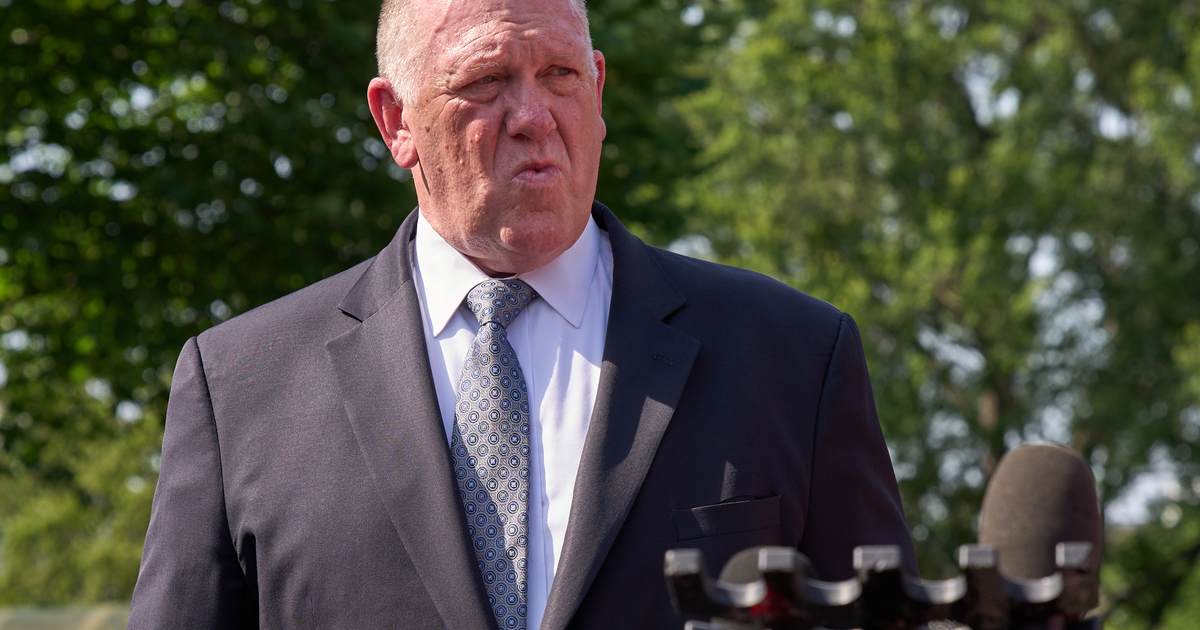
Tom Homan squared off with a CBS anchor over ICE tactics, officer-involved shootings, and the use of unmarked vehicles, and the exchange exposed how the media and Democratic lawmakers politicize enforcement while ignoring the consequences for agents and public safety.
The interview quickly turned into a lesson in straight talk about law enforcement realities and political theater. Tom Homan pushed back hard when Margaret Brennan raised doubts about unmarked vehicles and questioned whether anything had really changed inside Immigration and Customs Enforcement. His answers cut to the core: enforcement is messy, investigations take time, and rhetoric matters.
Homan didn’t mince words about the role of political theater in delaying practical fixes like body cameras for agents. He pointed the finger at Democrats who held up funding, arguing that a policy could have been implemented months earlier if not for partisan fights over Department of Homeland Security budgets. That claim framed the broader point: bureaucracy and politics, not operational excuses, often slow reform.
The segment revisited recent deadly encounters linked to immigration enforcement, including shootings in Maine and Houston and a separate fatality in Florida involving a tractor-trailer. Those incidents prompted hard questions about tactics, accountability, and how federal officers identify themselves. Homan emphasized that investigations must play out before assigning blame, a standard position for anyone who has worked in law enforcement.
https://x.com/EricLDaugh/status/2078882104205590544
On the topic of unmarked cars, Homan was blunt: unmarked vehicles have always been part of policing and serve a purpose in finding people who try to hide. He noted that agents’ vehicles are equipped with emergency lights and that officers wear insignia when they approach a car, insisting those details matter in a traffic stop. The media focus on the aesthetics of a vehicle misses how operations actually unfold on the ground.
Homan also warned about the public rhetoric coming from sanctuary cities and some members of Congress, arguing it can embolden people to resist federal officers. He framed compliance as a basic safety rule: if you resist, situations get dangerous for everyone involved. He urged people to comply and then pursue remedies through the courts if they believe a stop was unjustified.
That legal pathway was another point Homan pushed: policing moments are not the right time to litigate a stop. He repeated the practical option of taking grievances to court later, rather than escalating during an encounter. That approach reflects decades of policing experience and a preference for order over chaotic confrontation.
Critics will focus on the lack of body cameras in some of the highlighted cases, and Homan acknowledged that would help clarify facts. He insisted cameras would be standard if not for funding roadblocks tied to political fights in Congress. Framing the issue this way shifts responsibility away from field agents and back to lawmakers who control budgets and oversight.
Throughout the back-and-forth, Homan made clear he wasn’t ducking accountability; he urged patience for the investigatory process and stressed evidence—video, witness statements, affidavits—will determine outcomes. He also reminded viewers that misidentification happens across all law enforcement agencies during dynamic operations. That context matters when headlines rush to verdicts before facts are in.
Below is the transcript of the exchange as it aired:
MARGARET BRENNAN: Mr. Homan, we saw that two immigrants were shot in the span of a week. There was that one in Maine that was fatal just days after another one in Houston. We also saw that man fleeing agents in Florida, who then was struck and killed by a tractor-trailer.
I know you’ve been trying to keep the department out of the headlines ever since that streak in Minnesota that was deadly. How do you respond to those who say, what’s happening now looks like very little has changed?
TOM HOMAN: Well, you know, first of all, we’ll wait and see what the investigations – how they play out, right. Because, you know, I don’t want to get ahead of an investigation on who’s at fault, what exactly happened because we all know, when these investigations happen, there’s going to be cell phone video, there may be city cameras, and, of course, then you got witness statements and affidavits from the officer and witnesses. So, we’ve got to let the investigations play out. So I don’t really want to comment on the investigations themselves.
But, you know, I think, you know, Markwayne Mullin, you know, took some action in concern of the safety of the agents and how we do operations and that’s why he did that, you know, that pause on enforcement on vehicle stops.
But, you know, I – my concern is – I’ve never – I’ve done this since 1984. My concern is I think a lot of the rhetoric that you see every day, especially in sanctuary cities and at these protests that resist. Members of Congress saying ICE isn’t a real law enforcement agency. I think that – I actually think that emboldens some people to say, I’m not going to comply with ICE. And I think no matter what people think of ICE, right, no matter what you think of immigration law, you should always comply with law enforcement.
MARGARET BRENNAN: Yes. Yes. But in the shootings in both Houston and Maine, the people who were killed were not the intended targets. Have you caught the people you were actually looking for?
TOM HOMAN: One of them I believe we did. But, you know, that happens in law enforcement all the time. I mean we’re working, you know, you get leads on individuals and you say, OK, well this subject lives at this house, he drives this car. And when that subject leaves the house, you know, 6:00 in the morning, and someone gets in that car from that house, you know, they assume, OK, this guys and they’ll do a vehicle stop. And depending on when they make that stop and that person complies, either they’re going to be arrested or released. That’s the way it’s supposed to be.
So, you know, law enforcement deals with mis identity every day across the country, not just ICE, every law enforcement agency. I was a cop. I know – I know that happens.
MARGARET BRENNAN: Yes. But these were fatal shootings, of course, in Houston and in Maine. And in Houston, it was an unmarked car. So, when you’re saying, don’t resist, these individuals who were chasing the man who died, they didn’t have markings on that vehicle that would allow for him to know that they were ICE. It just looked like a car coming after them in the videos.
TOM HOMAN: No. They have emergency lights. Officers have insignia. So, when they get out of that car and approach the car, you can clearly see they’re law enforcement officers. They can’t – this is – these people –
MARGARET BRENNAN: Well, in the video that has been public, it’s not a marked car.
TOM HOMAN: These people – I’m not saying it’s a marked car, but they have emergency lights and sirens. So, when they pull someone over, they’re going to activate their emergency lights. A lot of – a lot of police departments – I’m in New York City right now. A lot of NYPD officers are driving unmarked vehicles. And that helps them find people that don’t want to be found, right?
So, you know, but bottom line is, we’ll see when the investigation plays out, but they’d be alive today if they simply complied with a vehicle stopped by federal law enforcement. Just comply.
MARGARET BRENNAN: Yes.
TOM HOMAN: You can – if you don’t think you’re being treated right and had no reason to stop you, then there’s avenues to take them to court. Just sue. Get a lawyer and argue in court.
MARGARET BRENNAN: Well, the family of the man in Houston said they – he thought he was being robbed because it was an unmarked vehicle. Not that it was law enforcement at all.
TOM HOMAN: They had emergency lights. They activate emergency lights. Blue lights. You know – you know, in my vehicle I drive where I’m with my security detail we have emergency lights.
MARGARET BRENNAN: You’ve seen that on video because we haven’t?
TOM HOMAN: Seen what on video, ma’am?
MARGARET BRENNAN: That there were lights. Because in the videos that we’ve seen, there aren’t. And because there weren’t body cameras, it is hard to substantiate some of what you are saying.
TOM HOMAN: OK. OK. Well, I have not seen the videos.
MARGARET BRENNAN: OK.
TOM HOMAN: But I’m saying, our vehicles are equipped with emergency lights. Now, if they didn’t activate the lights, again, I haven’t seen that video. If they didn’t activate the lights, then there’s an issue there, right?
MARGARET BRENNAN: OK.
TOM HOMAN: But I’m saying, they are equipped with lights. So, let me just caveat that. They should have been equipped with lights and sirens. So, I do not know specifically if they activated those lights.
MARGARET BRENNAN: OK.
TOM HOMAN: But as far as the cameras, Margaret, you know, everybody in ICE would have a camera now if the government wasn’t shut down by Democratic members of Congress. There was money in that bill that they held up.
That exchange landed for many conservative viewers as a clear reminder that hardened rhetoric has consequences for safety and enforcement. Homan’s background and blunt delivery made the point that policy fights over budgets leave gaps on the ground. When politics delay equipment and oversight, agents and civilians bear the cost.
At the end of the day, Homan insisted on process: let investigations run, preserve evidence, and hold people accountable in court when appropriate. His answers were short, direct, and unapologetic about the need for order and compliance during tense law enforcement moments. For those who want effective border enforcement, the interview was a concise defense of operational firmness over media-driven second-guessing.
Nicely handled, sir.