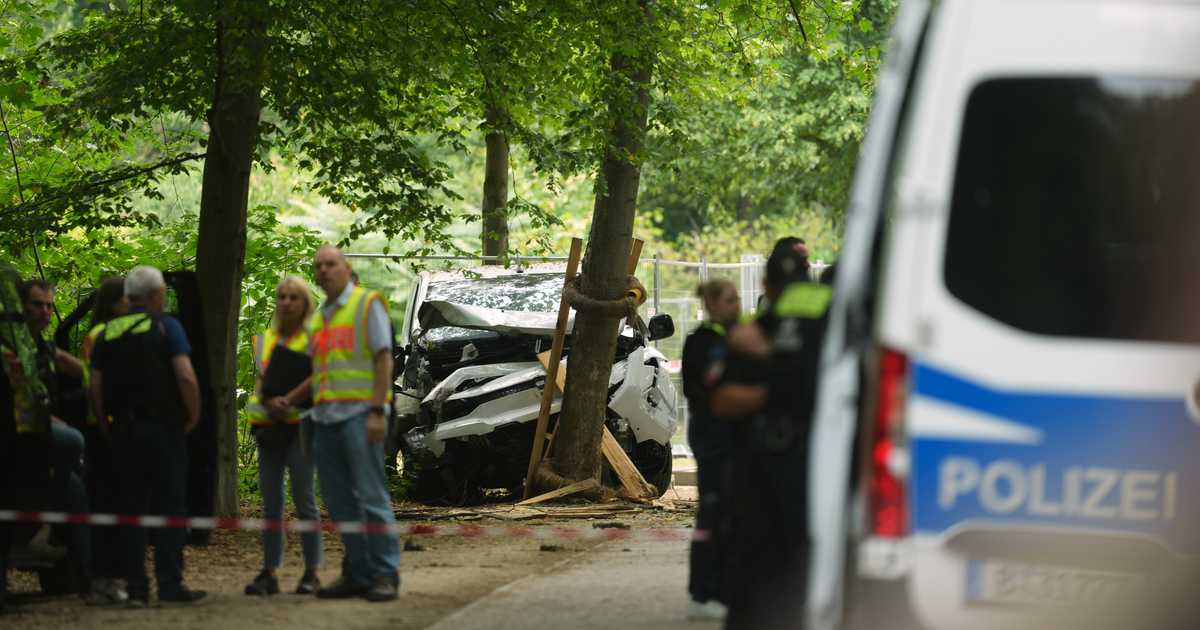
A Berlin vehicle attack that killed one person and wounded many has exposed how Germany’s soft approach to Islamist offenders can end in tragedy, and now politicians are pushing to close the loopholes that let convicted jihadists avoid prison.
On July 25 a van plowed into a crowd at a Pride event in Berlin, killing one woman and injuring dozens more, and the suspect, identified in reporting as Abdul Bellout, was later shot dead by police after a manhunt. He had a prior conviction for trying to join an Islamic extremist group and was given a suspended sentence, then sent on a short “deradicalization” course as part of his release conditions. That outcome has ignited anger and a demand for a tougher legal response from German officials and the public.
The so-called deradicalization program in this case was a three-day course spread over six weeks and, according to reporting, was run by a team that included four white women. Critics argue that such token programs are inadequate for people who have shown clear intent to join violent Islamist groups. Those concerns now feed a larger debate about whether courts should be able to hand down suspended sentences to anyone convicted of terror-related offenses.
Germany’s interior minister called the suspended sentence in this case “certainly incomprehensible,” reflecting a wider shock among lawmakers about how the justice system handled an obvious security risk. Chancellor Friedrich Merz also criticized security services for failing to keep track of known threats, saying ordinary people can track devices worldwide the way authorities apparently could not. The political backlash is swift, and review processes have been launched to change how suspended sentences are applied.
https://x.com/ripx4nutmeg/status/2081717696710807833
Parliamentarians are now discussing measures that would remove suspended sentences as an option for terror convictions, effectively ensuring that people who try to join extremist organizations serve time behind bars. Early proposals include categorical exemptions from suspension for anyone convicted of terror-related offenses and clearer criteria for monitoring released offenders. That shift would be a big change in legal culture for a country that has often prioritized rehabilitation and cautious civil liberties when weighing punishment.
Germany is considering banning terrorists from receiving suspended sentences after the Berlin Pride attacker avoided jail despite trying to join the Islamic State.
Abdul Ballout, 21, drove a van into the Christopher Street Day Pride Parade in Berlin, killing one woman and injuring 29 others in what was described as an “Islamist” act of terror.
It has since emerged that he was convicted of terror offences in May, but did not spend any time in prison, because his 22-month sentence was suspended.
Now, ministers have ordered a review of how and to whom suspended sentences are handed out. Early suggestions include exempting anyone convicted of terror-related offences.
“It is certainly incomprehensible that, given the level of danger involved in this case, a suspended sentence was imposed,” said Alexander Dobrindt, Germany’s interior minister.
Friedrich Merz, the German chancellor, also criticised his country’s security services.
“I cannot understand how I can track my mobile phone from anywhere in the world – or even use it to determine the location of my iPad, for instance – yet it is supposedly impossible, or technically unfeasible, for security authorities in Germany to determine the whereabouts of individuals classified as security threats to that same extent,” he said on Monday.
For conservatives, this feels like a validation of long-standing warnings: lenient penalties and weak follow-up allow dangerous people back into society with little oversight. Calls for change mix frustration with political pressure to prioritize public safety over reputational fears about being labeled intolerant. That tension between civil liberties and security has been building for years, and a high-profile attack finally forced a re-examination.
Some activists and community leaders want to avoid politicizing the attack, but public opinion is hardening toward stricter punishments and better monitoring of radicalized individuals. Officials say they will audit sentencing practices and the use of suspended terms, while intelligence services face scrutiny over why a convicted extremist remained effectively free. Those reviews could lead to immediate policy tweaks and longer-term legal reforms.
Beyond sentencing, the debate also touches on deportation and immigration policy for noncitizen offenders, with some calling for expedited removal and bans on future entry. The idea of preventing repeat offenders from returning or remaining in Germany is gaining traction, though legal and diplomatic hurdles remain. For many, the single preventable death was enough to change the political calculus.
Germany’s shift would not be painless: it raises questions about proportionality, prison capacity, and how to balance effective rehabilitation against the duty to protect citizens. But lawmakers who have watched repeated warnings go unheeded are demanding sharper tools in the legal toolbox. If reforms lock up convicted terrorists instead of giving them short suspensions, that will be an unmistakable signal that public safety has become nonnegotiable.
There’s a clear pattern: a justice system that values second chances colliding with a hard reality of organized Islamist violence. Critics argue that mercy in these cases is mercy misplaced, and that stronger penalties would deter potential recruits and reduce repeat risks. The debate in Berlin now mirrors similar conversations across Europe about the right balance between rights and security.
Short-term fixes are likely: exemptions for terror-related cases, more rigorous monitoring of released suspects, and faster deportation where possible. Longer-term answers require a reform of how courts, police, and intelligence services coordinate and communicate, and a political willingness to accept tougher measures despite international criticism. For many in Germany and beyond, the lesson is plain: leniency can have deadly consequences, and policy must change accordingly.