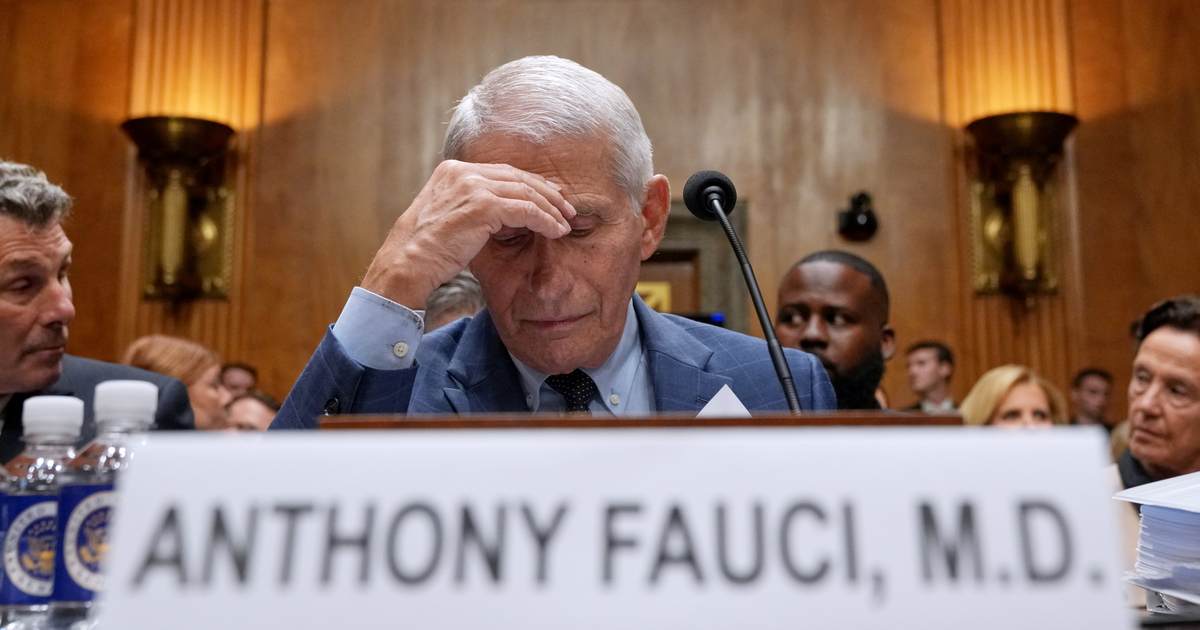
Dr. Anthony Fauci invoked the Fifth at a Senate hearing despite receiving a preemptive pardon, sparking sharp pushback from Republicans who argue the pardon shouldn’t shield him from congressional questioning and possible contempt proceedings.
Senator Rand Paul released Fauci’s government diary entries ahead of the hearing, arguing those records show a side of Fauci that voters deserve to see. The diary material, public records by law, put pressure on Fauci and framed the hearing as more than a routine appearance. For many conservatives, those pages underscore long-held concerns about decision-making and transparency during the pandemic.
Fauci read his prepared opening remarks, then repeatedly declined to answer questions by invoking the Fifth Amendment, even though the White House had issued a pardon that protects him from prosecution. That contrast — a pardon on one hand and refusal to testify on the other — felt like a dodge to a lot of Republicans watching. Over his long career of congressional appearances, critics note a pattern of stonewalling that now looks politically and legally awkward.
Sen. Rand Paul (R-Ky.), the chair of the Senate Homeland Security and Governmental Affairs Committee, said Wednesday he would push to hold Dr. Anthony Fauci in contempt of Congress after the former head of the U.S. COVID-19 pandemic response invoked his Fifth Amendment right at a hearing on Capitol Hill.
https://x.com/BillMelugin_/status/2081849209028808826
“That’s a vote that will happen in committee next week. It will be in contempt of Congress,” Paul told reporters after the hearing.
“We believe that with his … immunity from criminal liability, that he didn’t need to hide behind the Fifth Amendment and that maybe the Fifth Amendment doesn’t attach when you have a pardon in place,” he continued. “That’ll be a legal question, but the question on contempt will be voted on, and then there’s a question of whether or not the Department of Justice will take that up.”
Republicans on the committee made clear they will press for a contempt vote to force accountability for what they view as evasive behavior. A contempt finding would be a formal rebuke and could trigger further legal battles if DOJ chooses to act, which would force courts to weigh in on how a pardon interacts with testimonial privileges. For conservative lawmakers, this isn’t just about one hearing; it’s about whether officials can avoid scrutiny simply because they received executive protection.
Observers also pointed to alleged destruction of federal records and the use of private channels to conduct official business as separate problems that the pardon does not erase. Those records issues fall directly under congressional oversight, and they remain within the committee’s authority to investigate. When public servants use informal communications to bypass transparency rules, it undermines trust and complicates the legal landscape.
Legal commentators have outlined ways the pardon might be challenged or rendered meaningless when it comes to compulsory testimony, making the situation more combustible than a simple political squabble. If a court is asked to decide whether a preemptive pardon negates the Fifth Amendment right against self-incrimination during congressional oversight, we could see multi-year litigation. That possibility is one reason senators pressed Fauci so hard, knowing court rulings could set a broader precedent.
Before the hearing Sen.Rand Paul a former senior Justice Department prosecutor told me there are three, viable legal strategies to challenge the preemptive Biden pardon.
But there is no easy path.
One strategy calls for charging Fauci with a crime, with the expectation he would file a motion with the court to dismiss based on the pardon. This could open the door to challenging the sweeping pardon’s viability and years of litigation.
Another strategy involves Congress. Because Fauci has theoretically been preemptively pardoned against past and future criminal charges related to his NIH work, it can be argued that Fauci has no plausible claim to the 5th Amendment, the right against self-incrimination.
If Fauci takes the Fifth at Senator Paul’s hearing (which he has) the committee could seek to compel Fauci’s testimony. A finding of contempt could follow.
Finally, one of Fauci’s closest associates has been criminally charged. With pressure and the right incentives he might be flipped and become a cooperating witness.
Dr. David Morens, who was a senior advisor to Fauci at the National Institute of Allergy and Infectious Diseases, was indicted on multiple charges including conspiracy and obstruction, including destruction, alteration or falsification of federal records.
Along with allegations that personal email accounts were used to evade the Freedom of Information Act, this could be a powerful motivator.
From media reports: Dr. David Morens has pleaded not guilty to all five federal criminal counts.
The presence of an associate facing criminal charges raises the political stakes for Fauci and his defenders, because cooperation agreements can shift the evidence landscape quickly. That risk makes the committee’s push for testimony more than a performance; it is a tactic to unearth facts that may otherwise stay buried. Sen. Paul and other Republicans are betting that pressure from oversight plus potential criminal referrals can produce answers the public deserves.
Whatever happens next, the hearing showed that pardons do not automatically clear the board when it comes to congressional oversight or accountability politics. Expect committee actions to continue and legal theories to be tested, with conservative senators pushing hard to ensure transparency and consequences for perceived evasions. The coming days will determine whether a contempt vote becomes a tool that forces more testimony or just another round in a long, partisan fight.