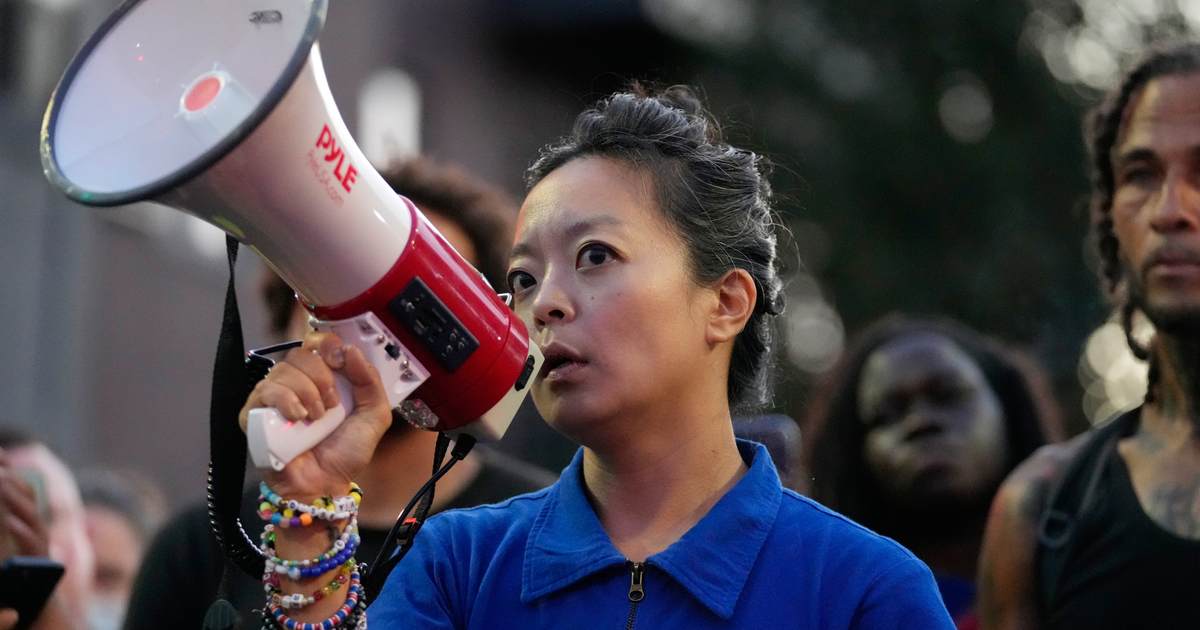
Francesca Hong is running a campaign that looks moderate on the surface but raises serious questions about her true positions on crime, policing, and public safety.
Hong is positioning herself as a centrist ahead of what looks like an easy primary win in Wisconsin and a general election against Republican Tom Tiffany, but her record suggests otherwise. Voters should expect tough questions about whether her public persona matches her past statements and affiliations. This piece examines inconsistencies and what they mean for law and order in the state.
In a recent podcast interview, Hong said she would not commute the sentences of murderers, a clear line meant to reassure skeptical voters. That statement landed as a direct rebuttal to critics who say her record favors radical reforms over public safety. The contrast between that podcast comment and past moments has become a focal point in the race for governor.
Tom Tiffany publicly accused Hong of misrepresenting her position, pointing to an April 27 forum where Democratic candidates were asked if they would commute sentences for people convicted of murder. At that event, only Mandela Barnes answered no to that question, which left room for opponents to claim Hong has shifted her stance. The clash over that exchange has now become a central talking point for Republicans trying to define Hong before voters do.
Hong’s policy history includes open support for dismantling traditional law enforcement structures, and she has talked in ways that make it reasonable to worry about proposals to eliminate police and prisons. She also frames parts of her plan as “investing” in law enforcement and refers to “public safety” in ways that suggest a major overhaul rather than straightforward support for victims and patrols. Those mixed signals are exactly why her past membership in the Democratic Socialists of America is getting renewed attention from critics.
https://x.com/mattberg33/status/2084639203954991511?ref_src=twsrc%5Etfw
Her DSA ties are not just a footnote; they inform a platform that, in practice, pushes for sweeping criminal justice changes and alternatives to incarceration. For voters who prioritize street-level security and accountability, those ideas are alarming rather than reassuring. Republicans and independents alike are asking whether campaign rhetoric will translate into governing choices that weaken law enforcement tools.
When questioned about whether she advocated abolishing the Senate, Hong’s campaign denied it, even though a social media post showed she had called for just that, and fact-checkers at the time declined to settle the dispute decisively. The unresolved discrepancy fed into a larger pattern: statements made to friendly audiences that are then softened or denied on the campaign trail. That kind of slipperiness is exactly what makes it hard to trust pledges of moderation from candidates with radical histories.
This cycle—campaign like a moderate, win on name recognition, then govern according to a more radical playbook—has been seen before, and critics are invoking that pattern now. The comparison to other Democrats who ran moderate and governed differently is meant to warn voters that surface-level reassurances may be tactical rather than sincere. For those focused on crime reduction and order, the stakes are straightforward: policy details and past affiliations matter more than smiling rhetoric.
Republicans are framing this contest as a referendum on law and order versus ideological experiments that prioritize theory over victims. That framing hinges on concrete examples: past statements, organizational ties, and moments where Hong’s answers shifted depending on the audience. Voters will have to decide whether they trust a candidate whose record and rhetoric pull in different directions.
Editor’s Note: The American people overwhelmingly support President Trump’s law and order agenda. The debate in Wisconsin will test whether state leadership sides with tough-on-crime principles or with policies that reorganize policing and incarceration from the ground up.