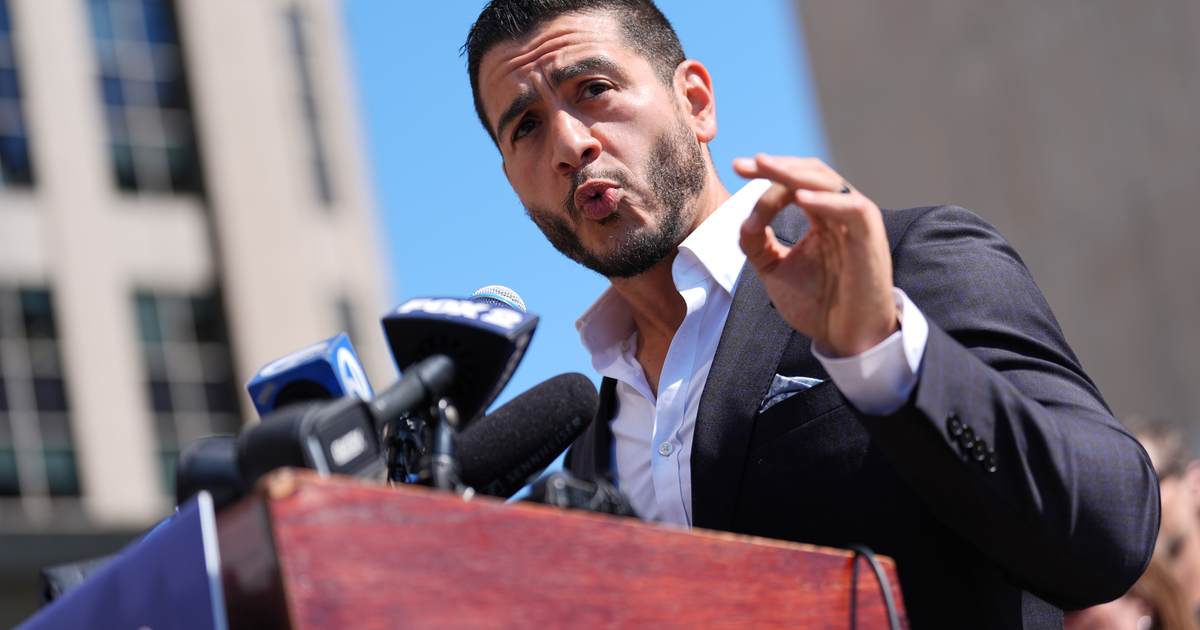
Mark Penn’s forecast of defections in Michigan is playing out as Democrats fret and a former Biden aide publicly abandons the party for the Republican Senate nominee.
Political consultants warned that a small but decisive share of Haley Stevens’ voters could tilt the general election in Michigan, and that warning now reads like a clear danger sign for Democrats. One estimate put that figure at about 5 percent, and Stevens herself fell short in the primary by a single percentage point. In a tight statewide contest, those margins matter more than ever.
Republican Mike Rogers is now in a position to pick up cross-over votes from disaffected Democrats, and that momentum is showing in public defections. Voters who can’t back Abdul El-Sayed are already saying so, and their defections cluster in key constituencies. When core Democratic blocs wobble, the party’s coalition gets very fragile fast.
Black and Jewish voters in Michigan were among the groups most visibly unhappy with El-Sayed during the primaries, and their reluctance to transfer that support to him in November matters politically and culturally. Add in rural voters who have already moved away from the Democratic ticket, and Stevens’ supporters switching to Rogers becomes a plausible path to victory. This isn’t a vague trend; it’s a realignment in microcosm that Democrats ignore at their peril.
https://x.com/earlyvotedata/status/2085929378857549980
That shift gained a lot more attention when Julian Epstein, who once served as press secretary for First Lady Jill Biden, announced he will vote Republican in Michigan rather than back El-Sayed. His move isn’t a neutral choice; it’s a public rebuke from someone embedded in Democratic politics who says the party has lost its way. Those defections from the party’s professional class and its grassroots can signal wider trouble in November.
After decades of giving my all for Democratic House and Senate candidates, this fall I will support — and contribute to — Mike Rogers, Michigan’s GOP Senate nominee, instead.
[…]
And I’ll do everything I can to make sure other Democrats follow.
With the exception of Pennsylvania Sen. John Fetterman, my party’s leaders have sought to appease the dangerous faction rising in our midst.
Weak, timid figures like Senate Minority Leader Chuck Schumer are spouting empty clichés — “We are a big-tent party” — while abdicating their moral and political responsibilities.
Democrats aren’t coddling Scandinavian-style socialists; they’re getting into bed with a nihilistic, deconstructionist brand of third-worldism.
It’s an ideology that seeks the elimination of prisons, policing, borders, the Senate, the presidency, the Supreme Court and democratic free markets.
A worldview that aligns with genocidal jihadist movements like Hamas.
A generation ago, the left would’ve recognized this cadre as Trojan horse doing the bidding of our adversaries.
But not today.
And as working-class voters flee an increasingly toxic Democratic brand, the party’s newfound embrace of anti-American extremists is likely to produce big losses nationally — and a civil war within.
[…]
El-Sayed parrots Sen. Bernie Sanders’ delusion that attaches no importance to generating wealth — and only cares about redistributing it.
He expresses sympathy for Mideastern terrorist movements that masquerade as liberation efforts, giving cover to terror attacks on Jewish synagogues in the US (“hurt people hurt people”) and going to absurd lengths to avoid offending supporters of Iran’s slain Ayatollah Ali Khamenei.
He doesn’t believe the planet’s only Jewish state has a right to exist.
Hasan Piker, his principal campaign surrogate, blames the US for 9/11 and professes his love for China’s madman dictator Mao Zedong, who slaughtered millions of his own people.
Piker praised Hamas after the Oct. 7 massacre and cites every oppressive tyrant from Fidel Castro to Nicolas Maduro as his guiding lights.
Democrats can’t run from this lunacy in November.
The “we are a big tent” evasion will sound like what it is: a craven concession to extremism in hopes of rebuilding a political party that’s fallen into decadence.
That block of criticism from a former Democratic insider cuts deeper than a routine party squabble, because it frames the choice as one about values and national safety, not just policy differences. When insiders start endorsing the other side, it amplifies voter doubts in places where turnout decides outcomes. Michigan is one of those places where a little disaffection becomes a big swing.
Strategically, Rogers benefits from steady messaging that highlights the unease among moderate and working-class voters while Democrats squabble over purity tests. Campaigns are won where alliances change, and Rogers’ team is now positioned to pick up enough disaffected Democrats to build a winning coalition. In a state where margins have been thin, discipline and message clarity pay off.
For Democrats, the lesson is plain: nominating candidates who alienate traditional voters invites defections that can cost seats statewide. Internal purges and posture politics may energize a base faction, but they risk shrinking the broader tent needed to win in Michigan. The party’s leaders will need to reckon with that reality if they hope to hold on.
Meanwhile, voters watching these developments get a clear picture of the stakes. Cross-party voting, high-profile endorsements, and candidates’ controversial stances all matter when elections are this close. The coming months will show whether Michigan’s drift will become a pattern nationwide or a wake-up call that brings Democrats back to competitive politics.