This article examines how market forces and clinic practices have shifted fertility care toward IVF, the growth of private equity in the sector, and the contrasting approach of restorative reproductive medicine.
Grace Stark was 23 when she miscarried her first child and learned she had “primary infertility.” “No s**t,” she thought, because she had been struggling for a year and a half and no clinician had asked the right questions. At that hospital appointment she was offered IVF instead of a diagnostic workup, a pattern she and others describe as routine.
After marriage, Grace tried natural family planning and sought help after six months of no success, only to be told military protocol required 12 months of trying before a fertility workup. “I wish I would’ve lied, I knew better,” she said. Moving to Guam and enduring worsening periods and migraines finally led her to a different clinician who asked the questions no one else had.
The new physician, trained in NaPro technology, tracked Grace’s cycle and pursued root-cause testing and targeted interventions, and the couple conceived after tests, hormone support, and diet changes. “I burst into tears,” Grace said when they made a plan that addressed the underlying issues. Even after a later miscarriage, she returned to restorative care and ultimately became the mother of four children with no trouble conceiving thereafter.
Grace remembers being offered IVF immediately after a loss and feeling like a sales target. “It was so awful after that experience to basically be given a sales pitch for IVF from someone who had absolutely no idea about any of my medical history, or about the values that my husband and I held, and barely even acknowledge that I’d had a miscarriage,” she said. “He just saw somebody who would be a good IVF success story for them, like a guinea pig.”
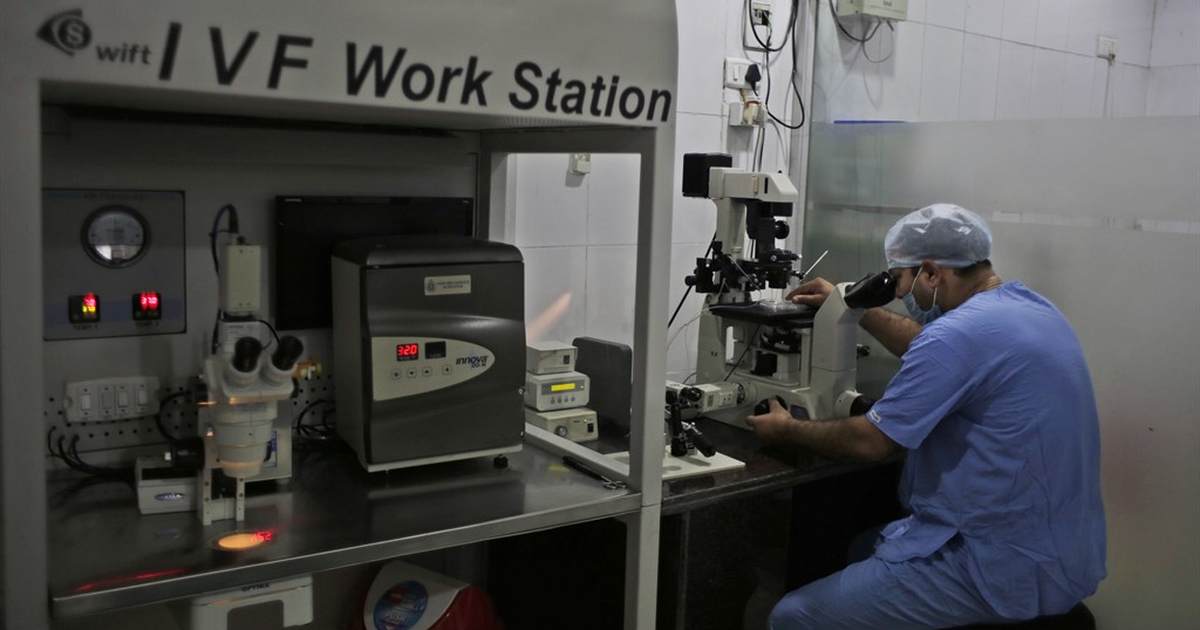
The wider numbers show a dramatic shift toward ART. Between 2020 and 2022 the number of IVF and other assisted reproductive technology cycles started in the U.S. jumped 33.4 percent, and annual IVF births surpassed 100,000 in 2024 for the first time. Over the same decade private equity ownership of fertility clinics surged from 3.7 percent in 2013 to 32.1 percent by the end of 2023, with 163 of 507 clinics reporting PE affiliation and those clinics performing an estimated 54 percent of U.S. IVF cycles in 2023.
Private equity’s footprint grew further when U.S. Fertility was effectively sold to investors in 2025, leaving Amulet Capital and L Catterton with a combined 85 percent stake in the nation’s largest fertility network. The investment playbook often features expanding ancillary services—labs, genetics, cryostorage—which aligns incentives with revenue growth rather than root-cause diagnosis or conservative care.
Practitioners of restorative reproductive medicine argue their model focuses on diagnosing and treating menstrual and hormonal disorders that show up as early as adolescence. “With NaPro technology, we have couples chart their cycles in a standardized, objective fashion, which gives us all this information called biomarkers, and that really helps guide our ability to evaluate and treat the menstrual cycle,” Dr. Teresa Hilgers said. NaPro advocates say this approach identifies ovulation abnormalities, low sperm counts, and conditions such as PMOS and endometriosis earlier and more precisely.
Hilgers described a care pathway that prioritizes thorough evaluation before moving to invasive steps. “We want to do a really good evaluation first, so we get the proper diagnoses, and then we work at correcting them to the best of our ability,” Hilgers said. “That then improves the couple’s fertility, the woman’s menstrual cycle, and gives them their best opportunity to achieve a pregnancy.” She also contrasted outcomes, saying, “With NaPro technology, we have a lower preterm labor and delivery rate than IVF. With IVF, it’s about 15 percent give or take, and with NaPro, it’s 8 percent.”
Major fertility organizations have noted limits in the evidence for RRM. ASRM reviews on RRM methods claim to have found “no high-quality evidence demonstrating that RRM is as effective as ART,” and that commonly promoted RRM interventions have limited evidence to support their effectiveness. Still, supporters point to areas where restorative care appears to outperform per-cycle IVF outcomes in certain studies and to the lower cumulative costs in many cases.
Teenagers with painful or irregular periods often get prescribed hormonal birth control as a quick fix rather than diagnostic testing, which can mask conditions until a later infertility diagnosis. Cases like Haley Yeager’s illustrate that pattern: at 16 she was offered birth control without testing and experienced mood problems until she later found diagnosis and treatment through cycle charting. Haley said her early exposure to the pill likely would have steered her toward an infertility trajectory and IVF years later if she had stayed on it.
That trajectory, critics say, is reinforced by a commercialized system that rewards procedures and ancillary sales. “I think there’s a little bit of preying going on, whether it’s intentional or unintentional. IVF is a huge money-making industry, and these couples will do almost anything to have a baby. It’s the perfect patient pool for IVF,” Hilgers said. Haley added, “The cynical part of me would say that restorative medicine doesn’t make as much money as birth control,” she said. “IVF is also a huge money-making business — making women’s bodies healthier and restoring their health is not a money maker.”
An actuarial preprint reviewing insurance claims for roughly 5 million patients treated for infertility between 2021 and 2024 flagged gaps in basic diagnostics before IVF. The study found that while about 70 to 85 percent of couples with infertility had begun IVF, between 13 percent and 78 percent had not received the basic diagnostic workup recommended by professional guidelines prior to starting IVF. Observers connect that failure to a system incentivized more by procedures and revenue than by conservative diagnosis.
Policy analysts warn that private equity’s short-term profit horizon can crowd out patient-first care. “If a private equity model is an investment in a high-turnaround, lucrative business with the expectation that it will result in a lot of money in a short amount of time, and even to increase their resale value, that in and of itself, just as a model for how we’re treating infertility, strikes me as incredibly problematic,” one analyst said. “The business model of IVF itself (not the individual endocrinologists) has become so corrupt that it’s hard to reconcile with a true patient-first model for treating infertility.”
Patients and clinicians who favor diagnostic-first approaches fear that the growing dominance of consolidated clinics and investment-backed networks will limit alternatives. “They [private equity] essentially have a monopoly,” Waters said. “The more popular restorative reproductive medicine becomes, that certainly threatens the private equity model of having access to a concentrated set of patients.” For families seeking answers, that market reality can mean fewer options and more pressure to follow the assumed IVF route.