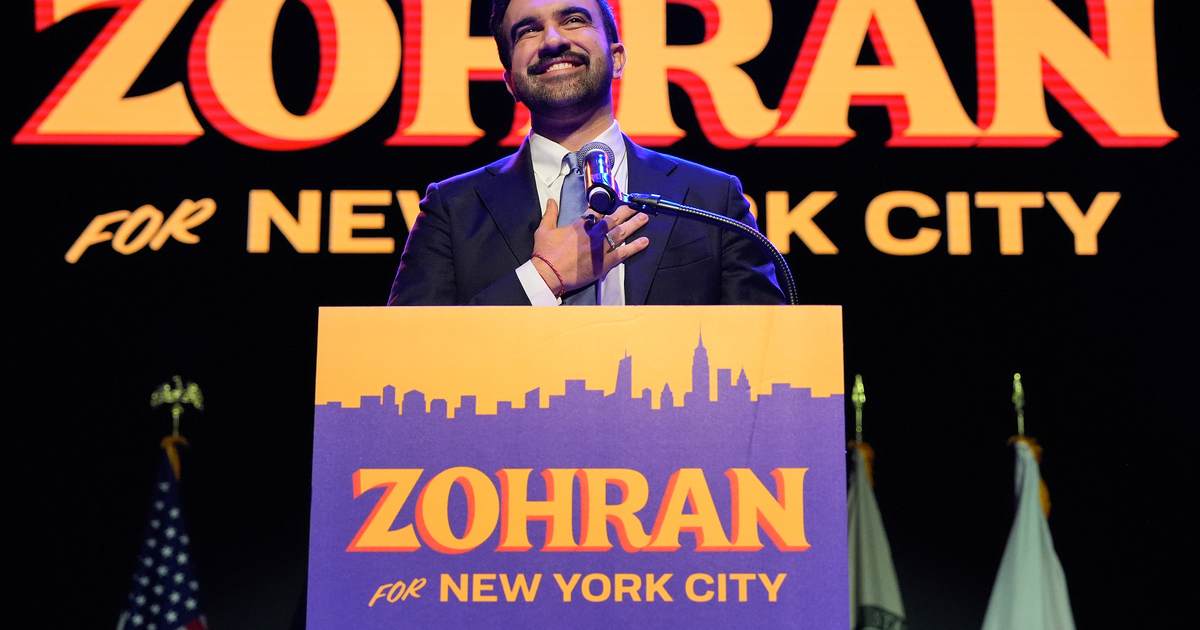
Zohran Mamdani backed the Delivery Protection Act in New York City, a move that would force last-mile delivery workers into direct employment with major platforms, reshape the delivery ecosystem, and shift costs onto consumers and small operators.
Mayor Zohran Mamdani has thrown his weight behind the Delivery Protection Act, a proposal aimed at making big delivery platforms directly employ drivers and warehouse staff instead of allowing independent Delivery Service Partners to operate. The mayor frames this as protecting workers from subcontracting abuse, but the policy would upend how deliveries are organized across the city. The change has immediate consequences for small operators who built businesses as delivery contractors.
The law targets last-mile delivery operations in New York City, with the biggest practical impact falling on Amazon delivery networks and their independent partners. Making drivers direct employees raises the cost base for platform companies and strips small-business owners of ownership and autonomy. Those Delivery Service Partners would face a stark choice: hand over their businesses or risk being forced out by new rules.
The intended protection for workers is appealing on its face, but the mechanics matter. Forcing employment under a single corporate umbrella won’t erase aggressive scheduling, unsafe pacing, or the incentives that produce injuries on the road. What it will do is shift liability, paperwork, and regulatory burden onto the platforms, which then pass costs downstream to consumers and squeeze small operators.
“Special delivery. It looks like an Amazon delivery. And it drives like an Amazon delivery. And it’s an Amazon delivery. Amazon is spending millions of dollars to convince you that this isn’t an Amazon delivery. But all you have to do is see for yourself. My uniform says Amazon. If I don’t wear this Amazon branded vest, disciplinary action will be taken against us. The workers’ routes and hours are set by Amazon. So why isn’t Amazon responsible for these vans? Because Amazon and other corporations have built a vast network of subcontractors that shield them from responsibility,” Mamdani said in a video posted on social media.
“Amazon tells these subcontractors where to drive, who to hire, and what hours to work. I do all the work that makes Amazon all the money.”
https://x.com/DanielDiMartino/status/2086979812292227344
Amazon itself warns the bill will hit household budgets, projecting an increase in consumer spending of several hundred dollars annually per household. That projection matters because any added operating expense is usually recovered through higher prices or reduced service, and New Yorkers already facing affordability pressure will feel this in their wallets. Policymakers who promise to make life easier for residents should consider how new mandates translate into everyday costs.
The bill’s political calculus is unmistakable: it hands organizing leverage to labor groups that prefer centralized employer structures. Unions gain strength when workers are employed by a single recognizable corporate entity rather than a scattering of small contractors. So what is pitched as worker protection also becomes a tool for more efficient unionization, with government effectively tilting the playing field.
That tilt matters more than ideological labels. When city rules manufacture concentrated employer power in the labor market, they aren’t protecting competition or small business—they are reshaping the market in favor of larger institutional actors and organized labor. The effect is to replace the messy, risk-taking small-business layer with a direct corporate model that can be easier to regulate but worse for entrepreneurship.
Proponents claim the act will hold big companies accountable, but accountability achieved through forced consolidation is thin consolation for the small firms that will vanish and the consumers who will pay more. Policies that sound tough on corporations can end up rewarding concentrated power by reducing the number of independent firms and increasing barriers to entry. New Yorkers who want lower prices and more local entrepreneurs should be wary of solutions that substitute government mandates for market incentives.
City leaders who champion such measures should explain why centralizing responsibility into the hands of a few giant employers is the best path forward for workers and consumers. Without careful design, this law risks producing exactly the opposite of its stated goal: fewer small businesses, higher costs, and a labor market less open to independent operators and new entrants.