The Economist took aim at a children’s show and the response says more about elite anxieties than about cartoon puppies.
The cultural left has long prioritized shaping childhood tastes and lessons, and conservatives notice when outlets turn that priority into criticism of harmless entertainment. When a respected magazine decides a hit preschool cartoon is a political instrument, it reveals how eager elites are to politicize even the smallest corners of cultural life. That effort fuels a broader argument about who gets to define values and what counts as influence.
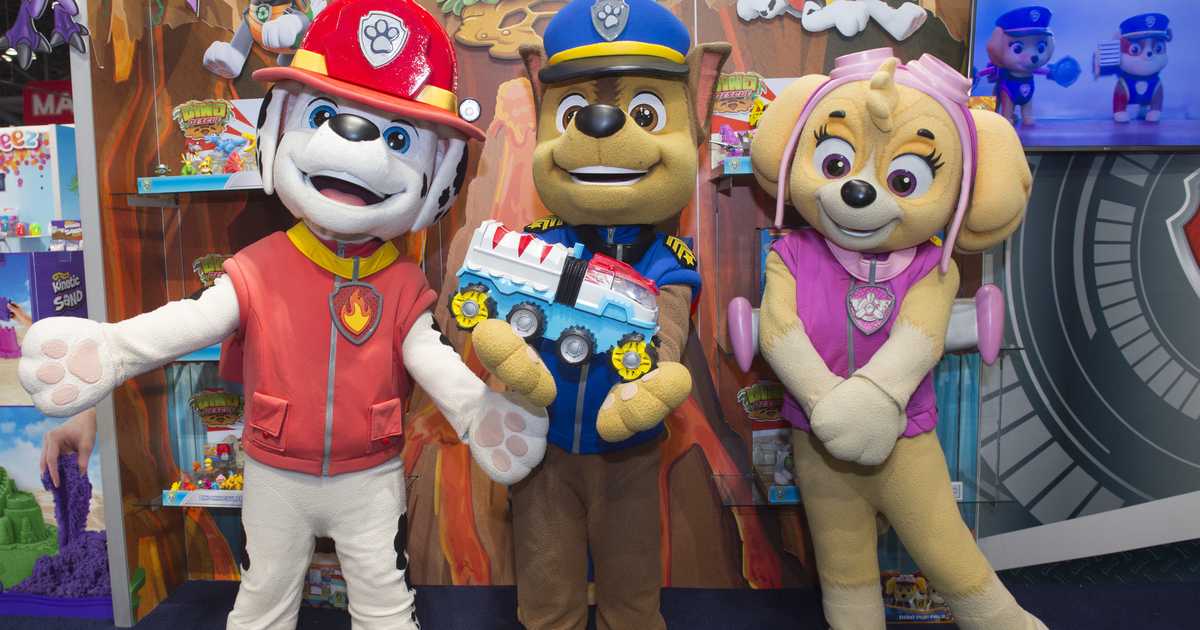
Recently a highbrow publication argued that Paw Patrol is more than a kids’ show — it’s a vehicle for a worldview. Critics called the program copaganda and quibbled over the wardrobe choices of a female pup, treating color and authority as badges of ideological intent. The reaction felt less like reasoned media analysis and more like a hunt for cultural sins to tally.
The piece carried a headline declaring a dark underbelly to the franchise, and that framing set the tone for a lot of the commentary that followed. The magazine described the show as a juggernaut with merchandise, seasons, and movies, and then read political meaning into its catchphrases and formula.
They may look like a pack of cutesy anthropomorphised dogs. “No job is too big,” vows their heartwarming motto, “no pup’s too small!” Don’t be fooled: some say the cartoon heroes of “Paw Patrol” are covert outriders for authoritarian capitalism. “Keep trying, everybody makes mistakes,” a winsome character urges in their latest outing, “Paw Patrol: the Dino Movie”. The haters have a slogan too: “Defund the Paw Patrol!”
If you haven’t had a pre-school child (or been one) since “Paw Patrol” first aired on TV in 2013, it may have passed you by. But it is a world-conquering juggernaut, spanning more than a dozen seasons, a toy empire and now three theatrical film releases. Critics—perhaps including parents aggrieved at enduring so much schlock—have avidly dissected its subliminal messages. Hearing about this is like coming late to the manosphere; both, you find, are amazingly popular and allegedly pernicious.
For the blissfully uninitiated: the show is set in idyllic but slightly creepy Adventure Bay, where children drive and puppies talk. Led by a lavishly quiffed ten-year-old boy, a group of heroic pups respond to mild emergencies, setting off down a fun slide at their HQ. It is utterly formulaic, with incessant catchphrases (“Paw Patrol is on a roll!”) and appalling earworm music. “A children’s story which is enjoyed only by children”, wrote C.S. Lewis, “is a bad children’s story.” He would not have liked “Paw Patrol”.
Keep C.S. Lewis’ name out of your mouth and spare him from being dragged into a modern culture-war shoving match. Invoking classics to justify a moral panic about a preschool cartoon is a weak rhetorical move and it lowers the quality of the conversation. The core question is simple: why spend elite energy on attacking a show parents pick for toddlers?
https://x.com/TheEconomist/status/2086472612813693031
This critique does reveal something useful, though: it unmasks the priorities of opinion-makers who view neutral cultural products through a political lens. That tendency turns entertainment into an ideological battleground and assumes a level of coordinated influence that often isn’t there.
Critics paint a picture of cultural administrators who want everyone to march in lockstep with their worldview, and they get defensive when ordinary families choose lighthearted stuff. That defensiveness reads as insecurity: if the people you supposedly influence prefer simple fun, your arguments look less persuasive.
There’s another pattern here: elite institutions frequently lecture the public while framing dissent as ignorance or malice. That posture fuels resentment rather than persuasion, because it treats citizens as pupils to be corrected instead of adults to be convinced. The result is predictable — cultural backlash, distrust of media experts, and a preference for plain, non-ideological entertainment.
At this point the critique of a kids’ program becomes evidence of a broader activist instinct at work, not a neutral cultural review. When analysis starts from the assumption that every creative choice signals political intent, it ceases to be criticism and starts to be campaigning. That mindset closes off ordinary disagreement and stokes cultural division.
Woke culture’s first wave didn’t simply vanish; it mutated into constant vigilance and interpretation, which means no corner of life is exempt from scrutiny. That ongoing scrutiny makes anything popular a suspect, and parents notice. Popularity should count for something in our cultural judgments.
That context matters when you read an interview where a high-profile editor presses a tech owner about political influence. “Why should you be able to shape European politics? You don’t even live there,” the editor asked. “I think of it as sort of the West, collectively,” came the reply. “But do you see why this makes people think that this man who has all this power, he’s the world’s richest man, he thinks he has a right to influence our politics,” she continued.
“It’s why people loathe you. Some people do loathe you.” “Yes, some people do,” he answered. “But do you understand why?” she asked. “Do you think what you’re doing is helpful for Western democracy?”
“Maybe some people do loath me,” he said. “And that’s probably true. I don’t care. But the fact that as you pointed out a quarter billion people follow me is that I think a lot more people actually like me than don’t. And I think a lot more people hate you, and the media, more than you realize.” Correct. And this article proves it.