The WNBA convened a task force meeting to wrestle with what it means to be a woman and ended up with more questions than answers, leaving a league already under pressure from activists and skeptical fans even further adrift.
Watching the WNBA stumble through this issue feels like watching a carefully built brand undo itself in real time. The league called a meeting that should have been straightforward: clarify eligibility and restore confidence. Instead, the session landed squarely in the middle of a culture fight it seems unwilling to settle.
The public fallout has been loud and messy, with players, fans, and activists all trying to pull the league in different directions. Internal leaders clearly felt the need to convene presidents and general managers to try to square the circle. Yet a meeting that should have produced clarity instead produced more headlines and more division.
A WNBA task force of team presidents and general managers met Wednesday and discussed transgender athletes but did not arrive at any eligibility rules, according to a statement sent to ESPN by a league spokesperson.
https://x.com/JenniferSey/status/2087734478223675795
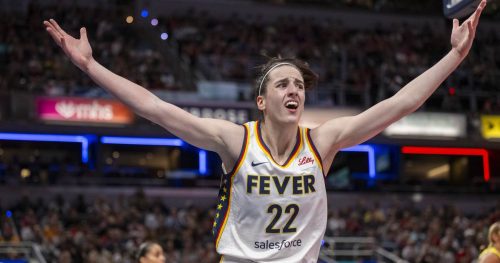
In recent weeks, demonstrators have staged rallies at Indiana Fever games for and against transgender inclusion after Fever guard Sophie Cunningham said in an ESPN article that she supports barring transgender girls and women from girls’ and women’s sports.
The league’s statement Wednesday, in full, reads:
“Today’s meeting covered a wide range of topics, including ongoing discussions on transgender athletes and the continued hate and vitriol directed at players online. We will continue to engage all league stakeholders in the coming weeks and months. We will approach these important conversations thoughtfully and in alignment with the values of our league. There are no immediate eligibility matters affecting the WNBA and we strongly denounce the bad-faith efforts to use these topics to demean or marginalize others.”
WNBA commissioner Cathy Engelbert previously sent a memo to teams saying a task force of WNBA team presidents and general managers would discuss the issue at the meeting, which was already scheduled.
The WNBA has no publicly available policy governing eligibility of transgender or intersex athletes. The 2026 collective bargaining agreement signed in March states that “only players who are women are eligible to play in the WNBA.” There is no further definition of a woman. On Friday, two former NBA players, Enes Kanter Freedom and Royce White, declared themselves eligible for the WNBA draft, saying they identify as women.
No eligibility rules came out of the meeting, and that vacuum is exactly the problem. When a league refuses to define the basics of its competition, chaos fills the gap and opportunists show up to make noise. That vacuum also leaves players exposed to online abuse while fans are left wondering what the roster rules even are.
The 2026 collective bargaining agreement does include the line “only players who are women are eligible to play in the WNBA,” yet it stops short of offering any definition. That sentence creates a big expectation and no guidance, which is an administrative failure. If leaders want respect from fans, they have to offer rules that make sense and are enforceable.
Outside voices rushed in to exploit the ambiguity, and that predictable circus reaction has only made things worse. Two former NBA players publicly said they were eligible for the WNBA draft because they identify as women, illustrating how murky policy invites spectacle. The league now looks like it is reacting to headlines instead of setting policy that protects players and the integrity of the sport.
There are human costs here as well. Players face harassment online and at games, and that toxic environment is part of why many viewers tune out. The league’s statement mentioned “continued hate and vitriol directed at players online,” and that line speaks to how the debate has turned personal. Leadership should be protecting athletes from abuse while also safeguarding fair competition.
Watching major sports leagues limp through these culture fights is frustrating for fans who just want honest athletics. The WNBA has a brand built on women’s basketball, but a brand needs clear guardrails to survive. Pandering to factions or avoiding tough decisions guarantees instability and erodes trust among players and viewers alike.
Cathy Engelbert and the league’s decision-makers now face a choice: define the rules with clarity or keep hoping the controversy will blow over. Neither option is without political heat, but one preserves the sport and one keeps fanning the flames. A league that can’t even decide what its initialism stands for invites ridicule and undermines its own product.
This episode is another reminder that avoiding a hard decision rarely solves anything. A task force that talks and produces no policy is not leadership; it is a PR exercise. If the WNBA wants to be taken seriously, it will need real answers, not more meetings that end in vague statements and more confusion for everyone involved.