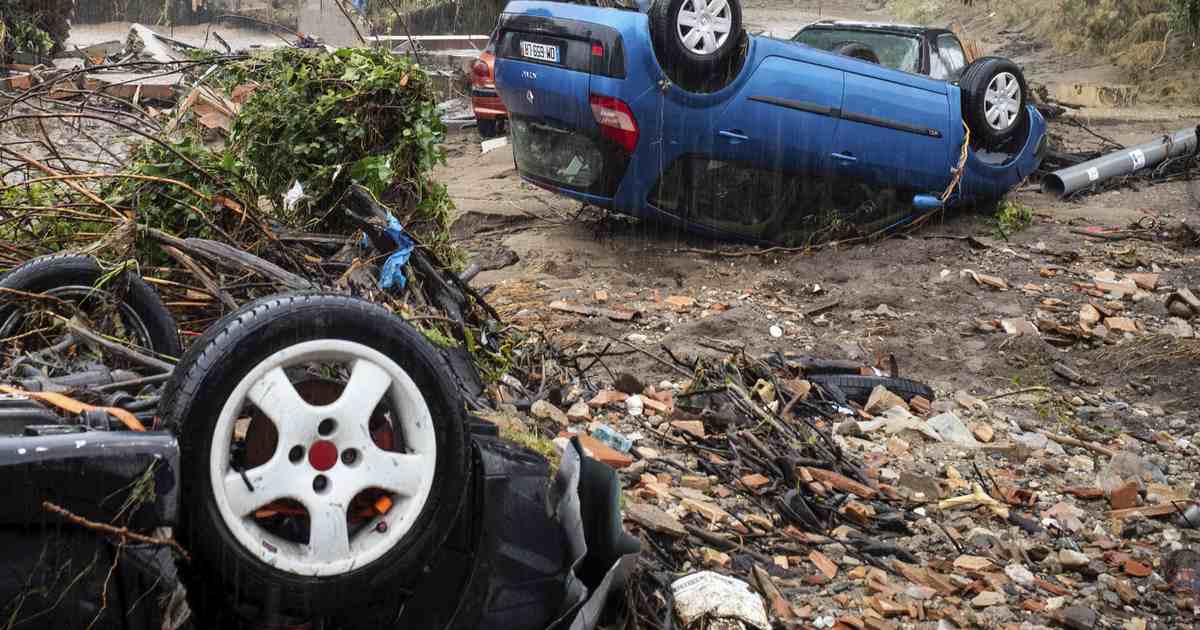
The images and footage from the recent Himalayan flash floods show sudden, violent destruction that swept entire communities away and left hundreds unaccounted for.
The video circulating online is brutal and immediate, with mud and water racing down valleys at terrifying speed. Survivors and onlookers describe scenes where people were overtaken without time to escape, buildings shredded or carried off their foundations, and bridges torn apart. Authorities are scrambling to reach remote settlements while trying to piece together how a single event translated into such widespread havoc.
Initial tallies put the confirmed death count at around 160, and officials warn that the missing could number far higher than initial reports. Local statements suggested between 300 and 1,000 people were missing in the aftermath, and first responders expect the toll to rise as teams gain access to blocked valleys. Rescue work is complicated by damaged roads, unstable ground and ongoing weather risks that can stall helicopters and ground convoys.
Investigators say a massive piece of a glacier, roughly half a mile long, broke free at high altitude and plunged into a river valley, producing a fast-moving mix of ice, rock and water. Geologists compared the impact to the equivalent of a 5.2-magnitude earthquake, explaining how the force crushed ice into a destructive slurry that chewed through everything in its path. Experts caution that local topography and potential preexisting instability likely made the event exponentially worse as debris funneled into narrow channels.
https://x.com/Breaking911/status/2092602931321200936
Tourism officials reported a large number of visitors affected by the disaster, with figures indicating hundreds of tourists initially unaccounted for. Reports listed as many as 391 tourists missing with roughly 291 of them identified as foreign nationals, including groups from India and several Western countries. Specific counts cited more than 100 people on a pilgrimage from India, about a dozen Britons and at least three Americans among those not yet located, while citizens from Australia, the Netherlands, Malaysia and South Africa were also mentioned in early reports.
Surveillance footage verified by analysts shows crowds running uphill near a border port before a wall of water and thick sludge swallows the area, demolishing parking lots and structures in seconds. Eyewitnesses describe a scene of sudden obliteration, where people who had been moving on the road were overtaken almost instantly by the surge. That kind of speed, combined with the weight of mixed ice and rock, left little chance for many caught downstream.
Communities downstream along rivers such as the Bhote Koshi and Trishuli face massive disruption, with reports of schools, hydropower projects and settlements swept away or badly damaged. Local officials have not yet produced a full accounting of displaced residents or infrastructure losses, but bridges and critical lifelines are gone in multiple places. The human cost goes beyond immediate fatalities: entire livelihoods and essential services have been erased in a single, brutal event.
Scientists and field teams are analyzing satellite imagery and ground surveys to understand both the trigger and the mechanics of the slide, with glaciologists noting that high-altitude ice failures can be catastrophic when they fall into confined valleys. Early voices in the scientific community suggest other contributing factors may have played a role, including the structure of the glacier and any recent melt patterns, though definitive conclusions will take time. For now, emergency priorities remain search and rescue, delivering supplies, and marking unsafe zones where additional collapses could threaten responders.
International attention has focused on the mix of locals and foreign travelers affected, and diplomatic channels are working to corroborate lists of missing citizens while home countries offer consular help. The scale of the event has also sparked urgent discussions about preparedness for sudden glacial outburst floods in Himalayan regions, especially where tourism and local settlements overlap with unstable terrain. Recovery will be slow, with rebuilding dependent on clearer maps of what was lost and whether key river corridors can be stabilized for safe return.
A giant torrent of mud, water and ice that began high in the Himalayas tore a devastating path through a mountain valley on the border between Nepal and Tibet on Wednesday, smashing buildings and sweeping away fleeing people caught by surprise by its speed and destructive force.
At least 160 people were killed and hundreds more were missing after the flood, which snapped bridges into pieces and pulled multistory structures off their foundations. The deluge also engulfed dozens of men, women and children who were overtaken as they tried to run. The death toll was expected to rise.
Initial assessments by geologists and glaciologists indicated that an enormous chunk of ice — possibly a half-mile wide — had snapped off a glacier at an altitude of 17,000 feet and tumbled thousands of feet into a river valley below. Scientists studying the disaster said the impact registered as the equivalent of a 5.2-magnitude earthquake and crushed the ice into a fast-moving mix of water, ice and rock that pulverized everything in its path.
Officials in Nepal reported 157 deaths. Chinese officials reported only three deaths in the Tibet region of China, but the Chinese state news agency Xinhua said there had been “significant” casualties at the Gyirong port of entry, at the border with Nepal.
Surveillance footage circulating on social media and verified by The New York Times shows crowds running up a road near the port before torrents of water and thick clouds engulf the parking lot and surrounding buildings, destroying the area.
“The bottom looks like a bomb exploded — it’s just deposits from the broken-up glacier,” said Daniel Shugar, a geologist at the University of Calgary in Canada who studied satellite imagery to analyze what happened. He said other factors may have also contributed to the landslide.
As many as 391 tourists, including 291 foreigners, had been reported missing in Nepal, the country’s tourism board said in a statement. They included more than 100 people on a pilgrimage from India, a dozen Britons and at least three Americans. Citizens from Australia, the Netherlands, Malaysia and South Africa were also among the missing.
Thousands of people live in riverside settlements downstream from the flooding, including along the Bhote Koshi and Trishuli rivers in the Rasuwa district. The authorities have not estimated the number of people missing and the extent of damage but said that bridges, schools and hydropower projects had been swept away.