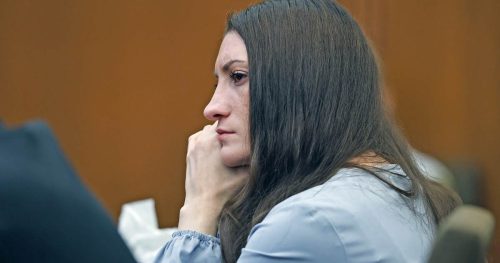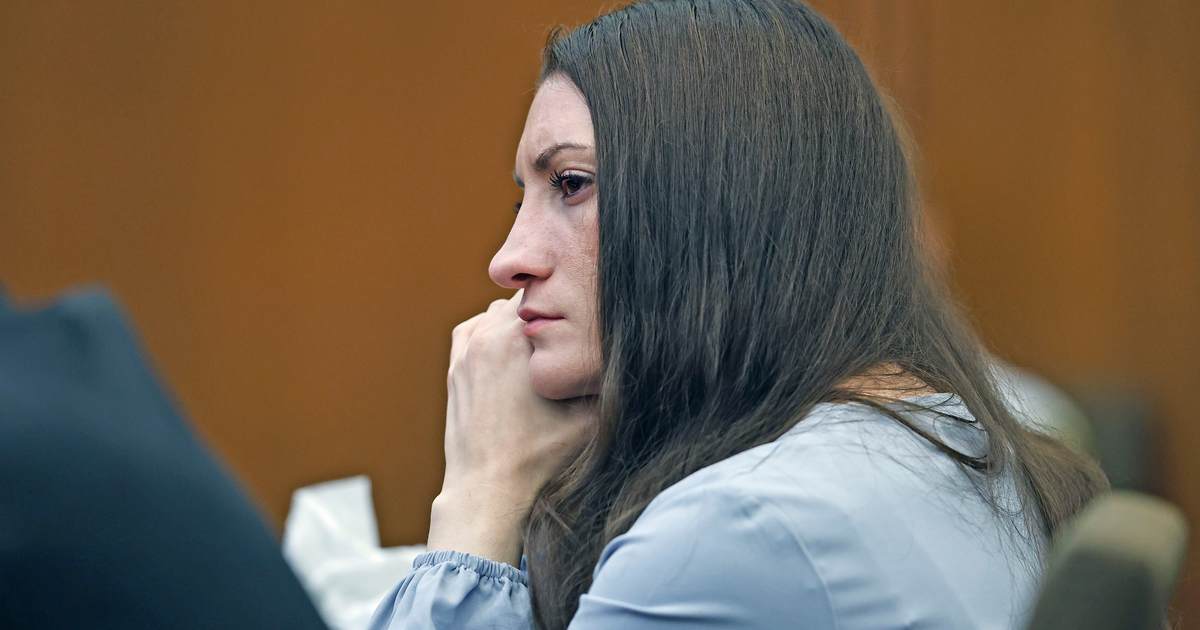
The Lindsay Clancy jury remains deadlocked after days of deliberation, with roughly 75 percent of jurors reported to be women and some observers noting pink clothing among jurors tied to Clancy sympathizers; the contentious case, centered on claims of severe postpartum psychosis, is pushing the courts toward either a dynamite-style push to reach unanimity or an eventual mistrial and retrial. The trial’s social and political fallout has become a flashpoint for debates over mental health defenses, accountability, and how the justice system handles violent acts by parents.
The panel’s inability to reach a verdict has turned into a public spectacle, partly because observers noticed a pattern: about three-quarters of the jurors are women and some were seen wearing pink, which many have treated as a signal of support for Clancy. That detail has fueled tensions and raised questions about identity politics inside the courtroom. It’s not just a legal fight; it’s become a cultural skirmish over how society judges mothers who commit terrible crimes.
Lindsay Clancy stands accused of killing her three young children in January 2023, and her legal team argues she was in the grip of postpartum psychosis, overwhelmed by medication and a mental-health collapse. Her lawyer, Kevin Reddington, has been a central figure in framing that defense, and parts of the public have responded with sympathy. That reaction has only widened the divide between people who see a tragic breakdown and those who insist on criminal responsibility.
Many on the right see this case as a troubling example of the scales tipping toward excusing violence because of identity or ideology, while others warn against criminalizing serious mental illness without careful scrutiny. The debate has been loud and sometimes raw, with critics calling out what they view as a gendered double standard and defenders invoking compassion and medical nuance. Those tensions are now playing out in a configuration of jurors who, some say, bring social loyalties into a courtroom that should focus on evidence.
Lindsay Clancy’s high-stakes triple murder case has a “very high probability” of ending with jurors unable to agree on whether she should be held criminally responsible for strangling her three young kids, experts predict.
The jurors — who are in their fourth day of deliberations — are tasked with deciding whether they buy the 36-year-old Duxbury mom’s defense that she should be found not guilty by reason of insanity on the grounds she was in the throes of severe postpartum psychosis when she took her kids’ lives and tried to take her own.
[…]
Veteran Boston criminal defense attorney Peter Elikann told The Post the consensus among him and other experts is “there was always going to be a very high probability that there would be a deadlock jury in this case
[…]
Elikann explained the judge still has at his disposal a formal instruction under Massachusetts law that he could give to the jury if they send out another note saying they still can’t reach an agreement, called a “Tuey-Rodriguez” charge.
He said the instruction is “known colloquially as the dynamite charge … And it really pushes the jury and urges them to try to work out a unanimous decision. It’s almost equivalent to a pep talk by the judge encouraging them to go back and try harder.”
After that, if the panelists tell the judge a third time they remain deadlocked, the judge could choose to declare a mistrial.
The judge can use that so-called Tuey-Rodriguez or dynamite charge to encourage jurors to keep working toward a unanimous decision, but that tactic has limits. If jurors still cannot agree, the court is likely to declare a mistrial, at which point prosecutors almost certainly will bring the case back. A retrial would be costly and painful for everyone involved, but the district attorney’s office isn’t going to let a case like this disappear.
If the panel returns no verdict, the practical outcome is usually a second trial rather than a free pass for the defendant, especially in a case with such grave facts. The Plymouth DA, or whoever takes the lead, will weigh the evidence and public interest and move forward. Prosecutors will be mindful of the intense scrutiny and the high bar for proving guilt beyond a reasonable doubt, but they’ll also face pressure to seek justice for the victims.
The jury has had to parse charges ranging from first-degree murder to second-degree murder to involuntary manslaughter, plus the possibility of a not guilty by reason of insanity verdict and a straight not-guilty verdict. Each option carries different legal standards and strategic implications for both sides. That complexity is one reason experts predicted a high chance of a deadlock from the start.
On many conservative minds, this case underscores a wider problem: a tendency to treat dangerous behavior as solely a medical matter, rather than a criminal one when warranted. It’s entirely appropriate to study mental-health triggers, but sympathy should not eclipse accountability for violent acts. There must be a balance that protects vulnerable people while ensuring community safety and appropriate punishment when someone kills children.
Calls to treat people gently under the rubric of mental health have gone too far in some corners, and critics say this case exposes the consequences. That doesn’t mean the justice system should ignore medical evidence, but it does mean judges, juries, and prosecutors must be careful to apply the law evenly, without political or cultural favoritism. The public deserves a process that is rigorous, transparent, and firm when it comes to crimes against children.
Legal procedure will keep unfolding, and whatever the next step — another charge, a retrial, or a deadlock — the case will stay in the spotlight. People will argue about intent, illness, and societal responsibility, but the courts will have to make the factual and legal calls. The way those decisions are made will shape how similar cases are handled in the future.
https://x.com/DrunkRepub/status/2094825337909645813?ref_src=twsrc%5Etfw