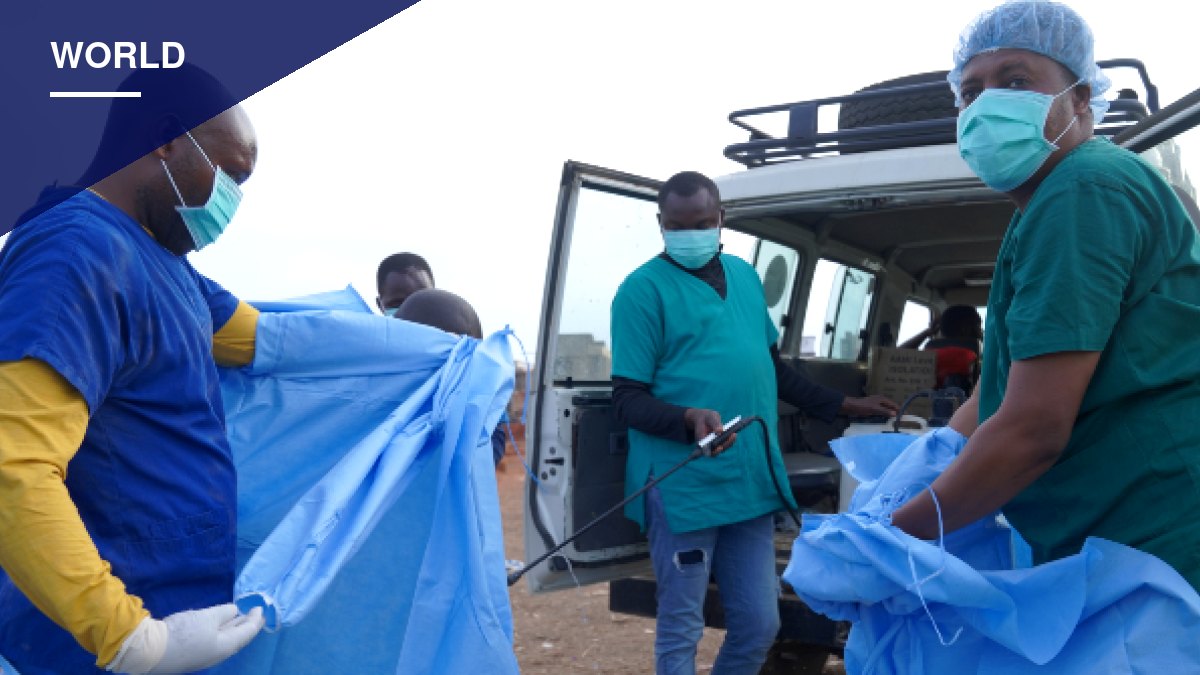
A camp that had sheltered roughly 19,000 displaced people in Ituri province, Democratic Republic of Congo, has been emptied this week after a government military operation, the United Nations said Thursday. The displacement comes in the middle of an Ebola outbreak that has already killed more than 4,000 people in the country.
Congolese authorities have confirmed over 8,000 Ebola cases, most of them in Ituri, with a fatality rate of about 50 percent. Health officials believe the outbreak is on track to become the deadliest in DRC history and possibly the worst Ebola outbreak ever recorded anywhere.
The outbreak was first identified in May, though the World Health Organization later said the disease had likely been spreading undetected for months before the public health emergency was declared, hampered by regional unrest, poverty and weak health infrastructure. The strain involved, Ebola Bundibugyo, is less common than the Zaire and Sudan strains and has fewer available treatments.
Military Raid Scatters Camp Population
According to the U.N., Congolese security forces entered the Kigonze camp searching for weapons and supplies believed to be stockpiled there for local paramilitary groups. Clashes broke out, and camp residents fled over the following week. The camp, which once held about 19,000 people, is now reportedly empty, with the whereabouts of most former residents unknown.
Reuters reported that Congolese and health officials confirmed security forces had gone to Kigonze looking for weapons when the violence began. In June, Reuters journalists had been told by local officials that more than 30 people died of Ebola in the camp in a single month, and that around 1,000 people there had been identified as having had contact with known Ebola patients.
Ebola does not spread through the air — only through contact with an infected person’s bodily fluids — but conditions in camps like Kigonze, including violence, poor hygiene, and traditional burial practices involving close contact with bodies, make transmission easier.
U.N. Warns of Surveillance Gaps
The United Nations had already raised concerns about Kigonze and similar camps earlier in the week.