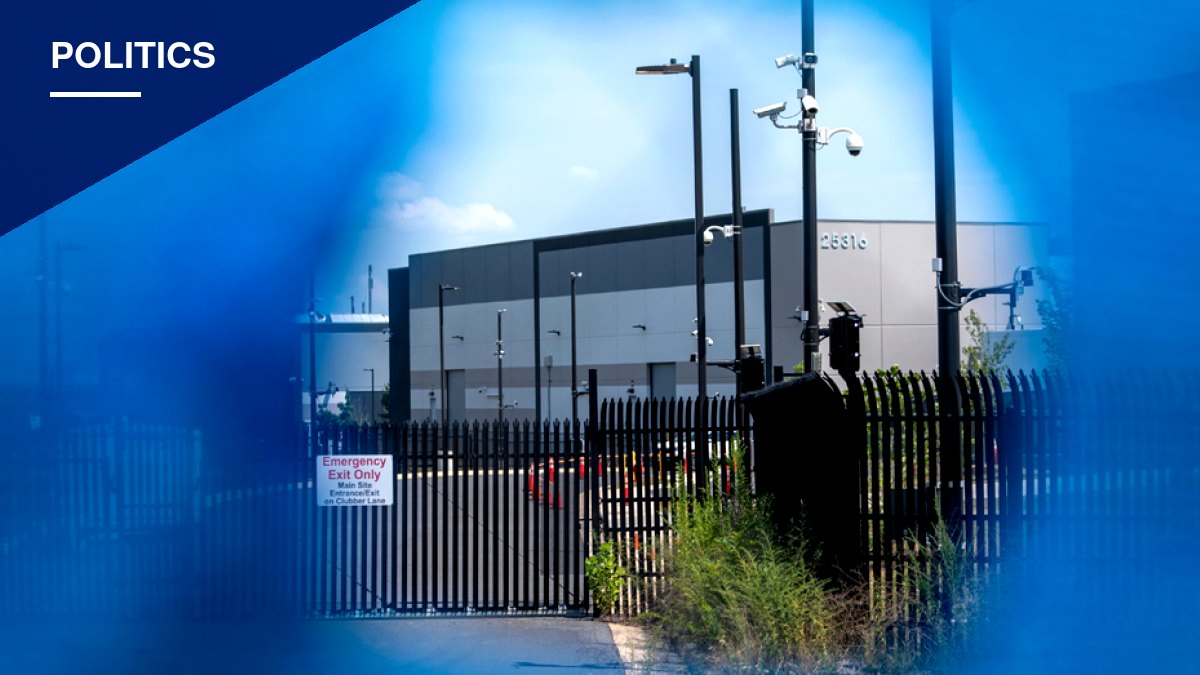
Voters in seven states will decide 34 ballot measures this November dealing with data centers, the massive facilities that power the country’s artificial intelligence boom. The votes will take place in California, Florida, Illinois, Kansas, Nevada, Ohio and Wisconsin.
The measures arrive as other states have already moved to limit or restrict data center development, a sign of how fast these projects have become a political issue at the local and state level.
A Fox News national poll conducted last month found that voters are divided over AI’s benefits weighed against the economic and environmental costs tied to the data centers needed to run it.
More than seven in 10 voters, 71%, said they opposed building AI data centers in their own area, including 46% who said they strongly opposed them. At the same time, 52% said they would support building the facilities in remote locations, while 44% were opposed even to that.
Views of AI itself were also largely negative. Overall, 60% of voters held a negative view of artificial intelligence, compared with 37% who viewed it positively — a 23-point gap that has more than doubled since a Fox News poll taken in July.
A Partisan Split
The poll found a clear partisan divide. Voters with favorable views of AI leaned Republican, while those with unfavorable views leaned Democratic. The split was even wider on data centers specifically, with Republicans doing better among supporters of the facilities and Democrats doing better among opponents.
That divide comes as AI policy becomes an increasingly visible issue in Washington and on the campaign trail. President Donald Trump has opposed broad federal regulation of the AI industry, arguing the United States cannot afford to lose the technology race with China.
Playing Out on the Campaign Trail
In Texas, Republican Gov. Greg Abbott, who has previously worked to attract major tech investment to the state, recently ordered a pause on data center permitting and grid connections while an audit is conducted. His Democratic challenger, Gina Hinojosa, has backed temporary moratoriums on new development.
In the state’s U.S. Senate race, Republican Attorney General Ken Paxton and Democratic state Rep. James Talarico have clashed over tax breaks offered to the data center industry.
Ohio has become a particular focus, both at the ballot box and on the campaign trail. The state has 20 data center-related measures spread across 17 jurisdictions this November — more than any other state, and more than half of all 34 measures being decided nationwide.
In Ohio’s Senate race, Democratic challenger Sherrod Brown has criticized Republican Sen. Jon Husted over data center development in the state. Trump, campaigning on Husted’s behalf, defended the industry’s economic potential.
“Look, there’s so much money to be made for Ohio, you can’t just turn them off,” Trump said.
With dozens of measures on ballots this fall and candidates in multiple states staking out opposing positions, the fight over where and how data centers get built looks likely to remain a live issue well beyond Election Day.