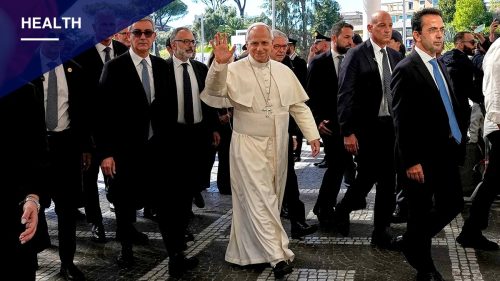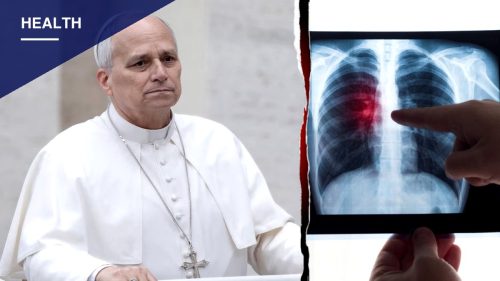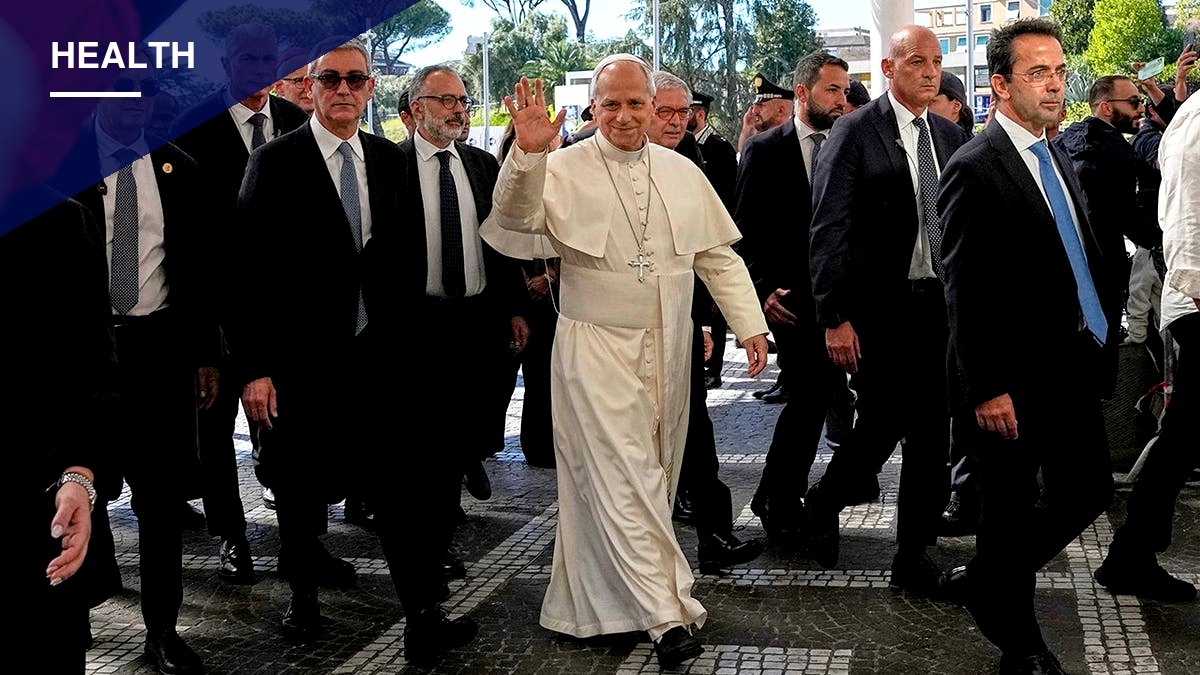
After the Vatican confirmed Tuesday that Pope Leo’s recently discovered lung nodule was adenocarcinoma, a form of lung cancer, a woman who survived her own diagnosis a year ago says the news should bring hope rather than fear, even as it highlights serious gaps in who gets screened for the disease in the United States.
Surgeons removed the lower lobe of the pope’s right lung using a minimally invasive, camera-guided procedure rather than open-chest surgery, and he returned to his room the same afternoon, the Vatican said. Doctors had initially described the finding as a “small, localized nodule.”
In an opinion piece for Fox News, a survivor who had half of her right lung removed 12 months ago wrote that her first reaction to the pope’s diagnosis “was not dread. It was hope.” She said she was running again four weeks after her own surgery.
The writer, who was 43 at diagnosis, a mother of four, a daily runner and the daughter of a lung doctor, said she had no symptoms when a full-body scan she chose to pay for out of pocket found a 3.8-centimeter nodule on her right lung. A follow-up low-dose CT scan two months later showed the mass had grown, leading to a stage 1B lung cancer diagnosis and surgery. She said she never experienced any symptoms throughout.
“Four weeks to the day after my operation, I was on a plane,” she wrote, adding that if the pope keeps a planned November trip to South America, he will be about as far removed from his surgery as she was from hers.
A Gap in Who Gets Screened
The writer argued that the real cause for concern isn’t the pope’s prognosis but how few Americans get access to the kind of scan that caught his cancer and hers. The pope’s cancer, she noted, was found during a routine checkup; hers was found because she paid for a scan no one had recommended. “Most Americans get neither,” she wrote.
Lung cancer is the leading cause of cancer death in the United States and one of the most expensive cancers to treat because it is usually caught late, according to the piece. Current guidelines recommend screening only for adults ages 50 to 80 with a heavy smoking history. Fewer than one in five people who qualify under those guidelines ever get scanned, and nearly two-thirds of people diagnosed with lung cancer would not have qualified for screening at all — a group that includes the writer herself.
Stage at diagnosis is the strongest predictor of survival and cost, the piece states: when lung cancer is found at stage I, five-year survival can exceed 90%, yet most cases are still caught after the disease has spread, when curing it becomes unlikely.
Proposed Legislation
The piece points to a draft bill known as the Saving Health by Identifying Risk for Americans (SHIRA) Act, currently circulating among the White House, the Department of Health and Human Services and Congress. The bill would:
- Make lung cancer screening free for patients under Medicare, with no copay or deductible
- Cover veterans exposed to burn pits
- Guarantee a first scan for cancer survivors and people with a family history of lung cancer
- Require Medicare to update its definition of “high risk” so never-smokers are included
- Build toward age-based screening starting at 40, similar to existing breast and colorectal cancer screening
“I was fortunate,” the writer said. “A preventive scan, a persistent friend and father, and an early diagnosis gave me a future I might not otherwise have had. The pope was fortunate too: a routine check found his cancer before he felt a thing. Luck should not decide who survives lung cancer. Screening policy should.”
She said she is praying for the pope this week and hopes every American could have the same reason for confidence that his early diagnosis provides.