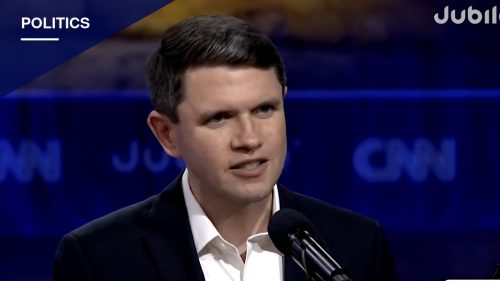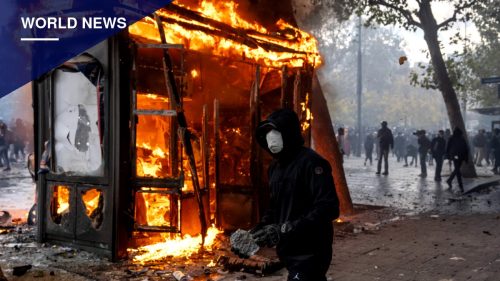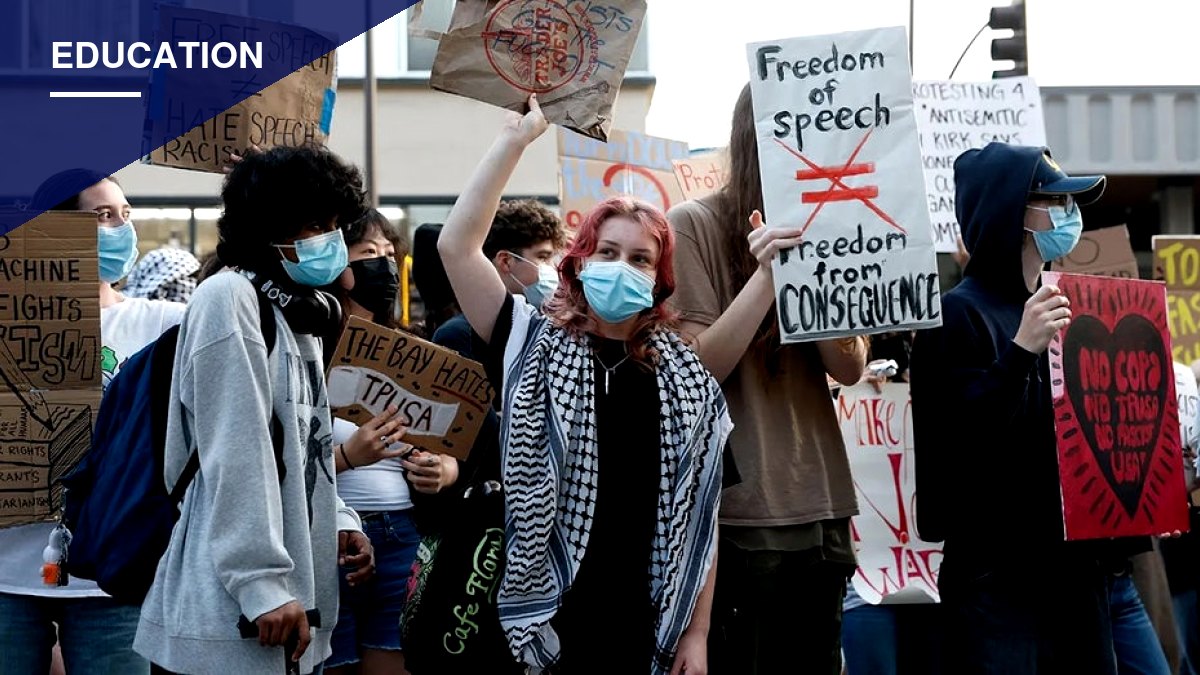
A new national survey of college undergraduates has found that nearly half believe physical violence can be justified to stop what they consider “hate speech,” a finding that Cornerstone University President Dr. Gerson Moreno-Riaño says reflects a failure of higher education to form students morally.
The 2026 National Undergraduate Student Survey, conducted by the Buckley Institute through the research firm Inquire LLC, polled 803 full-time undergraduate students under age 25 at four-year public and private colleges between Sept. 5 and Sept. 14. It found that 45% of students said violence could be justified to stop hate speech, including 54% of liberals, 36% of moderates and 30% of conservatives.
Other findings from the survey included that 46% of students support shouting down speakers they disagree with, 40% believe offensive speech should be subject to criminal prosecution, and 22% said the United States deserved the Sept. 11, 2001, terrorist attacks. On economic systems, 42% of respondents said they would rather live under socialism compared with 28% who preferred capitalism.
Moreno-Riaño, who has led the private Christian university in Grand Rapids since 2021, told Fox News Digital that he does not view the findings primarily as a free speech issue, but as a sign of what he called “violent entitlement” taking root on campuses.
“American colleges and universities for a long time now have really ceased to form students morally and are teaching resentment, teaching grievance politics, teaching violent entitlement,” Moreno-Riaño said. “So when graduates leave these universities, they leave with that. They’re not leaving with a moral formation of their hearts, their minds, their lives. They’re leaving with resentment.”
He said that mindset is one reason employers are increasingly skeptical of the value of a college degree.
“It’s not just what some will say are worthless degrees. It’s also what’s behind the degree. Individuals who have been taught to resent, not to reason, not to deliberate, not to have deep conversations with those with whom they disagree,” he said. “Rather, it’s grievance, anger, violence, entitlement, and then violent action against it. And that to me is a significant problem. Again, not a free speech issue. It’s really about how moral education in higher ed has lost its way. We’re training people to be grieved, angry, entitled, violent. And that does not bode well for our democracy and our republic.”
Moreno-Riaño argued that American higher education has been losing its moral grounding for decades and has become “godless,” leaving a vacuum that gets filled by ideology.
“When there is no moral compass in higher ed, there’s a vacuum, and what fills it? Ideologies, communism, socialism, grievance, culture. That’s what’s happened, and it’s been happening for years,” he said. “Not only that, there’s an anti-history bent in higher ed. When you think about today’s young students not really knowing the evils of communism, the evils of socialism, and believing it’s inspirational, that demonstrates just the moral bankruptcy, but also the academic bankruptcy of these institutions.”
He said employers may start looking past four-year degrees altogether, training workers directly out of high school rather than hiring graduates he described as having been shaped by “socialists and Marxists” who want to “destroy the system” rather than improve it.
“I think what’s happening is that employers are seeing this and many employers are saying, maybe we should train our own people or maybe we should go into the high schools directly and educate the future at the high school level and forget colleges altogether, because colleges are morally bankrupting our future,” Moreno-Riaño said.
He connected that concern to the rise of artificial intelligence, warning that technical skill without moral grounding is dangerous.
“I think that’s what’s happening. And if you combine that with artificial intelligence, you have sharp minds without a moral compass. That’s a very dangerous thing because a sharp mind without a moral compass is a weapon looking for a target,” he said. “For a democracy, we need individuals who can reason, who can deliberate, who can speak with those with whom they disagree and not seek violent action against them, but think deeply about what they’re saying, reconsider positions, pursue what is good and with courage. If we don’t do that, then we’re in trouble. And I think the workplace and employers are seeing that and want to shift that in a different direction.”
Moreno-Riaño said American higher education needs to change course and take moral formation seriously rather than allowing campus culture to be “grounded in entitlement and grievance.”