The Justice Department has charged five people in connection with a nationwide scheme that used stolen identities to enroll fake “ghost students” in colleges and collect federal financial aid payments, officials announced Thursday.
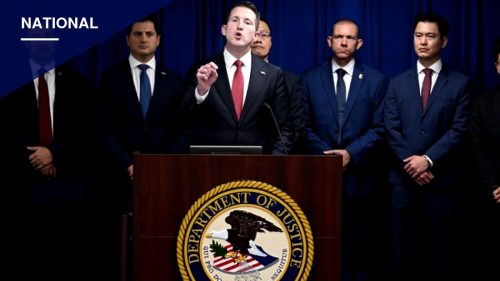
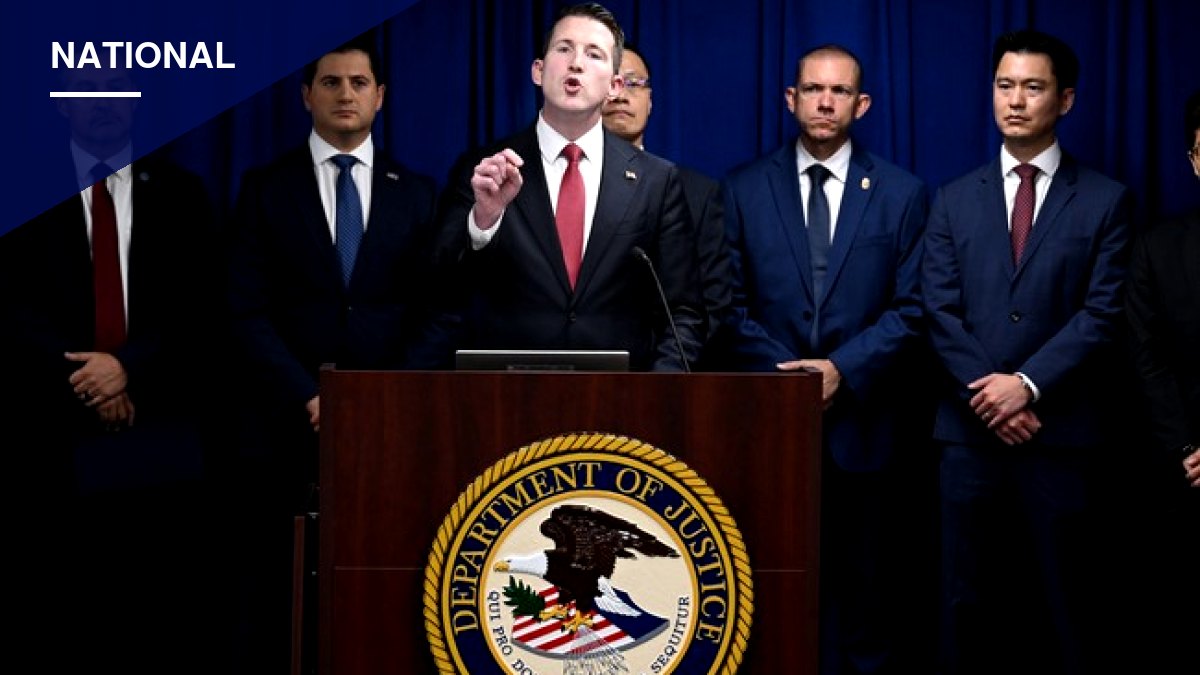
The investigation, called “Operation Ghostbusters,” was announced at a press conference by Assistant Attorney General Colin McDonald, head of the DOJ’s Fraud Enforcement Division, alongside Department of Education Undersecretary Nicholas Kent, First U.S. Attorney for the Eastern District of Virginia Theo Stamos, FBI Criminal Division Assistant Director Heith Janke, and Andrew Ferguson, vice chair of the White House Fraud Task Force.
McDonald called it “a whole-of-government response to stop this ghost student scheme.” The effort involves the FBI, the Department of Education’s Office of Inspector General, U.S. Customs and Border Protection, the State Department, the DOJ’s Criminal Division and U.S. attorneys offices around the country.
The investigation began with FBI agents in Richmond and federal prosecutors in the Eastern District of Virginia before expanding nationally. Officials say there are now more than 40 open cases spread across 26 FBI field offices and more than 20 U.S. attorneys offices.
How the scheme worked
According to the Justice Department, criminal actors stole the identities of real Americans — often people who had never attended college — and used them to create fraudulent Federal Student Aid (FAFSA) accounts. Those fake accounts were used to enroll “ghost students” at colleges across the country and apply for federal aid in the victims’ names.
If the Department of Education approved the aid, the money was sent to the school where the ghost student was supposedly enrolled. After tuition and fees were deducted, the leftover funds were deposited into bank accounts controlled by the fraudsters, who then moved the money out of the country, often to Kenya, according to officials.
McDonald said investigators believe the fraud has been ongoing since at least 2021. Officials have previously identified Minnesota and California as major hot spots for the scheme; in 2024, nearly one-third of California community college applications were reportedly flagged as fraudulent.
Five charged, cryptocurrency seized
Officials announced charges against five defendants and the seizure of more than $750,000 in cryptocurrency tied to the scheme, which investigators say was laundered through a network connected to Kenyan nationals. McDonald described it as “the first international seizure of its kind in Kenya.”
“If you steal American identities, if you steal taxpayer dollars, if you exploit programs meant to help students build a future — we will find you. Whether you are in Nebraska, New Jersey, Virginia, or Nairobi, we will pursue you.” — Assistant Attorney General Colin McDonald
In Nebraska, a federal grand jury has indicted Francis Mogambi, a Kenyan national, on charges of theft of government money and aggravated identity theft. Court documents allege Mogambi worked with associates in Kenya to steal U.S. identities, enroll victims as students, redirect federal aid payments, keep a portion for himself and send the rest to co-conspirators abroad.
In New Jersey, Mabed Patricia Utate-Alberto, Patricia Arisleydi Perez and George Arturo Alfau Mendez face charges of conspiracy to commit wire fraud. Prosecutors allege the three acted as money mules in a scheme involving hundreds of ghost students and more than $1.3 million in proceeds, with some funds allegedly routed to individuals connected to a Kenya-based safari business used as a cover for the operation.
McDonald said the Justice Department is working with Education Secretary Linda McMahon’s department to identify and shut down fraudulent accounts to cut off the flow of money to fraudsters.
Increasingly sophisticated tactics
Officials said some fraud rings have used artificial intelligence to complete college applications and coursework on behalf of fake students, and have even faked a student’s presence in online classrooms to convince schools that a real person is enrolled.
“The goal is to keep the ghost student in school for as long as possible, semester after semester after semester, stealing money from the taxpayer. These are not isolated errors. This is organized fraud at scale.” — Colin McDonald
Officials said the fraud has real consequences for the Americans whose identities are stolen. In some cases, a person who never applied to college or requested student aid later discovers a loan tied to their name for a school they never attended, putting their credit at risk for debt they never incurred.
McDonald said the investigation is ongoing. “This is not the end of Operation Ghostbusters, this is just the beginning,” he said.