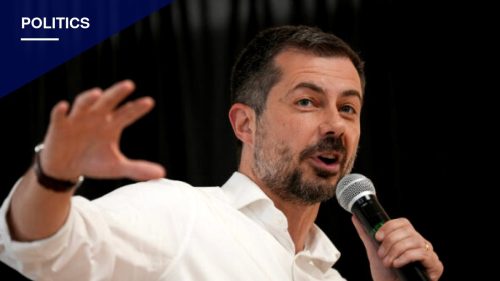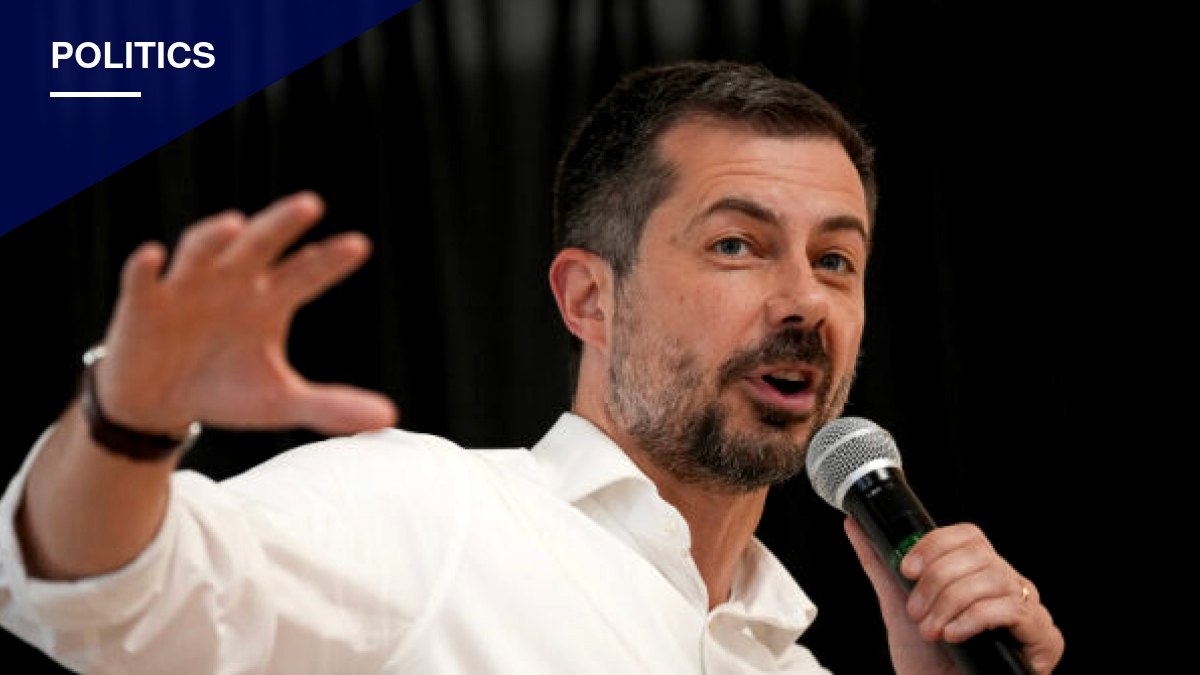
Former Transportation Secretary Pete Buttigieg said he is “not interested in who it hurts” when pressed on whether a $15 minimum wage would put small businesses at a disadvantage against large corporations, during an appearance on the “PBD Podcast” released Friday.
Host Patrick Bet-David raised the concern directly, arguing that companies like Amazon, Walmart and Target could easily absorb a higher wage floor while small, locally owned businesses could not.
“Who do you think is impacted if you raise the minimum wage to 15 bucks an hour? Amazon, Walmart, Target, they can raise it,” Bet-David said.
He used a hypothetical example to illustrate his point, describing a small shop in Hope, Arkansas, competing against national chains.
“The guy that can’t afford it is that small shop in Hope, Arkansas. Amazon’s across the street, Walmart’s across the street, and Joey’s Place that’s been there for six years is out of business,” Bet-David said. “Raising the minimum wage hurts that guy. It doesn’t hurt the Fortune 500 companies at all.”
Buttigieg responded by framing the policy in terms of who benefits rather than who might be harmed.
I’m not interested in who it hurts. I’m interested in who it helps. We have enough experience now, both as a country and states doing it on their own, that we know you can do it gradually enough that it doesn’t kill the small business owners.
The exchange echoes past comments from other Democrats on the issue. In February 2021, Rep. Ro Khanna (D-CA) told CNN he was unconcerned about small businesses that couldn’t afford to pay higher wages. “We don’t want low-wage businesses,” Khanna said. “I don’t want small businesses that are underpaying employees.”
Legislative Push for Higher Wages
Democrats have continued pursuing a higher federal minimum wage. Rep. Bobby Scott (D-VA) and Sen. Bernie Sanders (I-VT) introduced legislation in April 2025 to raise the federal minimum wage to $17 by 2030. “Raising the minimum wage is good for workers, good for business, and good for the economy,” Scott said.
At the state level, Republican Glenn Youngkin vetoed a bill in March 2025 that would have raised Virginia’s minimum wage to $15 by January 2027, arguing that a uniform statewide mandate ignored differences in local economies and cost of living and would be “detrimental” to small businesses.
During Senate debate on the $17 federal proposal in April 2025, Sen. Bill Cassidy (R-LA) warned the increase would cost jobs, particularly in rural areas and among low-margin small businesses. “Increasing the wage by more than 230 percent even over 5 years will destroy jobs, impacting rural areas and low-margin small businesses that cannot afford such an increase,” Cassidy said. “A law mandating a higher minimum wage doesn’t mean much to a worker who loses his or her job because of this.”