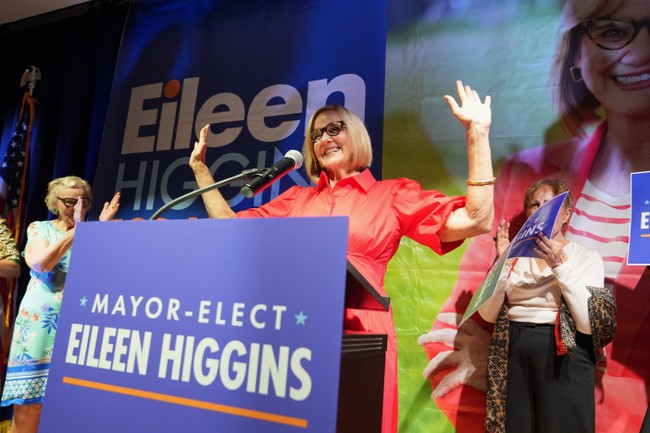
Miami voters chose Democrat Eileen Higgins over Republican Emilio Gonzalez, flipping City Hall after nearly three decades of GOP leadership, with the new mayor winning by a clear margin and sparking a partisan debate about what the result means for local and national politics.
Eileen Higgins, a former county commissioner, defeated Emilio Gonzalez in Tuesday’s mayoral contest, ending close to 30 years of Republican control in Miami. The result was decisive: Higgins won by almost 20 points, a gap that surprised many local conservatives who expected a tighter race. That margin has become the headline for both parties as they parse lessons and assign blame.
Democrats are framing the victory as further evidence that their message is resonating in urban centers, pointing to recent wins in other major races this year. Republicans, meanwhile, are warning that a loss like this highlights weaknesses in messaging on affordability and public services at the city level. The broader context includes a mix of wins and narrow losses for both parties in recent special elections, which feeds into different narratives about momentum.
Gonzalez brought local management experience to the race as a former city manager and served on President Trump’s Homeland Security Department transition team. He received President Trump’s endorsement in the final stretch, a boost intended to energize the conservative base in Miami. Despite the high-profile support, the turnout and candidate mix tilted in Higgins’ favor.
A Democrat hasn’t been elected Mayor of Miami in nearly 30 years. VP Harris beat Trump in Miami by just one point last year. Tonight, Eileen Higgins became the first Democrat to win in three decades and won by 19 points. This is a very, very bad sign for the GOP. pic.twitter.com/XSRsezWd9e
— Charlotte Clymer 🇺🇦 (@cmclymer) December 10, 2025
Local Republicans will want to look closely at how Higgins built a coalition that combined suburban and urban voters, voters focused on everyday costs, and those who prioritized efficient city services. Her background as a mechanical engineer and as a Peace Corps director in Belize became part of a practical, problem-solving message. Campaigns that emphasize tangible, local fixes — housing, transit, and permits — tend to play well in city races where voters see direct impact.
Higgins also earned the distinction of becoming the first woman elected mayor of Miami, which energized parts of the electorate and added a historic element to her win. She ran on affordability and making city government work better, positioning herself as an establishment Democrat focused on governance rather than sweeping ideological change. That contrast matters to voters who compare municipal priorities to national culture wars.
Miami’s Mayor Race is Tuesday. It is a big and important race!!! Vote for Republican Gonzalez. He is FANTASTIC! You can also vote today. MAKE AMERICA GREAT AGAIN!
“Tonight’s result is yet another warning sign to Republicans that voters are fed up with their out-of-touch agenda that is raising costs for working families across the country,” the DNC’s chair, Ken Martin, said in a statement Tuesday night. That exact line has already been circulated by Democrats to frame the outcome as a referendum on GOP priorities, even though municipal issues were front and center. Both sides are now using Miami as a messaging case study ahead of the next cycles.
Conservative strategists will argue the loss reinforces the need for a clearer, local-focused pitch that addresses cost-of-living pressures and visible city services. There is also a debate about the role of national endorsements in local contests; high-profile backing can energize some voters but may not sway citywide pluralities that prioritize bread-and-butter issues. Miami’s electorate is diverse and pragmatic, and Republican operatives will want to sharpen outreach that connects national themes to daily local concerns.
Editor’s Note: President Trump is leading America into the “Golden Age” as Democrats try desperately to stop it.