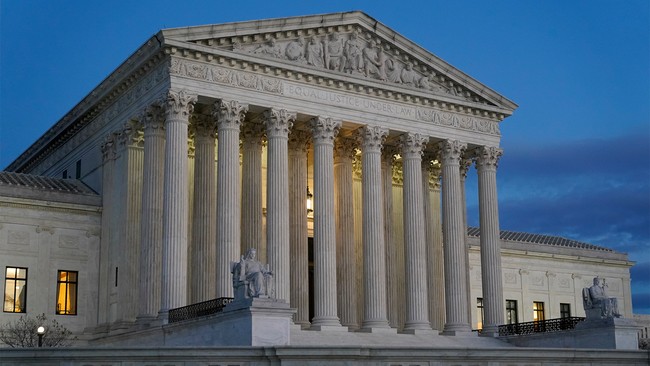
The Supreme Court refused to lift an injunction that blocked President Trump from federalizing Illinois National Guard troops, leaving a dispute over whether the President can use the Guard to protect federal personnel and property in places like Chicago.
The high court on Sunday denied the Trump administration’s emergency request to remove a lower-court injunction that had stopped deployment of National Guard troops in Illinois. The decision lands in the middle of a legal fight between the White House and Illinois about whether federalizing Guard forces is lawful to address violence and protests near federal facilities.
The dispute traces to an episode at an Immigration and Customs Enforcement facility in Broadview where officials reported “frequent and sometimes violent protests, damaging federal property and threatening the safety of federal officers.” In response, President Donald Trump “called 300 members of the Illinois National Guard into active federal service to protect federal personnel and property in Illinois, particularly in and around Chicago.”
The core legal issue is how to interpret what “regular forces” means in the statute the administration relied on. The court said the term likely points to the regular forces of the United States military, not civilian federal agents like ICE officers, and that the statute’s language “requires an assessment of the military’s ability to execute the laws, it likely applies only where the military could legally execute the laws.”
The opinion emphasized that the government did not identify any statute or constitutional provision that would let the military legally “execute the laws” in Illinois for this situation. Because of that gap, the court concluded the administration “has not carried its burden to show that §12406(3) permits the President to federalize the Guard in the exercise of inherent authority to protect federal personnel and property in Illinois,” and therefore the emergency relief was denied.
The court contrasted the White House’s stated justification with what the law permits. The administration maintained it was acting under inherent constitutional power to “protect federal personnel and property,” and the government long has argued that those “protective functions” differ from “execut[ing] the laws” under Posse Comitatus restrictions.
The majority flagged a tension: if protective tasks are not the same as executing the laws, then saying the Guard was federalized to protect personnel does not automatically show the statute’s requirement that the military be able to “execute the laws.” “If that is correct, it is hard to see how performing those functions could constitute ‘execut[ing]’ the laws’ under” federal statute, the opinion explained.
Three justices dissented: Samuel Alito, Clarence Thomas, and Neil Gorsuch. They argued the court’s reading “adds new language to the text Congress enacted” and, in their view, wrongly restricts the President’s ability to use the Guard when federal officers face threats. The dissent warned the president’s authority “should not be thwarted” when “the protection of federal officers from potentially lethal attacks” is at stake.
🚨 In an apparent 6-3 vote, the Supreme Court has BLOCKED President Trump's deployment of the National Guard to Illinois, denying the government's application for a stay.
Justice Alito dissents joined by Thomas. Gorsuch dissents. Kavanaugh concurs. pic.twitter.com/JLfpjbaNxb
— SCOTUS Wire (@scotus_wire) December 23, 2025
Gorsuch, while joining the dissent, signaled caution about sweeping rulings and said he “would decide this application narrowly.” He urged care on the broader questions the case raises about the ties between the Guard, the regular military, and domestic law enforcement, calling them “weighty questions” that deserve careful handling in future cases.
This litigation unfolded against the backdrop of the administration’s tougher approach to immigration enforcement and growing friction with protesters who target ICE operations. The White House argues federalizing the Guard was necessary to shield agents and allow them to carry out arrests and removals of dangerous illegal criminals, while critics say the step overreaches constitutional limits and risks militarizing domestic law enforcement.
The ruling leaves the injunction in place and narrows the immediate path for federalizing state Guard units under the theory the administration advanced. The case will likely reverberate as officials and courts sort out where the line sits between protecting federal property and exercising the military’s domestic role, especially in tense urban settings where protest and enforcement collide.