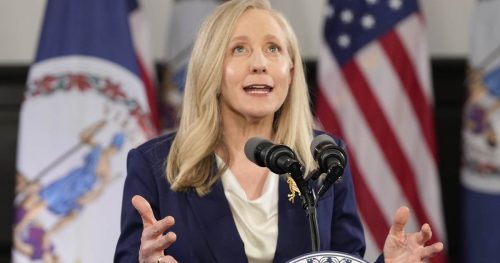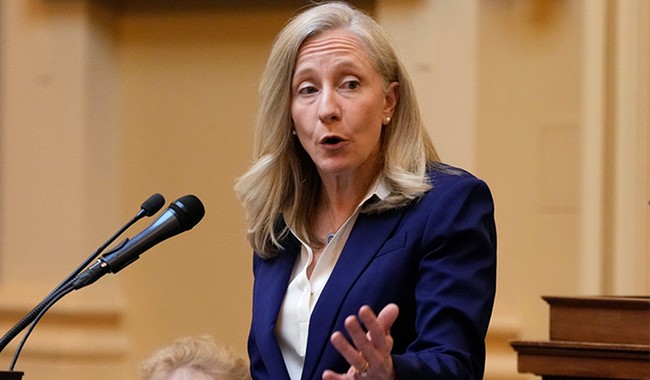
Virginia Gov. Abigail Spanberger has ordered state agencies to end 287(g) cooperation with ICE, a move critics say hinders immigration enforcement and public safety while she pursues an agenda of higher taxes and progressive priorities.
Elections have consequences, and Virginians are already seeing a clear shift in priorities in Richmond. Governor Abigail Spanberger moved quickly to terminate agreements that let state officers assist federal immigration authorities, even as she pushes higher taxes under the banner of “affordability.” Her order affects the Virginia State Police, the Department of Corrections, and other agencies that previously worked with ICE under 287(g) arrangements.
Democratic Virginia Gov. Abigail Spanberger doubled down on her anti-immigration enforcement agenda with a new order Wednesday that scrapped cooperation agreements between state officials and Immigration and Customs Enforcement (ICE).
🚨 BREAKING: Abigail Spanberger just ended the Virginia State Police's 287(g) agreement with ICE– which allowed state law enforcement and the Department of Corrections to assist in arresting criminal illegal aliens. pic.twitter.com/eabmku6QMU
— Greg Price (@greg_price11) February 4, 2026
Spanberger, who officially entered office in January, issued a directive on Wednesday that compelled the Virginia State Police, the Virginia Department of Corrections, and other state agencies to end all 287(g) agreements with ICE. The order came down just days after Spanberger immediately rescinded an executive order by her GOP predecessor that mandated more cooperation with federal immigration authorities.
“Virginia law enforcement remains focused on enforcing the law, and Virginia law enforcement will continue to exercise available authority – including in cooperation with local, state, federal, and tribal partners – under a valid judicial warrant,” Spanberger stated in the order.
“I have full confidence that Virginia law enforcement is keeping Virginia safer when exercising their authority under Virginia law,” the governor continued.
Pulling state resources away from coordinated federal efforts won’t be just symbolic — it has practical consequences for investigations and deportations. Law enforcement partnerships like 287(g) let trained state officers work with ICE to identify and detain dangerous illegal aliens, and ending them limits those options. That change will affect cases that rely on information sharing and joint operations, especially in rural and suburban jurisdictions that depended on state-federal cooperation.
Already, critics are pointing to a chilling example of the fallout from sanctuary-friendly policies. Homeland Security Assistant Secretary Tricia McLaughlin said, “There is an illegal alien that we arrested from El Salvador in September of last year. He was arrested for strangling, with an electric cord, his eight-month-old sister. She was killed. Because of these new sanctuary city policies out of Virginia, once this individual serves his time, he will go back onto Virginia streets because we’re not allowed to be notified,” and officials note that broken cooperation can let violent offenders slip through the cracks.
Spanberger ran to the center and courted independent voters, but her early moves show a swift tilt toward progressive priorities on immigration enforcement. The decision to rescind previous directives and cancel 287(g) arrangements came in the first weeks of her administration and signals where she intends to govern. For many conservatives and independents who prioritize public safety, this feels like a bait-and-switch from a candidate who once presented herself as pragmatic.
Democrats in Virginia and elsewhere argue that limiting state cooperation with federal immigration authorities protects immigrant communities and avoids racial profiling. Opponents see something very different: a policy baked from principled opposition to President Trump and a political interest in retaining a reliable voting bloc. The result is a strategy that critics say prioritizes politics over prosecuting and deporting violent illegal aliens.
Border and immigration experts warn that breakdowns in state-federal cooperation shift workload and manpower around the country. Border Czar Tom Homan has noted agents have been reassigned in response to local policy shifts, and he said ICE and Border Patrol were removing 700 agents from Minneapolis because local and state authorities have started cooperating with federal immigration enforcement efforts. Those agents could be redeployed, but losing coordinated authority and local support makes targeted removals harder to execute.
Local leaders have tough choices: abide by the governor’s directive and risk fewer federal removals, or push back and risk political fallout. Either way, communities will see the effects in real investigations, detention decisions, and the ability of officers to act on credible intelligence. That tradeoff is at the heart of the debate; it is not theoretical to victims’ families or to neighborhoods that rely on consistent enforcement.
Editor’s Note: Democrat politicians and their radical supporters will do everything they can to interfere with and threaten ICE agents enforcing our immigration laws.