Supreme Court argument over ending temporary protections for Haitian and Syrian nationals produced sharp exchanges, focused on whether race played a role and how courts should evaluate such claims.
The Supreme Court heard consolidated challenges to the Trump administration’s moves to end temporary protected status for nationals from Haiti and Syria, and the hearing quickly turned into a test of how courts treat allegations about race in immigration policy. The argument highlighted the Arlington Heights framework and whether it applies to decisions about designating or ending humanitarian protections. Conservatives watching the case argued the court should be skeptical of strained racial classifications and stick to statutory text and precedent. The justices pressed the lawyers to make clear how courts should evaluate motive and intent in these administrative choices.
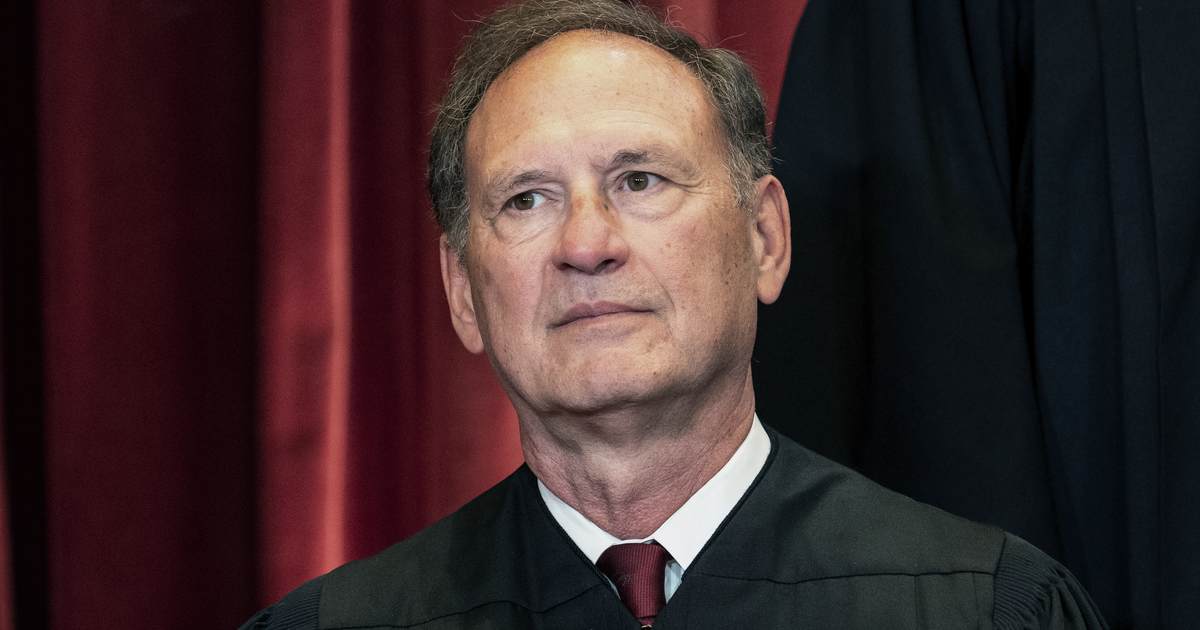
Justice Samuel Alito pressed the lawyer representing the Haitian nationals aggressively, questioning whether the complaint could really rest on a coherent racial classification. The lawyer, Attorney Geoffrey Pipoly, cited the Arlington Heights framework for assessing whether racial considerations were improperly in play. Alito drilled down on the idea that grouping dozens of countries by a single racial label is not a sound legal or factual approach. The tone of the questioning suggested the court was unconvinced that the racial theory matched the substance of the government action.
“The Arlington Heights framework exists precisely for the purpose of sussing out whether impermissible racial consideration were part of, were impermissibly in the mix,” said Attorney Geoffrey Pipoly. Alito pushed back by pointing out that the administration ended protections for a long list of countries and questioned whether the classification really boiled down to race. He asked whether the district court had actually listed each country and noted that none were Nordic countries, seeking to puncture a simplistic racial reading. The exchange made clear the justices wanted a precise legal map, not a sweeping label.
🚨 WOW! Supreme Court Justice Alito is LIGHTING UP the attorney for Haitian nationals for saying cancelling legal status for migrants is RACIST
ALITO: "You're saying [migrants] are ALL non-white?!"
"How about Turks? How about Greeks? How about Southern Italians? How about… pic.twitter.com/uAbygIiXyb
— Nick Sortor (@nicksortor) April 29, 2026
Alito kept up the pressure with hypothetical lineups of people from around the Mediterranean, forcing the lawyer to confront the fuzziness of racial categories in this context. “But, and I don’t like dividing up the people of the world arbitrarily into three racial groups, but you say they’re all non-white, and that’s the distinguishing characteristic?” Alito asked. Pipoly replied that the district court had adopted that view, but he qualified and emphasized his earlier point. Alito’s questions aimed to show that race is not a clean sorting mechanism for this set of designations.
When Pipoly insisted that public perception could inform racial labels, Alito asked directly, “Poll the American people? Do they think Syrians are white?” The lawyer answered, “I wouldn’t think that most would, Justice Alito,” and the justices pressed on about Turks and Greeks. Those exchanges exposed the slipperiness of relying on popular views of race to decide constitutional claims. The courtroom laughter at a few of the examples underscored how unstable those categories are for legal purposes.
Justice Alito walked the argument through historical shifts in who got labeled as white, noting the evolution of legal and social categories. Pipoly conceded historical nuance, saying, “Well, certainly 120 years ago when we had our last wave of European immigration, southern Italians were not considered white,” and he argued our concepts evolve over time. Alito pointed out that such evolution shows the danger of basing modern constitutional rulings on inconsistent or popular notions of race. The justices seemed intent on avoiding a ruling that would rest on imprecise groupings.
Pipoly then argued that under the court’s rationality jurisprudence, cases like Moreno allow a challenger to win without strict scrutiny if a policy reflects bare dislike of an unpopular group. He said, “I would say that even under this court’s rationality jurisprudence, if you look at cases like Moreno, it is not necessary for us to get strict scrutiny to win here because, irrespective of how you do the classification at issue here … under those precedents, bare dislike of an unpopular group is a sufficient basis to find that rational is not even satisfied.” The justices questioned whether the record before them actually supported a finding of bare dislike or discriminatory motive. Conservatives on the bench appeared ready to demand a stronger factual showing rather than accepting a sweeping inference from a list of countries.
The back-and-forth in the courtroom signaled that the majority of justices are prepared to hold challengers to a high standard when alleging racial animus in immigration decisions. They repeatedly sought concrete evidence, not broad assertions, and drilled into whether plaintiffs had proven discriminatory intent. That approach reflects a conservative preference for rule-bound review and deference to executive judgments in sensitive national-security and immigration matters. It also warns against expanding constitutional protections based on vague social perceptions of race.
Because they’re the racist ones. That blunt line circulated after the hearing and fed public reaction, but the justices’ questions focused on legal standards rather than sound bites. The courtroom record shows the court is wrestling with doctrine, not slogans, and wants clarity on how Arlington Heights and rationality review apply here. Those seeking sweeping remedies face a judiciary determined to tie conclusions to record facts and established precedent.
That changed, didn’t it? Observers noted how the exchange undercut arguments presented as clear-cut racial complaints, and the justices’ skepticism could shape a narrower outcome. The questions suggested the court may require more than emotive claims when rights and immigration policy collide. In short, the hearing favored careful legal analysis over broad rhetorical claims.
It is kind of crazy. The colloquy exposed how messy racial labels are when shoehorned into complex immigration choices, and the court seemed unwilling to let imprecise categories carry the day. The justices repeatedly demanded hard evidence showing discriminatory purpose rather than relying on inferences about group identity. That stance reflects a conservative commitment to legal precision and the separation of powers.
Yes, he did. Justice Alito’s line of questioning showed impatience with imprecise theories and a willingness to force the debate onto doctrinal grounds. The oral argument illustrated the court’s role as gatekeeper, ensuring that constitutional claims rest on concrete evidence and clear legal standards. The result could narrow the path for claims that seek to recast routine administrative decisions as racially motivated absent strong proof.