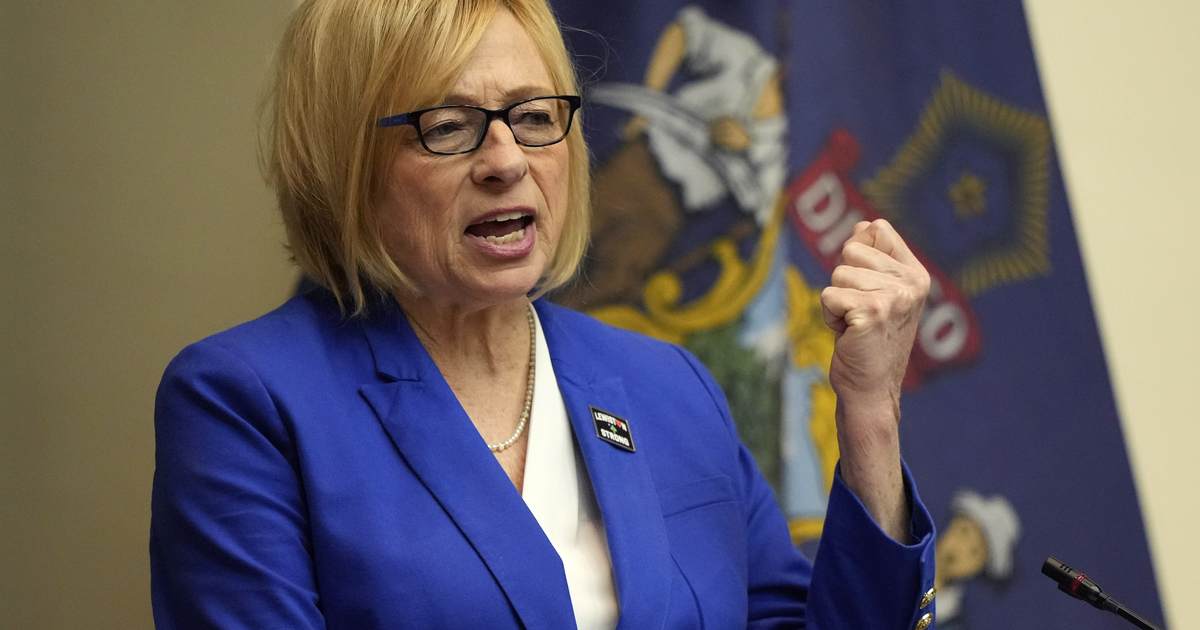
Gov. Janet Mills has suspended her Senate campaign, citing a lack of money, which clears the path for Graham Platner to be the Democratic nominee amid controversy and scrutiny.
Maine’s two-term governor said she lacks the financial resources needed to compete in what had become a high-profile Senate contest. Her exit hands a big opportunity to a political newcomer while leaving Democrats to manage fallout from his past behavior.
Mills’ decision shifts the dynamic in a race Republicans have watched closely, because Sen. Susan Collins remains the incumbent and a key target for Democrats. The state now faces a matchup that was not supposed to look like this for Democrats who expected a heavyweight recruit.
From The Associated Press:
Maine Gov. Janet Mills on Thursday dropped her bid for the U.S. Senate, pointing to a lack of campaign funds to keep up in one of the most competitive races in the country that quickly became a reflection of an internal party debate over which candidates can win in high-profile contests.
The move now thrusts political newcomer Graham Platner as the expected Democratic front-runner against longtime Republican Sen. Susan Collins, whose seat Democrats are targeting in their effort to win control of the closely divided Senate.
“While I have the drive and passion, commitment and experience, and above all else – the fight – to continue on, I very simply do not have the one thing that political campaigns unfortunately require today: the financial resources,” Mills said in a statement. “That is why today I have made the incredibly difficult decision to suspend my campaign for the United States Senate.”
Mills, a two-term governor and longtime Maine politician, was seen as one of Democrats’ top 2026 recruits when she entered the Senate race last year. She had the backing of Senate Minority Leader Chuck Schumer and prominent left-leaning advocacy groups hoping to unseat Collins in the chamber, which has 53 Republicans, 45 Democrats and two independents who caucus with the Democrats.
Mills also took a few shots at Republicans for hampering her agenda.
Together, we’ve expanded health care, fully funded education, guaranteed free community college and free school meals, protected reproductive freedom, and made our state more resilient to the pollution and violent storms caused by climate change. Yet, these efforts have been undermined by a Republican administration that is blind to science, deaf to the cries of those in need of medical care, and ignorant of the needs of regular families.
In her own announcement, Mills stopped short of endorsing Platner, leaving a gap between the party’s establishment preferences and whatever momentum the newcomer has. High-profile Democrats are nonetheless rallying to him now, which shows how quickly party energy can pivot when a candidate with name recognition steps aside.
My statement suspending my candidacy for the U.S. Senate: pic.twitter.com/IDs58EfatC
— Janet Mills (@JanetMillsforME) April 30, 2026
Platner has drawn a steady stream of negative headlines tied to his past online activity and language. Old Reddit posts show him calling himself “communist” and “socialist” while insulting rural white Americans, and he has been criticized for using anti-gay slurs, all of which make him an easy target for opponents.
The controversy that grabbed the most attention was a chest tattoo that resembled Nazi imagery. Platner has said he got the tattoo while serving with the Marines in Croatia and that he later covered it up, but the image has stuck in the public conversation and will shape how voters and donors see him.
For Republicans, Mills’ withdrawal is a political win and a reminder that campaign cash still decides who runs viable statewide campaigns. Collins now faces a Democrat who has baggage and no long record in Maine politics, and Republicans will press that contrast aggressively in the months ahead.
Democrats will argue this is about resources and momentum, but voters tend to remember the messy details people carry into a race. If fundraising and national attention can’t steady a candidate’s record, the party will be testing how forgiving primary voters and independents in Maine can be.