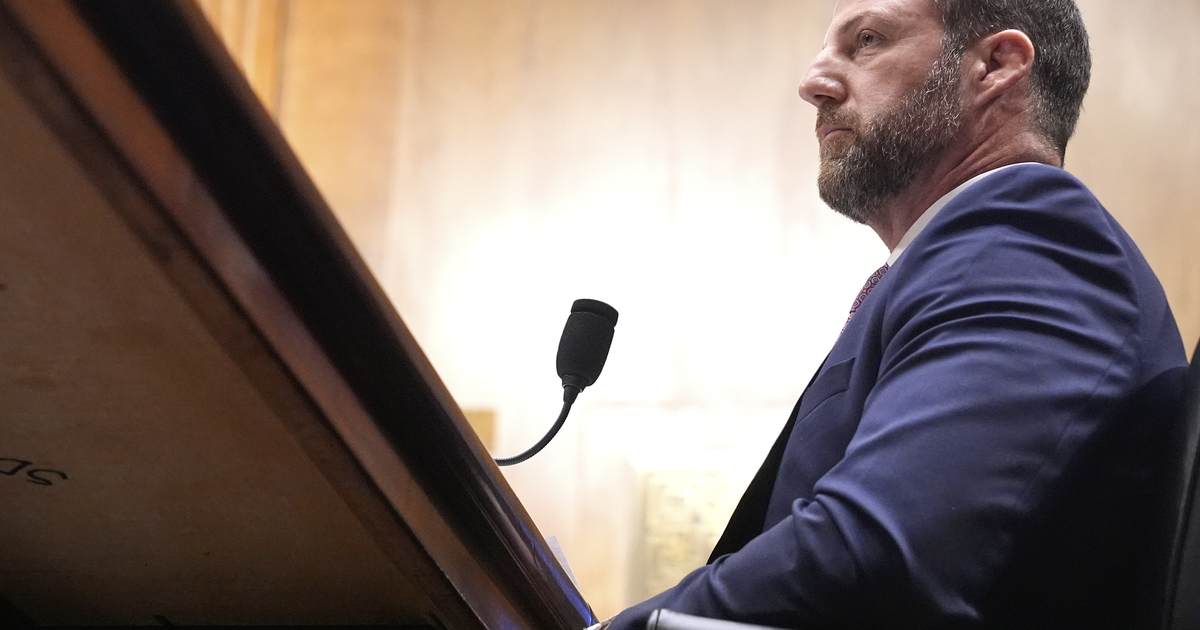
Homeland Security faces a ticking funding clock as Secretary Markwayne Mullin warns emergency coffers will be exhausted by the end of April, reviving a partial shutdown that has already disrupted travel and strained border security.
The Department of Homeland Security is running on emergency money after an earlier funding standoff left parts of the department without standard appropriations. Secretary Markwayne Mullin made clear the stopgap cash that kept operations afloat after an executive order is being spent at a rapid clip, and it won’t last past the month.
This partial shutdown hit DHS functions hardest, prompting President Trump to sign an executive order so critical services could keep paying staff. That order temporarily eased immediate pain at airports and border operations, but it did not replace a full, long-term funding fix from Congress.
Air travel showed the consequences quickly, with some airports reporting nearly 40 percent of TSA agents absent at the height of the disruption. The shortage of staffing and uncertainty around pay forced scrambling at checkpoints and left travelers and local authorities dealing with the fallout.
Even after paychecks restarted for many DHS employees, the underlying budget hole remained open and now emergency reserves are dwindling. The department’s payroll obligations are large and recurring, so when emergency pools are tapped they can disappear within weeks rather than months.
MULLIN says DHS will run out of emergency cash to pay his workforce at the end of April
"There's no more money." pic.twitter.com/KYdXI8Algt
— Jennie Taer (@JennieSTaer) April 21, 2026
“My payroll through DHS is just over 1.6 billion dollars every two weeks, so the money is going extremely fast, and once that happens, there is no emergency funds after that,” Secretary Mullin revealed on Fox News. “After we get through April, which I’ve got two more weeks, I’ve got one payroll left, and there is no more emergency funds, so the president can’t do another executive order for us to use money because there’s no more money.”
That blunt arithmetic underlines why the issue needs a quick legislative fix, yet Capitol Hill has not delivered one. In recent days there were no signs of a bipartisan compromise that would restore normal funding for DHS, leaving the department dependent on contingency plans and political maneuvering.
The last Senate package that made progress drew sharp Republican criticism for yielding too much to Democratic priorities while not strengthening certain enforcement wings. GOP lawmakers said the bill shortchanged Immigration and Customs Enforcement and parts of Customs and Border Protection, even as Democrats framed passage as a win.
House Republicans pushed back and refused to approve that Senate measure, which left the administration with limited options and led to the president’s executive step to prevent immediate collapse of services. That move bought time but not a long-term budget solution.
Now, with the emergency pool nearly exhausted, the same problems are poised to return within weeks unless Congress acts. Agencies that rely on steady appropriations could face renewed operational risks just as travel demand and border pressures remain elevated.
Practical consequences are already visible in the field: understaffed checkpoints, stretched local authorities, and morale challenges among career public servants who want to serve without worrying about whether pay will arrive. Those are not abstract policy disputes; they are real disruptions that affect Americans and frontline workers.
Editor’s Note: Democrats are causing chaos at airports and inflicting pain on the American people simply because they want to keep illegal aliens from being deported. Republican leaders are pushing for clear funding priorities that secure the border and keep travel and security services funded without relying on one-off executive moves.