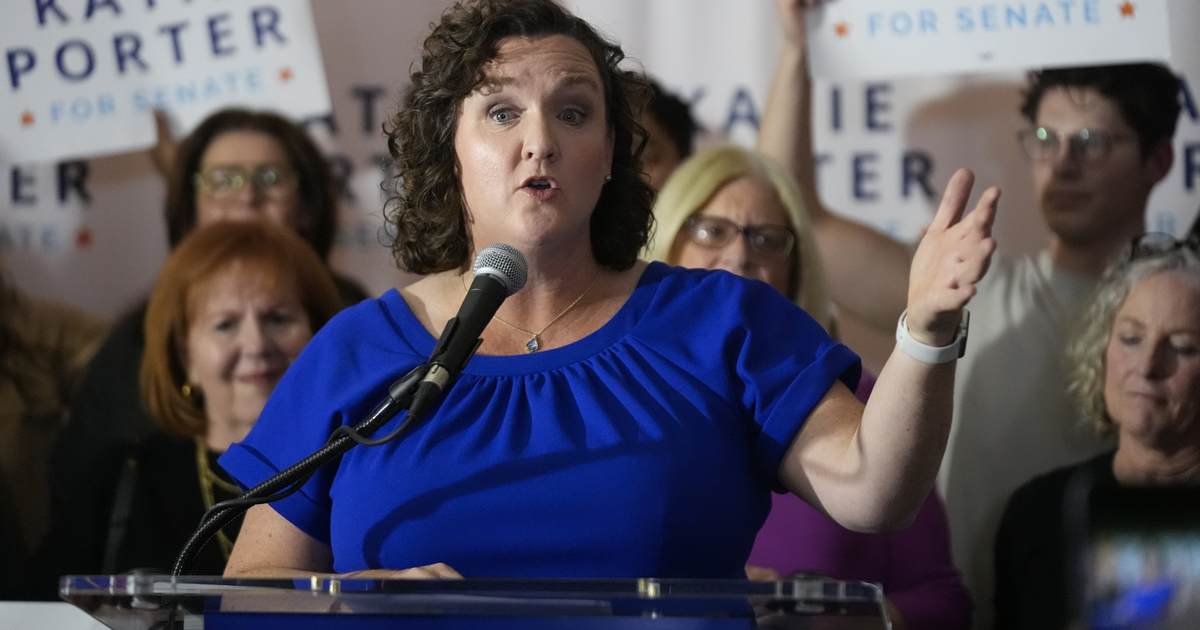
About 18 hours after the assassination attempt on President Trump, California Democrat Katie Porter sent an expletive-laced fundraising email that accused Trump of violent intent, and other Democratic leaders continued hawkish rhetoric in the aftermath.
About 18 hours after the assassination attempt that targeted President Donald Trump and other officials, Democrat Katie Porter sent a fundraising email that used profanity and sharp attacks aimed at the president. The message landed in inboxes quickly and hit a raw nerve for many who expected restraint after an act of political violence. The language was explicit enough that the fundraiser carried a clear warning about its content, and the timing made the tone impossible to ignore.
While the profanity itself was jarring, the most troubling line showed up near the end of the message and made the note more than just salty political copy. That paragraph crossed from rhetorical heat into a kind of moral indictment that painted the opposing side as inherently violent, and it did so in a fundraising pitch timed to capitalize on a national crisis. Critics say this kind of rhetoric contributes to a poisonous environment where unstable actors can latch onto extreme claims.
Imagine Barack Obama surviving three assassination attempts and 18 hours later, a Republican sent a fundraising email like this pic.twitter.com/RLj825Y7Sk
— Bethany S. Mandel (@bethanyshondark) April 27, 2026
“We know what Trump is willing to do and how far he is willing to go — he’s willing to kill people in the streets, to rip healthcare away, to ruthlessly attack our democracy,” the email read. That line appears exactly as sent and illustrates the incendiary nature of the pitch, because it accuses a sitting president of murderous intent while asking for money. The blunt charge, shoved into a solicitation, left many asking whether elected officials should be weaponizing fear right after an assassination attempt.
Porter’s email is the perfect reminder that Democrats simply cannot help themselves when it comes to pushing the exact type of rhetoric that people like Cole Allen and Tyler Robinson latch onto. Naming those individuals highlights a pattern where overheated language gets recycled by extremists looking for justification, and it raises real questions about responsibility. When public figures traffic in dramatized threats and moral absolutes, the fallout can be harmful and unpredictable.
Some will try to excuse the send as a scheduled message someone forgot to cancel, but that defense rings hollow for anyone who has watched how Porter manages her operation. Reports about internal staff dynamics and message control suggest this was not an accidental slip but a calculated choice to stay on message. If true, the decision to push that tone so soon after a violent incident speaks to a broader cultural problem within parts of the party: a willingness to trade civility for clicks and cash.
Porter wasn’t the only Democrat keeping up the hawkish posture; Senate Minority Leader Hakeem Jeffries quickly doubled down on calls for “maximum warfare” against Republicans even after reporters pressed him over the phrasing. Using the language of combat in partisan politics is dangerous by design, because it frames opponents as enemies to be annihilated rather than citizens to be persuaded. Pressing warfare metaphors into everyday political speech normalizes conflict and makes reconciliation harder.
Still, somehow Democrats will make themselves out to be the victims in all of this, portraying backlash as bad-faith attacks while ignoring the role their own words play in escalating tensions. That pattern of moral preening and selective outrage erodes credibility and sows cynicism among voters who want steady leadership, not theater. Voters watching from outside the noise crave leaders who can condemn violence clearly without turning tragedy into a fundraising hook.
Accountability matters here: public servants and candidates should be judged for the choices they make in moments of crisis, because words have consequences and timing matters. Electorates should expect restraint and responsibility from people who seek power, and they should be skeptical of those who prioritize partisan gain over public safety. The post-attack email from Katie Porter and the subsequent rhetoric from other Democrats underscore how political messaging can either calm a country or inflame it, and the choices made in those first hours tell you a lot about priorities.