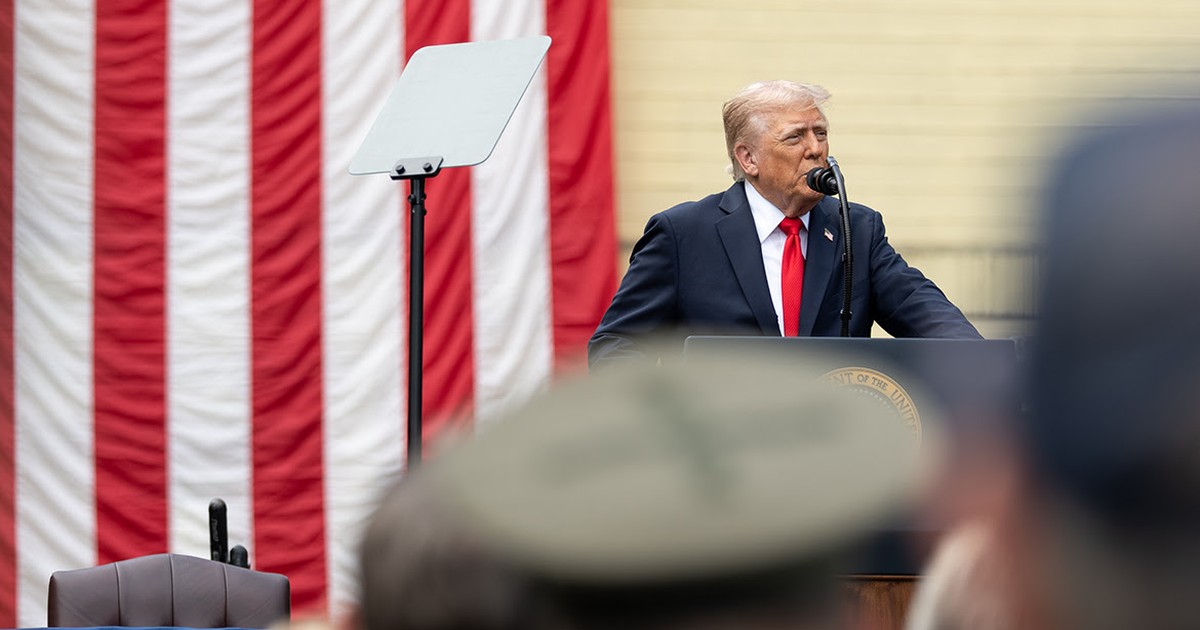
President Trump declared Iran to be in a “state of collapse” as U.S. pressure squeezes its oil exports and storage, Tehran scrambles for places to keep crude, and diplomatic talks stall amid heavy economic strain.
President Trump said that Iran is in a “state of collapse” as the regime runs out of storage for its oil and continues to lose more than $400 million a day under the U.S. blockade of its ports and vessels. He made the remark publicly and linked it to mounting economic pressure that has tightened Tehran’s options. The comment frames the situation as both an economic squeeze and a test of Iranian leadership.
“Iran has just informed us that they are in a ‘State of Collapse,'” the president wrote on Truth Social. “They want us to ‘Open the Hormuz Strait,’ as soon as possible, as they try to figure out their leadership situation (Which I believe they will be able to do!). Thank you for your attention to this matter! President DONALD J. TRUMP.”
It remains unclear how complete any potential collapse might be, but the evidence points strongly to severe economic stress driven by energy isolation. Iran’s economy depends heavily on oil revenue, and being cut off from regular export routes creates immediate cash shortfalls. That pressure shows up quickly in daily losses and longer-term damage to state finances.
TRUMP: Iran has Just informed us that they are in a “State of Collapse.” They want us to “Open the Hormuz Strait,” as soon as possible, as they try to figure out their leadership situation (Which I believe they will be able to do!). pic.twitter.com/J39ERbBKFH
— Breaking911 (@Breaking911) April 28, 2026
Over the past week, Iran has struggled to find places to store its excess crude, reluctant to shut in oil wells for fear of causing damage and permanently reducing production capacity. The regime has taken extraordinary measures to avoid drawing down output, including reactivating a decades-old tanker and repairing neglected infrastructure. Those actions are defensive moves meant to buy time while they search for export alternatives.
The regime reportedly reactivated a 30-year-old retired supertanker capable of storing two million barrels of oil, and officials have been working to rebuild derelict storage tanks. Tehran has also moved crude in unconventional ways, including shipping oil by rail toward China to prevent immediate loss of output. Those tactics underline how few conventional options Iran has left and how costly delay and improvisation can be.
Whether a return to negotiations happens depends on a complex mix of incentives and trust, and U.S. officials say the leverage currently favors Washington. This comes after talks that were scheduled over the weekend were canceled, with President Trump accusing Iranian negotiators of stalling despite facing significant pressure. The diplomatic pause reflects a moment when Tehran is testing whether it can outwait outside pressure or must change course.
From a strategic standpoint, preventing Iran from selling oil directly hits its ability to fund proxies and state operations, which is why the blockade has been emphasized by U.S. policymakers. Cutting exports reduces hard currency receipts and forces Tehran into costly workarounds that further erode its fiscal position. The daily loss figure cited by officials illustrates how fast the financial hemorrhage can be when markets are shut off.
Iran’s reluctance to shut wells reflects a long-term calculus: idle wells can suffer damage that reduces recovery rates and future output, so Tehran prefers temporary storage fixes to permanent production cuts. Repairing old tanks and reusing an aging tanker are stopgap measures that carry risk and expense. Those choices show a government trying to avoid making painful production decisions that would harm its oil industry for years.
President Trump’s message emphasizes that pressure is working and that the U.S. maintains leverage, while Iran’s improvisations signal both strain and resourcefulness. The administration presents the situation as a demonstration of strategic patience: keep pressure on economically and use diplomacy from a position of strength. Observers will be watching whether Tehran’s short-term fixes hold or only deepen its problems over time.
The near-term outlook is uncertain, with energy markets and regional stability at stake as Tehran adapts to constrained options. Policymakers on both sides face hard choices about whether to escalate, negotiate, or let economic pressure continue to mount. The coming days will test how durable Iran’s improvisations are and whether they buy the regime the breathing room it seeks.