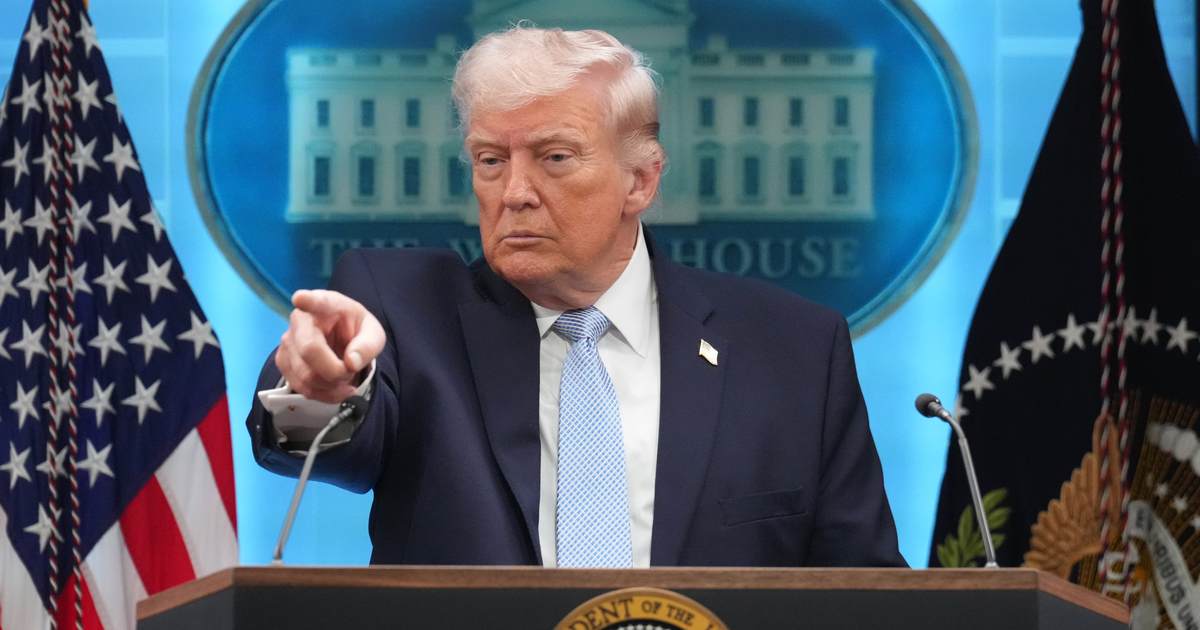
President Trump held an energetic briefing that mixed hard-edged warnings to Iran, a detailed account of a risky rescue mission for downed airmen, and a sharp critique of the media and political opponents.
After a weekend of wild rumors and hostile coverage, President Trump stepped in front of reporters to lay out actions and context with clarity and force. He contrasted his open engagement with the press against what he called a silent or evasive approach from the Biden White House. The conference covered Iran, a high-stakes rescue mission, and political fallout from leaks and criticism.
The White House announced the press conference after the President set an 8 pm Eastern Tuesday deadline for Iran to accept terms or face destruction of bridges, energy plants, and other infrastructure. That deadline framed much of the president’s remarks and set a hard negotiating posture around Iran’s future behavior.
Trump also addressed recent rumors about his health and activity, promising to respond and clear the air after the Easter weekend. He made clear he would not be sidelined by false narratives and that the nation deserved straight answers.
TOMORROW 🇺🇸
President Donald J. Trump joins the military in the Oval Office for a news conference.
American strength. Full display. Don’t miss it. pic.twitter.com/5yJpErS0wz
— The White House (@WhiteHouse) April 5, 2026
The administration detailed a daring recovery of a downed F-15 crew in Iran, stressing that the operation brought Americans home without losing any lives. Aircraft were deliberately destroyed on the ground to prevent Iranian forces from examining U.S. technology, and sensitive planning kept the mission secret until it was complete. The President said the rescue required extraordinary coordination between military and intelligence assets.
Because the mission was so sensitive, there was a period of official silence while it unfolded, the kind of operational security that saved lives. That secrecy explains the gap between rumor and fact, and it also fueled some of the media frenzy. At the White House Easter Egg Roll, the President addressed the matter and the diplomatic options on the table.
“I’ve seen every proposal you can imagine,” the resident said when asked about Iran’s ceasefire offer, and when pressed on whether Tuesday was the final deadline he answered, “Yes.” He added reporters would “have to watch” if the war would continue, and he described the Iranian proposal as a “significant step.” Those lines underscored a posture of warning paired with conditional openness.
Ahead of the briefing, the White House briefing room was described as packed, and the president appeared alongside senior figures including Secretary of War Hegseth, CIA Director John Ratcliffe, and Chairman Caine. The event emphasized the rescue operation and the broader policy toward Iran, combining tactical detail with strategic messaging.
“We’re here today to celebrate the success of one of the largest, most complex, most harrowing combat searches, I guess you would call it a search and rescue mission, every attempted by the military,” President Trump said in his opening remarks. “We were helped by a lot of great people, and it was an honor to be involved with it.” The tone was both celebratory and resolute.
“Late Thursday night, an American F-15 fighter jet went down deep inside enemy territory in Iran while participating in Operation Epic Fury,” the President recapped. “Both members of the crew ejected from the aircraft and landed alive on Iranian soil. … I ordered the U.S. Armed Forces to do whatever was necessary to bring our brave warriors back home. A risky decision.”
He made clear the scale of effort involved in getting both airmen to safety and preventing sensitive gear from falling into hostile hands. “[In the United States military, we leave no American behind],” he said, and he praised the courage and training that made the recovery possible.
On the second downed airman, the President described how the officer “followed his training and climbed into the treacherous mountain terrain and started climbing towards a higher altitude … in order to evade capture.” He called the outcome “an amazing, amazing thing” and noted that a vast array of aircraft and tactics were used to obscure and execute the retrieval. “The second rescue mission involved 155 aircraft, including four bombers, 64 fighters, 48 refueling tankers, 13 rescue aircraft, and more. We were bringing them all over, and a lot of it was subterfuge.”
“We didn’t want anybody examining our anti-aircraft and other equipment,” the President said, and he described damage to equipment while confirming no U.S. troops were injured. “God was watching us,” he added, invoking the extraordinary luck and coordination that accompanied the mission.
“Over the past 37 days, America’s armed forces have carried out more than 10,000 combat flights over Iran,” the President said, “striking more than 13,000 targets.” He stressed the scale of operations and framed the downing of the F-15 as a rare event amid thousands of sorties.
After condemning the leak that endangered the operation, the President invited CIA Director John Ratcliffe to speak, and Ratcliffe described the specialized capabilities the agency used to find and protect the airman. “It’s a privilege to be here with you today,” Ratcliffe said, “to share with you what we can about this exceptional mission.” He explained the human and technical assets that made the recovery possible.
“In addition to the human and technical assets deployed by the President to find our airman, CIA executed a deception campaign to confuse the Iranians who were desperately hunting for our airman,” Ratcliffe said, adding that one of America’s best was located and confirmed alive and concealed in a mountain crevice. The director framed the effort as precise, patient, and covert.
Secretary Hegseth praised the troops, calling the operations “missions of breathtaking skill, courage, and precision” and asserting that unleashed warriors are unstoppable when given direction. “When our warriors are unleashed, as this President has allowed them to be, they are unstoppable,” he said, and he noted Iran’s embarrassment at the rescue.
General Caine called the rescue “incredibly dangerous” but a testament to the survival spirit of the aviator and to America’s commitment to bring service members home. The President returned to the podium to answer questions about Iran, leaks, and critics, stressing that he had taken actions to counter the nuclear threat and to reverse failed prior deals.