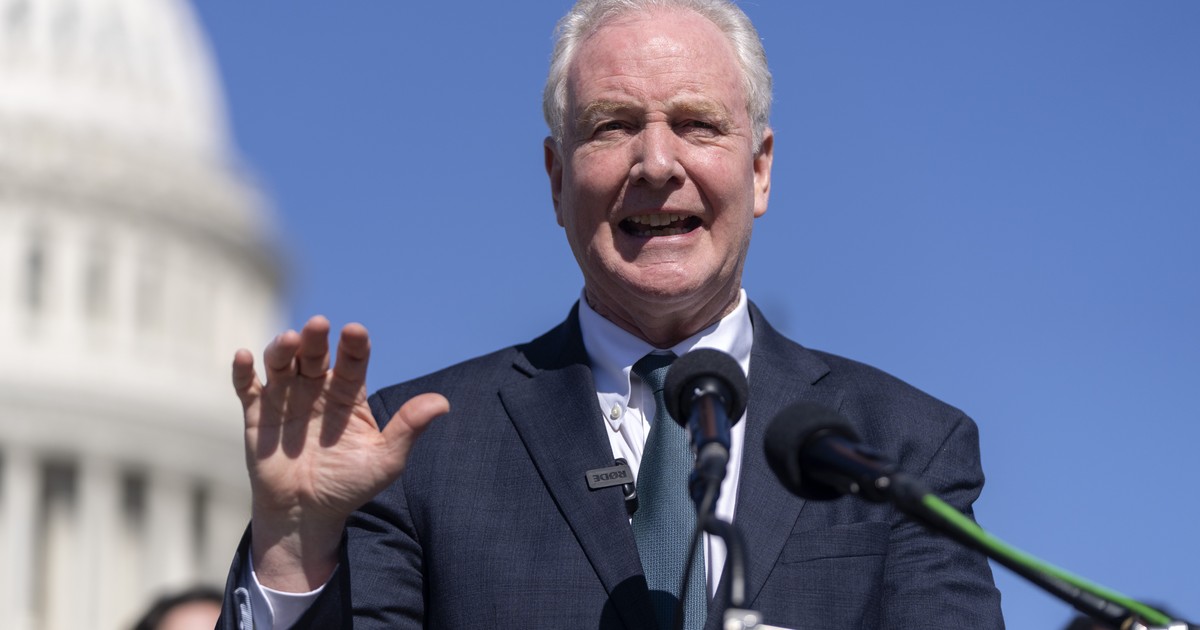
Sen. Chris Van Hollen criticized the lack of a defined endgame for Operation Epic Fury while the White House touted tangible gains in Iran, prompting a debate over whether the costs of the operation were justified.
Senator Chris Van Hollen (D-MD) went on television to argue that no amount of success in Iran would justify the human and financial price tag he associates with Operation Epic Fury. He questioned whether the administration had a clear objective and insisted that ambiguous goals undermine public support. The exchange highlights a deep partisan split over how to measure victory and who decides when a mission is worth the cost.
“Well, Ana, there was really no definition of success that really would have made this a worthwhile endeavor at the cost in lives and treasure for the American people and people throughout the region,” Sen. Van Hollen said. “I mean, from the beginning, Donald Trump and his team have not defined their goals. They’ve never had an endgame.”
Now that President Trump has YET AGAIN embarrassed Democrats, Senator Van Hollen just had to run to MSDNC who couldn't control his rampant TDS.
He says NOTHING has been accomplished, but even a blind person sees what Trump's done.
Kneecapped China, Obliterated Iran, and put the… pic.twitter.com/ScRXdLd7VD
— Gunther Eagleman™ (@GuntherEagleman) April 17, 2026
That critique is blunt, and it deserves a substantive reply rather than a shrug. Here is some of that endgame the White House reportedly never had:
The administration has consistently framed Operation Epic Fury as a targeted campaign to degrade Iran’s ability to pursue nuclear weapons and to blunt its regional aggression. Those objectives matter to allies in the Gulf and to the freedom of navigation that keeps global energy markets functioning. The alternative—accepting Iran’s continued nuclear and proxy expansion—carries strategic costs that compound over years and administrations.
Sen. Van Hollen went on:
“And here we are, you know, the president celebrating the reopening of the Strait of Hormuz, which as we’ve just said, was open before this war started, but without the huge costs that we’ve incurred in the meantime,” he said. “So this is why we keep calling upon our Republican colleagues to join us in reining in this president who started this illegal war. And we’re going to keep pressing them.”
“We’re going to keep bringing up these war powers resolutions because we know the American people are overwhelmingly opposed to this war,” he added.
Van Hollen frames the discussion around cost and legal authority, and those are legitimate points for Congress to consider. Still, the strategic picture is broader: denying a pathway to a nuclear Iran prevents a cascade of security problems across the Middle East. U.S. moves that shore up deterrence and protect partner nations create leverage for diplomacy and impose choices on Tehran it did not have before.
Critics say the Strait of Hormuz was open before the operation and that reopening it now is hollow if Americans paid a heavy price. The counterargument is that reopening without ongoing threats is the very definition of a successful, stabilizing military action. When the administration can claim the Strait is secure, that outcome has immediate implications for global trade and energy prices.
Another practical gain often overlooked is the diplomatic leverage that comes with credible military pressure. Reasserting American influence in a flashpoint region strengthens bargaining positions with Gulf states, reduces the appetite for unilateral regional arms races, and strains Tehran’s resources. Those shifts matter to long-term security and to allies who depend on predictable American commitment.
There’s also an economic angle. The campaign targeted Iran’s ability to threaten roughly 30 percent of China’s oil supply during crises, and it signaled to global markets that key shipping lanes will not be shuttered by unchecked aggression. That kind of certainty lowers risk premiums and helps allies who would otherwise face a chaotic scramble for alternatives.
President Trump’s team points out that measurable progress arrived in a short window—”just over a month” in their telling—after decades of failed diplomacy to reshape Tehran’s calculations. Rapid shifts are rare in foreign policy, and skeptics should explain why maintaining the old status quo was preferable. If constraints and negotiations follow pressure, then strategic patience and follow-through will be essential.
Lawmakers should debate war powers and oversight, but they should also weigh what real security looks like on the ground. Turning a complex regional reset into soundbites about endgames without engaging the facts does a disservice to voters and to the troops. If this operation produced openings for enforceable limits on Iran’s program and more stable seas for commerce, Americans deserve a grounded assessment, not reflexive dismissal.