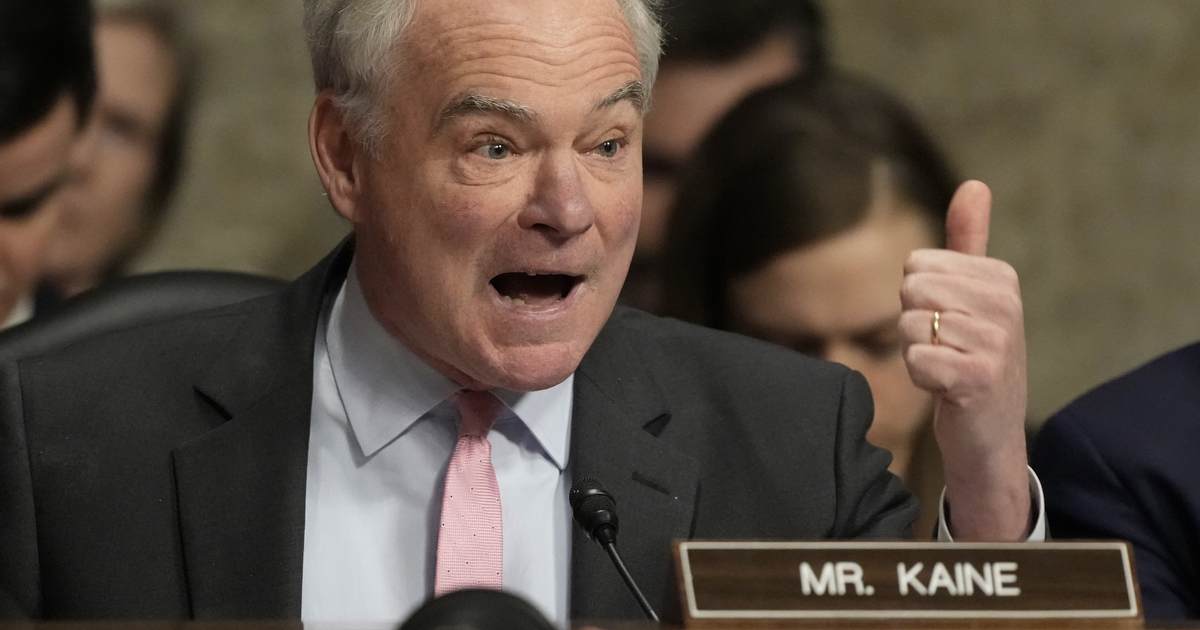
Senator Tim Kaine made it plain that Virginia’s new redistricting push is framed less as a move for “fair maps” and more as a tool to blunt support for Donald Trump and shape who controls future election outcomes.
Former President Barack Obama urged Virginians to back the redistricting plan and called it an effort at fairness, even using the phrase ‘leveling the playing field’ to describe his pitch. That endorsement carried weight for Democrats and made the choice feel like a national test. But when you strip away the speeches, the practical effect is about who holds power in Congress and which voters get a real say.
Senator Kaine did not try to hide the political motive, saying, “90 percent of Virginians aren’t Democrats, that’s true,” Kaine said, “but about 100 percent of Virginians want election results to be respected. We’re deeply worried that Donald Trump will try to interfere with the election results this November or in 2028, cause we saw him do it before.” That language frames redistricting as a defensive move against a single opponent, not a neutral effort to make districts more competitive.
🚨 TIM KAINE JUST ADMITTED THE QUIET PART OUT LOUD ON LIVE TV 🔥
FOX: Kamala Harris won Virginia by just 5 points. So why should 90% of your congressional delegation be Democrats?
SEN. TIM KAINE: “90% of Virginians are not Democrats… that’s true. But we need a congressional… pic.twitter.com/56IyKaQVAV— Reverend Jordan Wells (@WellsJorda89710) April 19, 2026
The senator’s comments raise questions about who the changes actually benefit. If the redrawing of lines is primarily aimed at weakening a political movement, it’s not a reform for voters, it’s a strategy against an opposing party. Voters deserve clear answers about whether maps are being drawn to improve representation or to tilt outcomes toward one side.
Critics point out a gap between Kaine’s rhetoric and the reality of what happened after the 2020 election. Many Republicans argue that questioning results is not the same as successful interference, and that elections ultimately stood. From this perspective, painting an entire political movement as a threat justifies sweeping changes that could curb representation.
Democrats, meanwhile, insist the plan protects democracy by preventing future chaos. That argument asks voters to accept restrictions now to avoid hypothetical risks later. But handing map control over to officials who openly say the goal is to blunt a rival’s influence looks less like safeguarding institutions and more like power preservation.
“And we have to have a Congress that will stand up to it,” Kaine continued. “In 2021, all five Republicans in Virginia went along with Donald Trump in his effort to overturn an election result. So we’re giving Virginians a chance to vote, which Republican states have not done, about whether they want to have a Congressional delegation that will stand up against Donald Trump’s tyranny.” His words make the ballot a referendum on loyalty to a person as much as on policy or governance.
That approach forces voters to weigh punishment against representation. When map changes are pitched as a way to guard against one leader, they can end up punishing large blocs of voters by diluting their voice. The resulting districts may look neat on maps while leaving entire communities feeling marginalized at the ballot box.
Absolutely incredible. The debate is being framed as protection from a singular political actor instead of a discussion about fair voter access and equal representation. Voters who care about clear rules and consistent application need to see the mechanics behind the lines, not just the rhetoric from party leaders.
Virginia residents can say no at the polls and force a reckoning over motives and methods, and many commentators urge that route as a way to preserve accountability. A reject vote would send a strong signal that mapmaking done for partisan advantage is unacceptable, regardless of who benefits. That’s why turnout and attention matter in states where maps are being redrawn.
There are also concerns about how political retribution shapes policy talk. Some Democrats have openly floated penalties for those who backed the former president, framing it as holding people accountable. That rhetoric feeds the perception that the redistricting push is intertwined with a desire to punish dissent rather than expand voter choice.
One Democrat said she wants to bar Trump voters from the Internet for four years as punishment for not voting for Democrats. Statements like that stoke real fear among voters about what happens when one party gets to rewrite rules after gaining control. Those threats contribute to the narrative that the current initiative is about control instead of constructive reform.
At its core, this fight is about who determines the rules and how they are applied. When officials advertise redistricting as a tool against a political opponent, they invite skepticism from anyone who values stable, impartial institutions. Voters in Virginia will decide whether they prefer maps drawn for competing interests or maps drawn to reflect communities and fair competition.