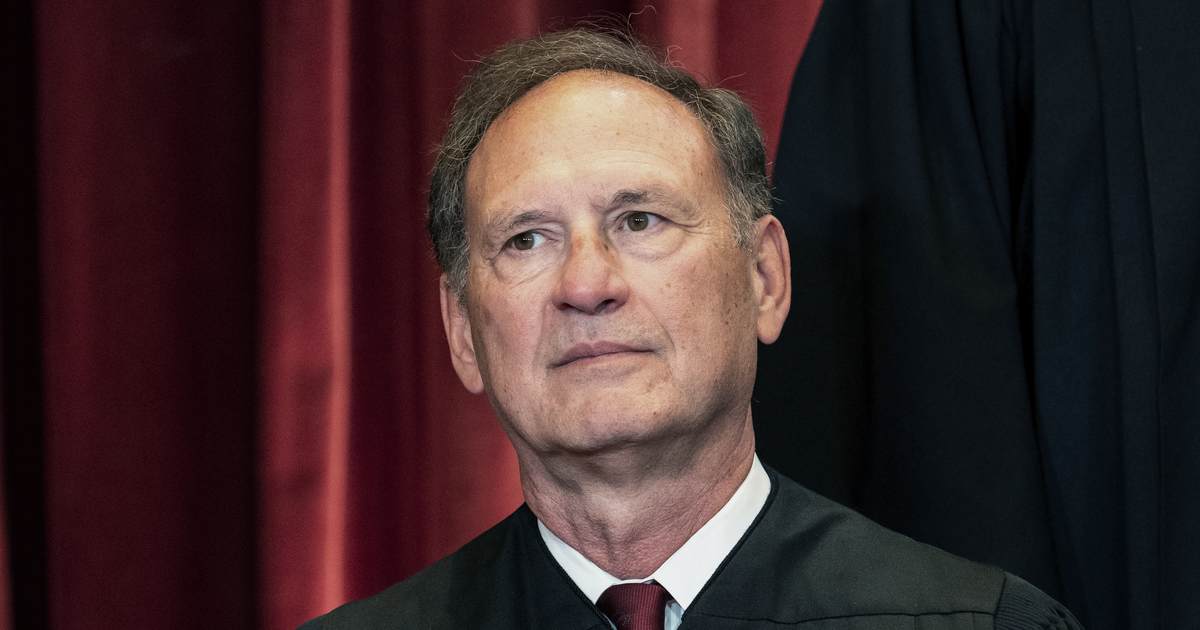
Supreme Court throws out the Louisiana congressional map in Louisiana v. Callais, narrowing how Section II of the Voting Rights Act can be used and setting up big changes for redistricting law while generating a sharp rebuke from Justice Alito toward Justice Ketanji Brown Jackson.
The Court’s decision in Louisiana v. Callais landed last night and it reversed the map at the center of the dispute, a map previously challenged under Section II of the Voting Rights Act. The ruling restricts the use of race as a dominant factor in drawing districts and rejects the maps that relied on what the Court viewed as race-based quotas. That outcome immediately raises questions about how future challenges under Section II will play out in the South.
This is not a headline that says the Voting Rights Act has been wiped out, but the ruling narrows its reach in practice. By tightening the standard for when race can be decisive in district draws, the decision makes it harder for plaintiffs to force maps drawn with race as the main criterion. For states and legislatures, that translates into greater latitude when drawing lines without the same threat of successful Section II litigation.
The Callais dispute began when an initial map was struck down under Section II, then revised to create a majority-black district that still drew legal challenges. The Court ultimately found the remedial map unconstitutional because it treated race as the predominant factor in a way the majority could not endorse. That factual arc — strike, revise, strike again — framed the Court’s stricter posture toward race-based mapmaking.
Justice Alito wrote for the majority and he did not hold back in rejecting the dissent. His opinion criticized the reasoning behind Justice Ketanji Brown Jackson’s separate view and characterized that dissent as failing to grapple with the governing law. The tone was pointed and academic, and the majority used it to underline how the legal test should be applied going forward.
🚨 The Supreme Court has immediately issued its judgment striking down Louisiana’s congressional map as a racial gerrymander. pic.twitter.com/AQJjA5Sw2P
— SCOTUS Wire (@scotus_wire) May 4, 2026
On the left, reactions were predictable: there was disagreement from other liberal justices, but few aligned with Jackson’s analysis in any public way. Even among the Court’s liberals, the new decision exposed divisions over how to treat race in districting and revealed that Jackson’s approach isolated her from coalition partners on certain doctrinal points. That fracturing only amplified the headlines and the online commentary.
The reaction on social media was immediate and loud, with critics and supporters trading takes on the Court’s handling of Section II and the role of race in redistricting. Commentary highlighted the bluntness of the majority opinion and the oddity of Jackson’s lone stand, and the ruling quickly trended among legal observers and political operatives.
After the published opinion there were additional posts and clips that circulated widely, capturing lines from the decision and the dissent and the wider public reaction. Those snippets fed a broader conversation about where voting law is headed and how state maps will be drawn in the next round.
Here is a direct clip of the opinion and the lines that drew the most attention:
The ruling will force litigants and state officials to rethink strategy. Plaintiffs who previously relied on Section II to demand race-based remedies will face a higher bar, and legislatures that want clear, race-neutral maps will see fewer immediate legal obstacles. At the same time, the practical effect will vary state by state depending on local facts and the way courts apply the majority’s framework.
For conservatives and defenders of traditional districting rules, the decision reads like a restoration of limits on race-conscious remedies and an insistence on consistent legal standards. For critics, it feels like a roll-back of protections that had been used to address minority vote dilution. Either way, Louisiana v. Callais will be cited again and again as the Court reshapes how Section II is enforced in the years ahead.
SCOTUS Judgment in Louisiana v. Callais