The fight over Florida maps has blown open Democratic infighting, with establishment figures choosing political survival over the objections of Black voters and local leaders.
The redistricting battle has pulled back the curtain on Democratic priorities, and the picture is ugly. With Republicans picking up legal and legislative wins in multiple states, Democrats are scrambling to hold power and showing a willingness to sideline longtime allies. That scramble is producing sharp clashes in places like Florida, where raw political ambition is colliding with demands for representation.
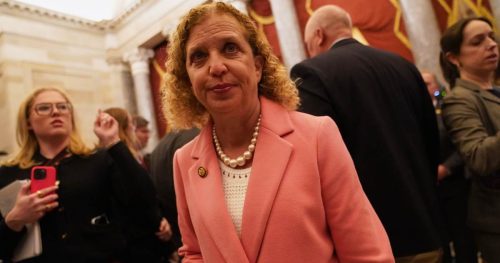
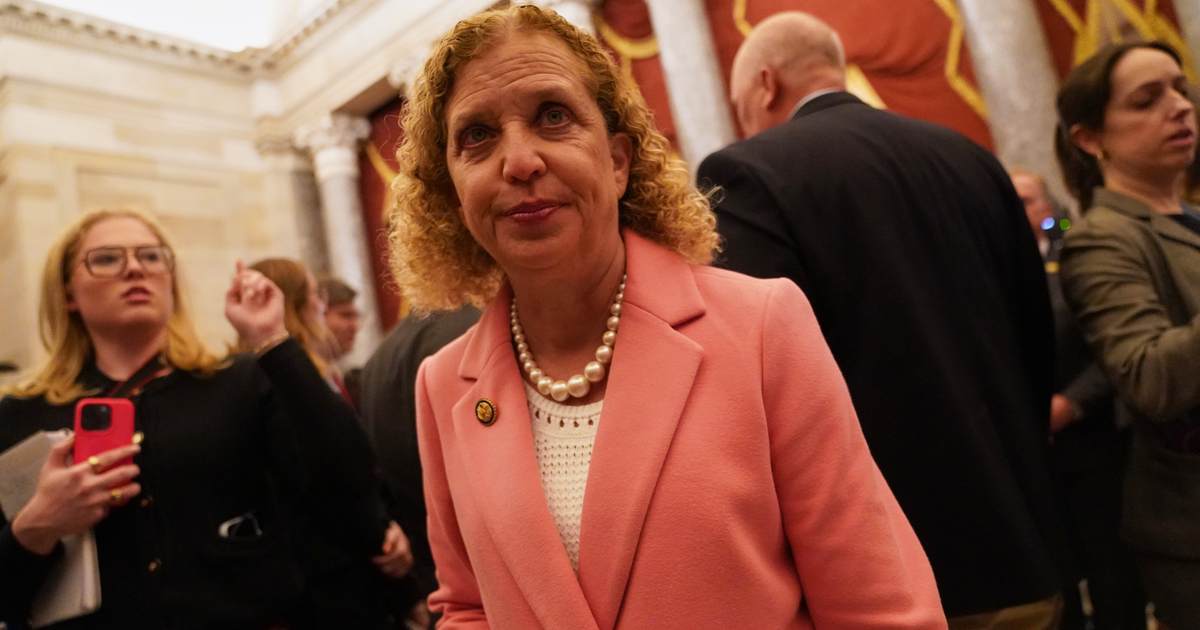
One obvious flashpoint is Representative Debbie Wasserman Schultz’s decision to seek re-election in a newly drawn, majority-minority Florida district after her prior seat disappeared. The move has sparked anger from Black Democrats who say the district deserves a Black representative. That anger reflects a broader tension: party elites trying to place safe, experienced operators into winnable seats even when it upsets local communities.
Representative Debbie Wasserman Schultz, a Democrat from Florida, said on Friday that she planned to run for re-election in a majority-minority district under the state’s newly redrawn congressional map.
The map created four additional Republican-leaning districts in part by eliminating her South Florida seat. Ms. Wasserman Schultz’s decision to run in Florida’s new 20th Congressional District, however, has stoked tensions with Black Democrats already reeling from Republican gerrymanders across the South that are likely to dilute or eliminate Black representation in Congress.
[…]
Ms. Wasserman Schultz’s decision to run in the 20th District was not unexpected, given the limited options for her to seek re-election under the new map. But even before her announcement, she had upset some Black Democrats, who said the district deserved a Black representative. Ms. Wasserman Schultz is white. The district is majority-minority, meaning more than half of its residents are Black or Hispanic, though the Democratic electorate in the district is mostly Black.
Most of the district had been represented until recently by Sheila Cherfilus-McCormick, who resigned from office last month before a House panel was scheduled to consider expelling her. Ms. Cherfilus-McCormick, who is Black, has been indicted on criminal charges of embezzling $5 million in federal disaster aid and using it for her campaign. She has denied the accusation and pleaded not guilty. She has also said that she is running in the 20th District, as are several other Black Democrats.
One of them is Luther Campbell, known as Uncle Luke from 2 Live Crew, a hip-hop group from the 1980s and 1990s. Mr. Campbell, a music producer and former youth football coach, said last week that it was “appalling” for Ms. Wasserman Schultz to be considering a run in that district.
“I will drag her,” he told Politico.
Another Black candidate, Elijah Manley, said on Friday that Ms. Wasserman Schultz is “carpetbagging.” She is “everything that’s wrong with the Democratic establishment,” he wrote on X.
In response to the criticism, Ms. Wasserman Schultz said in the interview that she already represents a majority-minority district, where a plurality of voters are Hispanic, and has a proven track record of helping diverse communities. Her announcement video included supportive clips from a number of people, including several Black activists and officials. She also emphasized her seniority and experience.
This is not just a local dust-up, it’s the latest sign that national Democratic leaders are facing hard choices: protect incumbents or prioritize community representation. When party managers pick incumbency and seniority over local sentiment, it sends a message that winning matters more than the coalition that wins. That message is doing damage inside the party and handing Republicans a clear talking point about Democratic priorities.
Expect primaries and heated local fights. Several Black Democrats have already signaled they will challenge for the seat, and the field looks messy. Those contests will force Democratic voters to choose between experience and local ownership of representation, and that choice won’t please everyone.
The reaction has been loud and personal. Local activists and familiar names from the community are calling the move “appalling” and “carpetbagging,” and the anger is not just about one candidate. It’s about trust, and whether national party decisions will respect the voices of Black voters who have been a central part of the Democratic coalition for decades.
Meanwhile, the national narrative is shifting. Republicans are framing these battles as proof that Democrats prioritize power over principle, and that framing will land with voters tired of inside-baseball politics. That narrative plays well in general election zones where concerns about elite behavior and accountability resonate with swing voters.
Internal Democrats are already debating trade-offs. In New York, some leaders have indicated they would “he would stomach” redrawing majority-Black districts if it meant preserving seats and winning elections. That blunt calculus makes clear how far party managers will go to secure advantage, even at the cost of alienating long-term supporters.
The Florida episode will be a test case. If party bosses push candidates into contested districts without local buy-in, the fallout could ripple beyond one seat. Voters who feel ignored won’t forget, and the political payoff Democrats expect might not materialize if turnout collapses where it matters most.
For now, the scene is chaotic and confrontational, with national strategy colliding with local demands for representation. As fights break out, expect more headlines about internal turmoil and fewer about policy, which is exactly where the party doesn’t want to be as voters look for competent leadership.