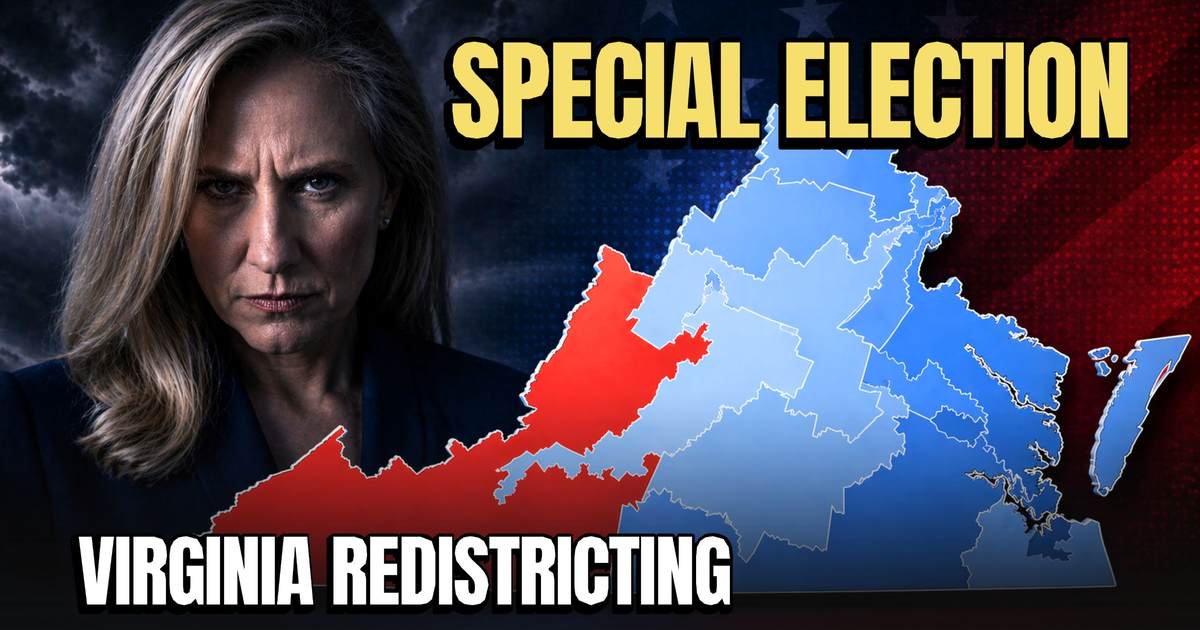
Virginia Democrats are scrambling after a state Supreme Court tossed their redistricting plan, and they’ve gone straight to the courts to try to undo the state ruling while appealing to the U.S. Supreme Court.
Virginia Democrats pushed a congressional map that would have handed them a 10-1 advantage, but the state Supreme Court found the process and the product out of bounds. That ruling called the map unconstitutional and highlighted a series of procedural missteps that left the plan legally vulnerable.
The reaction from the left was immediate and loud, with national figures and state operatives caught flat-footed as the map was struck down. High-profile names were tied to the effort and ended up looking foolish when the court emphasized process over partisan convenience.
Now the party is asking a federal court to stay the Virginia Supreme Court’s decision while it seeks review from the U.S. Supreme Court, arguing federal issues should trump a state opinion. That move raises a straightforward question: what federal claim actually overrides a state court’s interpretation of that state’s constitution?
🚨 Virginia Democrats indicate that they will appeal today's ruling invalidating the redistricting referendum to the United States Supreme Court.
They ask the Virginia Supreme Court to withhold its mandate. pic.twitter.com/RUHVSSUT4u
— SCOTUS Wire (@scotus_wire) May 8, 2026
Follow the rules, you clowns:
Before the ruling landed, insiders reportedly feared the court would reject the challenge, and there was genuine panic about how the rollback would reshape plans across Richmond and beyond. Democratic operatives privately admitted the odds of getting the map certified looked grim, with some estimating less than a 50 percent chance of surviving judicial scrutiny. Journalists noted the kind of technical defects that make a supposedly airtight political maneuver fall apart once judges start parsing statutes and deadlines.
- That Democrats failed to provide a required 90-day notice before the election.
- That Democrats used “misleading” ballot language when they framed the question as one of “fairness.”
- That they didn’t follow the statute requiring an “intervening election” of the House of Delegates between two votes approving a constitutional amendment.
- And that the special session was invalidly called and used to advance the effort.
Those legal points aren’t trivia. Each one hits a statutory or constitutional requirement in Virginia, and together they formed the backbone of the court’s decision to invalidate the amendment and the resulting map. The record shows multiple moments where procedure was sidestepped, and judges treat that seriously because rules exist to protect the process from last-minute power plays.
The fallout extends beyond court dockets. Opponents of the map argued that tactics like early voting and rushed sessions were part of a strategy to bury scrutiny under an avalanche of ballots and deadlines. Whether that was intentional or reckless, the optics are bad and the legal result was decisive: the map did not survive careful review.
Party leaders now face a choice between conceding the loss and doubling down on litigation. Filing to stay a state-court order while seeking review at the Supreme Court is an aggressive tactic that buys time but also invites scrutiny about whether the party respected the rules it was supposed to follow. Expect more filings, more briefs, and a lot of posturing from politicians who don’t like what the state court concluded.
The tug-of-war will play out in public and in the appellate record, and the appeals process could take months or longer. Meanwhile the practical effect is immediate: the state court’s ruling reshuffles plans for upcoming races and leaves elected officials and activists scrambling to adapt. That instability is exactly what critics warned about when the map was pushed through without the usual caution.
Last Call: Yikes.
For Republicans watching, the episode reinforces a simple point — legal lines matter and courts will enforce statutory requirements even when political pressure is intense. Democrats gambled on getting a map they liked by cutting corners, and the court’s reaction shows those shortcuts don’t always pay off. The next phase will be litigation theater, but the lesson for anyone playing redistricting is the same: process matters, and ignoring it carries real risk.