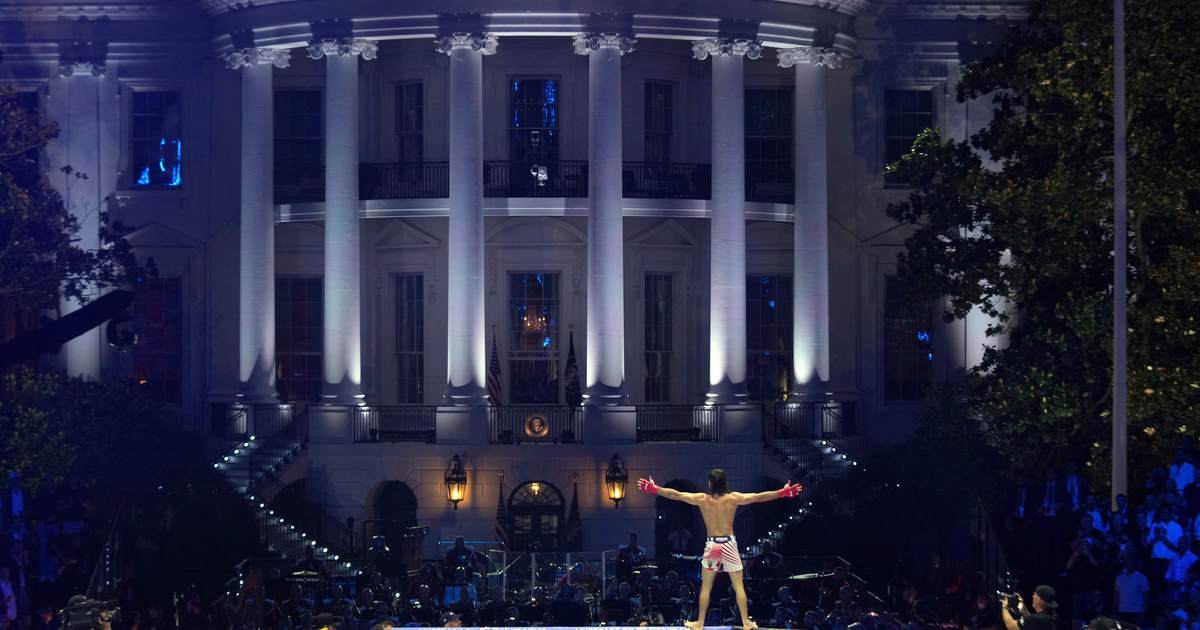
Two more suspects in a conspiracy to attack the White House during the UFC 250 event have been arrested, expanding a complex case that authorities say involved drones, sniper teams, weapons procurement, and a suspect tied to DACA.
The FBI announced arrests of two additional suspects connected to the planned attack on the White House grounds linked to the UFC 250 event held June 14. Investigators say the arrests follow a broader probe that has already identified multiple participants and support networks.
William Lee Spartacus Falkner and Jordan W. Rincker were taken into custody on Friday and Sunday, respectively, and both now face charges of conspiracy to commit murder. Officials describe the arrests as part of a coordinated effort to dismantle the plot and hold everyone involved accountable under federal law.
https://x.com/TheJusticeDept/status/2069168299192025547
Authorities say Falkner brought technical know-how to the conspiracy, and court documents note he had “experience with drones” in manufacturing and operation. Those communications reportedly show he researched ways to modify and arm unmanned aircraft and planned their deployment to cause maximum harm, including explicit references to achieving “maximum destructive impact.”
Rincker’s role included financial support and logistics, with prosecutors alleging he received and moved money intended to help conspirators travel for the operation. He is accused of procuring and distributing firearms, ballistic armor, night-vision equipment, and parts for building drones, actions investigators say directly supported the planned attack.
The scheme, as described in charging papers, centered on striking the crowd and the complex at the White House using a mix of weaponized drones and coordinated sniper teams. The alleged mastermind is an illegal alien who, according to filings, obtained legal status under President Barack Obama’s DACA program, a fact now drawing heated scrutiny from policymakers and the public alike as questions about vetting and oversight intensify.
One participant’s messages revealed the scheme’s broader aim, stating they hoped to “cause enough chaos to bring about the overthrow of the U.S. government.” That language has been cited by prosecutors as evidence of an intent to create a mass-casualty event and to inspire larger unrest beyond a single attack.
“Law enforcement continues to do what it does — move to disrupt and hold accountable those allegedly plotting to do harm on the White House Grounds on June 14,” said Acting Attorney General Todd Blanche in a press release. “Each and every day, the FBI and their federal, state and local law enforcement partners, along with U.S. Attorneys offices across the country, safeguard American communities and our nation’s security.”
With the latest arrests, the number of people implicated in the conspiracy has climbed to seven, according to officials familiar with the investigation. Agents credit interagency cooperation and tips that helped identify suppliers, financiers, and technical planners who together created a dangerous, multi-layered threat.
From a Republican perspective, this case underscores failures in immigration and security policy that have real-world consequences. The involvement of an individual who gained status via DACA has already been seized on by critics who argue that enforcement and vetting mechanisms must be tightened to prevent those with hostile intent from exploiting loopholes.
Beyond immigration policy, the plot highlights modern vulnerabilities: commercially available drone technology, dark-market components, and off-the-shelf tactical gear can be combined to produce devastating effects. Lawmakers and law enforcement face pressure to update rules on exports, domestic sales of key parts, and penalties for those who provide material support to violent plots.
Accountability will be central as prosecutions proceed, and the arrested suspects now face a federal legal process that could include additional charges as investigators sift seized evidence and digital communications. The case will be watched closely by officials and the public as a test of how effectively the justice system and policy makers can respond to evolving threats without sacrificing civil liberties.