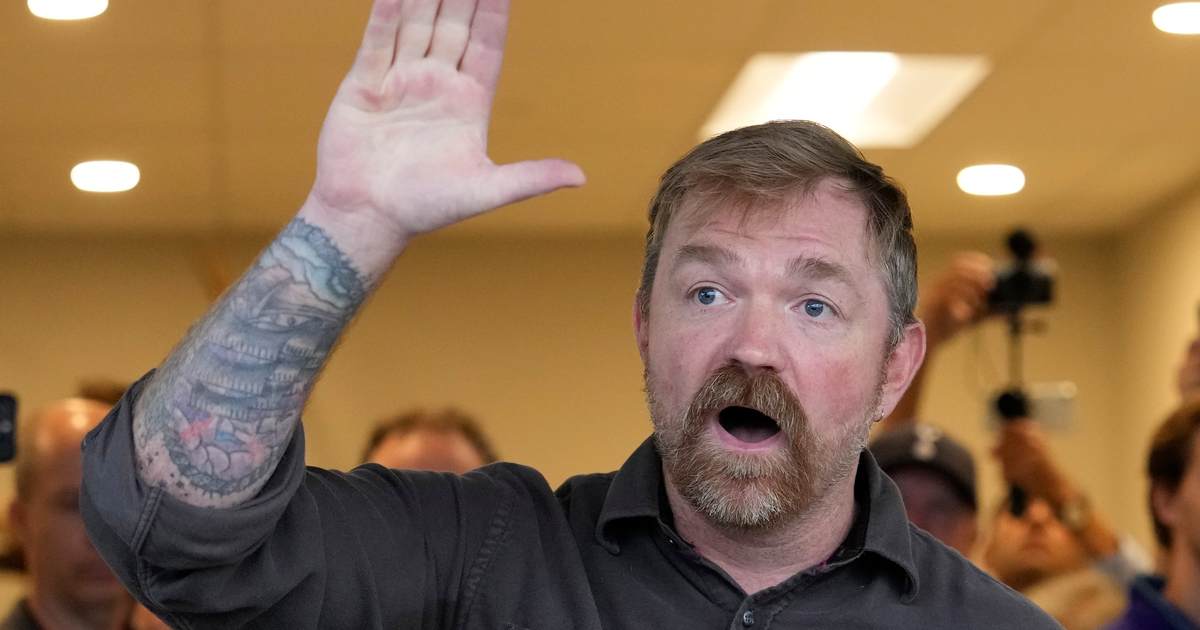
Graham Platner won the Maine Democratic Senate primary, but questions about a Nazi-linked tattoo, infidelity allegations, and past behavior keep the story alive as Republicans prepare to face him on the fall ballot.
The basic fact is stark and simple: a prominent candidate for Senate sports a tattoo tied to Nazi imagery, and explanations for it keep changing. Graham Platner won the Maine Democratic Senate primary and will challenge incumbent Sen. Susan Collins in November, yet the tattoo controversy refuses to disappear. Different accounts from Platner and others trace a messy backstory full of shifting responsibility and awkward rationales.
New details surfaced from a former girlfriend who says Platner knew the symbol’s fascist origins and kept it deliberately, framing it as a statement about America’s role abroad. That account, reported via NY Post, adds to earlier claims that he only recently realized the meaning. The timing matters: voters want clarity from someone running for high office, and mixed explanations only raise more doubts.
https://x.com/420mercymain69/status/2065184859648049341
Admitted Senate sleazeball nominee Graham Platner kept his hideous Nazi tattoo to remind himself “the US was the evil bad guy overseas,” according to an ex-girlfriend with whom he cheated on his fiancée in 2021.
The left-wing streamer, who spoke to The Post, is the second woman to say that Platner knew about the fascist origin of his Totenkopf skull and crossbones tattoo — despite his claims that he didn’t realize it was a Third Reich symbol until last fall.
Her assertions were backed up by texts reviewed by The Post that she’d sent to her mom in September 2025 in which she blasted him for his “Nazi tattoo,” “small d—k” and claims that he tarnished her reputation by using her to step out on his fiancée.
The woman also offered allegations Platner cheated on a second partner before his current wife — a now-ex-fiancée he was engaged to around that time.
“As a person who is a leftist, I immediately looked at him and asked him, ‘Is that a Totenkopf?’ and he told me a whole, ‘he will hold this weight forever’ bravado sob story about how it was, but he decided to keep it as a reminder that the United States was the evil, bad guy overseas,” she recounted.
[…]
“Graham’s repeatedly said he picked a skull-and-crossbones tattoo off a wall in Croatia to commemorate surviving Ramadi and his friends who were killed there,” a spokesperson from the Platner campaign told The Post. “Graham has also since covered up the tattoo, and answered countless questions about it.”
The campaign’s line — that the tattoo came from a Croatian wall and was meant to honor people lost in Ramadi — has been repeated before, but new witness statements contradict that clean narrative. When competing explanations pile up, voters are left to choose which story they believe. In a tight race against an incumbent Republican like Susan Collins, perception and credibility matter as much as policy positions.
Beyond the tattoo, Platner faces other credibility issues that opponents will use to shape the debate. Accusations of sexting, emotional abuse from prior relationships, and infidelity have surfaced, and those are easier to digest for swing voters than legalistic defenses or PR spin. This combination of personal scandal and symbol-related controversy gives Republicans a straightforward line of attack heading into the general election.
There’s also a curious personal detail that keeps getting picked up in coverage: Platner presents himself as an oyster farmer but reportedly sells only to a single buyer, his mother, who runs a restaurant. It’s a small fact, but it feeds a broader message about authenticity and the gap between image and reality. Opponents will lean on that contrast as they argue the candidate lacks the steadiness voters want from a senator.
The political calendar sharpens the stakes. Maine Democrats nominated Platner in the primary, and Republicans are waiting to pounce when the fall campaign begins in earnest, with a key date noted by party strategists: July 13 looms as the moment when attention will turn to the general election. In the meantime, the controversy will shape headlines and conversations that could influence independent voters.
For a GOP audience, the story is straightforward: a candidate who survived a primary still carries baggage that could make him a weak general-election opponent. The combination of a Nazi-linked tattoo, allegations about personal conduct, and inconsistent explanations creates a narrative that conservatives can use to question his judgment and fitness for the U.S. Senate. Whether that narrative sticks will depend on how the campaign and reporters handle new revelations.
At the end of the day, voters will weigh Platner’s record, his explanations, and the new allegations against the backdrop of a competitive Senate race. The details already out in the open give political opponents plenty to work with, and as the fall campaign ramps up, expect Republicans to press every inconsistency and contradiction. Maine’s electorate will decide if those issues matter enough to change a Senate seat this cycle.