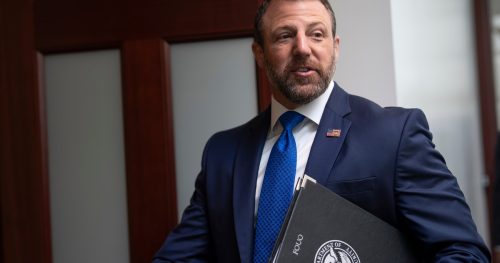
Barry Moore won the Alabama Republican Senate runoff and will head into the general election as the expected GOP nominee.
Late polling had suggested a surge for former Navy SEAL Jared Hudson, with some surveys showing him closing the gap and even leading by roughly five points in the days before the runoff. Despite that momentum, Rep. Barry Moore carried the day and secured the Republican nomination, aided by the high-profile endorsement he received from President Donald Trump. Moore’s victory settles the primary fight and hands Republicans a clear nominee to face the Democratic challenger this fall.
The runoff came after a crowded May 19 primary in which no candidate reached the 50 percent threshold, forcing voters back to the polls for a head-to-head matchup. Runoffs tend to reward candidates with deep local networks and committed bases, and Moore’s campaign leaned into conservative themes that resonated with Alabama’s GOP voters. That organization and the Trump endorsement proved decisive in a state where Republican unity matters most.
https://x.com/DecisionDeskHQ/status/2067062064506429565
Moore’s message emphasized job growth, support for veterans, and standing with the former president, tying himself to national Republican priorities that play well across the state. He presented a contrast with Hudson by stressing experience in Congress and relationships that could help Alabama deliver federal resources. Voters in the runoff responded to that mix of promises and alignment with the national Republican agenda.
Rep. Barry Moore won the Republican primary runoff in the Alabama Senate race, NBC News projects, making him the heavy favorite in the general election to succeed Sen. Tommy Tuberville this fall.
Moore, who was endorsed by President Donald Trump, defeated former Navy SEAL Jared Hudson for the GOP nomination. The two candidates were forced into a runoff after no one secured more than 50% of the vote in a crowded May 19 primary field.
Alabama’s Senate seat opened up after Tuberville launched his run for governor last year. He easily won the GOP nomination in the race last month.
In a victory speech Tuesday, Moore pointed to his relationship with Trump.
“When I call [Trump], he takes my calls, and we can work together with the senators, that delegation and certainly the president of the United States to make sure that Alabama has an opportunity to bring the jobs back here that we need,” Moore said.
Winning a GOP runoff in Alabama is practically a ticket to the Senate, given the state’s partisan lean, and Moore now prepares to take on Democrat Everett Wess in the general election. The race will test whether national Democrats can make any inroads in deeply conservative territory or whether Alabama voters stick with a Republican who promises to work closely with the Trump-aligned coalition. Republicans will point to this pick as proof the party can still unify around candidates who fight for conservative priorities.
Moore’s relationship with Trump will be a central talking point through the summer and fall, both in fundraising and in framing the campaign’s message. That endorsement gives Moore access to top-tier donors and a mobilized base that responds to presidential backing. The campaign will likely lean on those advantages while pitching a straightforward case about jobs, security, and conservative governance.
Jared Hudson ran a spirited campaign and showed how quickly momentum can shift in modern primaries, especially when national attention narrows the field. His surge in late polls underlined the unpredictability of voter sentiment and the role of turnout in runoffs. Hudson’s challenge forced Moore to sharpen his pitch and consolidate the GOP electorate behind a clear alternative to the Democratic nominee.
With Tommy Tuberville not seeking re-election and instead running for governor, Republicans had a chance to keep that Senate seat firmly in conservative hands, and Moore’s nomination is the party’s answer. The general election will still require attention to turnout, messaging, and local issues that affect Alabama families. Still, Moore enters the fall campaign with the advantages of incumbency-style alignment and the backing of key Republican voices.
Expect the campaign to focus on kitchen-table concerns and appeals to Alabama’s conservative base while defending the state against national Democratic themes. Moore will have to convert the primary coalition into a broader general election coalition without drifting from core Republican principles. The weeks ahead will reveal whether national Democrats can mount an effective challenge or if this remains a straightforward GOP hold.
Whoever wins this GOP runoff is likely to be the next U.S. senator, so congratulations, Mr. Moore.