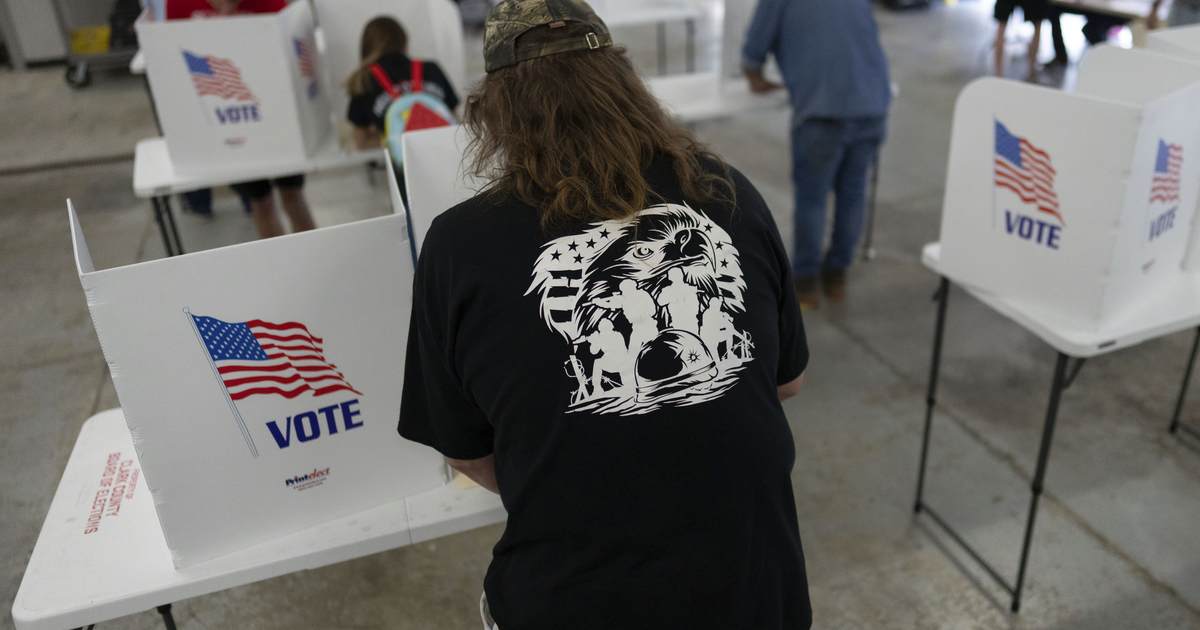
In Sioux Falls, a mayoral race has come down to the thinnest of margins, with former state representative Christine Erickson holding a two-vote advantage over Jamie Smith as officials prepare for a recount that could change the outcome.
Christine Erickson, who once served in the South Dakota House and is the sister of NFL kicker Adam Vinatieri, is currently listed with 18,279 votes to Jamie Smith’s 18,277 after all 79 precincts reported. That two-vote gap is the kind of razor-edge result that puts every absentee ballot, provisional ballot and tabulation step under a microscope. Local officials are moving toward a formal recount because state law and common sense demand it whenever a margin is this tight. The situation is unfolding under intense local interest and national curiosity about how small margins decide big offices.
The recount is not a formality; it is a real process that can expose human error or mechanical quirks in tabulation. Every jurisdiction has procedures for recounts, and in cases like this the count can shift by a handful of votes in either direction. Given the narrow margin of 18,279 to 18,277, even minimal adjustments will determine who gets sworn in as Sioux Falls mayor. Voters and party operatives on both sides are watching closely because the final outcome matters for local policy and political momentum.
https://x.com/JoelArends/status/2069656662810439716
Because of the extraordinarily slim margin, a recount will soon be underway that could throw Erickson’s victory in peril.
“We know that this isn’t over yet,” Erickson told supporters. “We anticipate a recount and we hope that these results stay true.” Her words make clear she’s braced for scrutiny while hoping the initial tally holds. That kind of measured response is exactly what voters should expect in a democracy where every vote matters and where procedural transparency is the test of legitimacy. Whether the recount confirms the count or flips it by a few votes, the process will be the focus.
This race is a reminder that local politics can hinge on microscopic margins, and it is far from the only example this cycle. In another notable municipal contest earlier in the year, vote splitting among candidates opened the door for an opposition pickup in a city long dominated by one party. Those dynamics show how strategic decisions by candidates and parties can have outsized consequences when turnout is low or when races attract multiple contenders. The lesson is blunt: in close contests, every vote and every campaign tactic matters.
Republicans watching this result will see both cautionary and encouraging signs. On one hand, a former Republican state lawmaker holding a narrow lead underscores how fragile local advantages can be. On the other, the fact that the system triggers recounts and scrutiny when margins are tiny should reassure voters that standards exist to protect electoral integrity. Still, the headlines also raise questions about the national conversation on election law reform and whether federal proposals could help or hurt clarity in contests like this one.
The spotlight on this Sioux Falls outcome arrives as South Dakota Republicans contend with broader legislative setbacks at the federal level. Senator John Thune’s inability to advance the SAVE America Act on election integrity has frustrated some conservative voters who see stronger federal rules as a way to prevent confusion in precisely these kinds of close races. That frustration feeds into a narrative that Congress should act to shore up procedures, while opponents argue local rules and state law are the right place for fixes. The debate will continue as the recount plays out here.
Personal details about candidates stick in voters’ minds, and Erickson’s family connection to a well-known NFL figure is one of those human touches that local media highlight. Still, the election will turn on ballots and not biographies. Officials will recheck tallies, validate challenged ballots and ensure chain-of-custody records are intact during the recount. For residents, the immediate concern is clarity and confidence in the result rather than celebrity ties.
The recount timetable will determine when the city can move forward with governance plans and municipal priorities. Until the recount concludes and any legal options are exhausted, the mayoral office will face uncertainty that could delay decisions on budgets, development and city services. Whatever the final number ends up being, this episode will be cited in future debates about turnout, candidate strategy and the mechanics of how American communities choose their leaders.