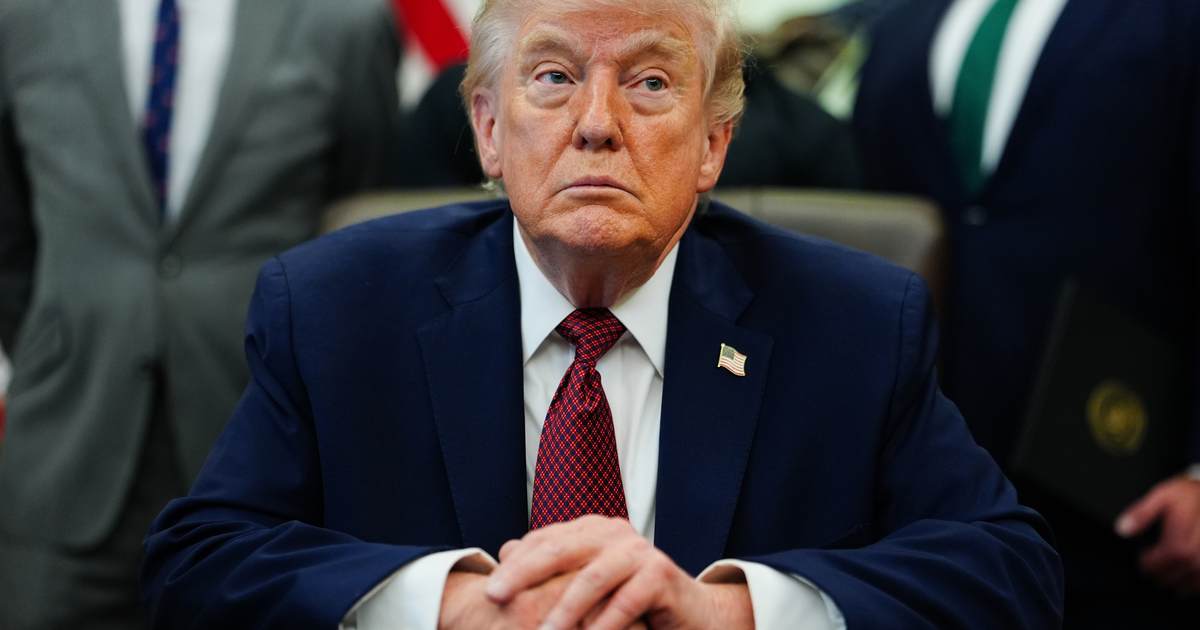
President Trump sharply criticized Israel’s tactics and weighed in on the new Iran deal, arguing that allies and enemies alike must be held accountable while calling for clearer limits and stronger American leverage.
President Trump publicly questioned Israel’s methods in its fight against Hezbollah and connected those comments to a broad diplomatic shakeup around the recently announced Iran deal. His remarks have stirred debates about allied responsibilities, regional stability, and how the United States should manage its relationships in the Middle East. Conservatives and supporters of a tough posture toward Tehran are closely watching how this unfolds.
— Fox News (@FoxNews)
“Israel is fighting Hezbollah too long, and too many people are being killed,” the president said Tuesday. “And you don’t have to knock down an apartment house every time you’re looking for somebody because there are a lot of people in those apartment houses and they’re not all Hezbollah that I can tell you. And I suggested to Israel to let Syria take care of Hezbollah because to be honest with you I think they do a better job of doing it.”
“And I didn’t like Syria, I didn’t like where two hours before we’re signing the agreement that there was an attack in Lebanon, in Beirut. It wasn’t like in the southern side, and you know it was in Beirut. I did not like that, I let them know that. I didn’t like it, not at all,” Trump continued. “But I think that Syria, he’s pulled that country together amazingly quickly. He’s very capable and he’s been very good for me. He’s protected everything that I’ve asked for, he’s done. And if Israel can’t do the job without killing everyone else, he’ll do the job. Syria will do the job.”
Those comments landed as Israeli officials announced they will not withdraw troops from security zones in Lebanon, Syria, and Gaza despite the new agreement that they say ended military operations “on all fronts,” including in Lebanon where Hezbollah has long operated. Israeli leaders framed their stance as a matter of self-defense and deterrence, signaling they will keep hard lines even if Washington and Tehran claim a de-escalation. That refusal raises practical questions about how the deal will operate on the ground.
Other voices in the region and within Israel were blunt online, writing on X that “Trump’s agreement does not bind Israel” and that the country “is not subject to the United States.” Those statements underscore a raw reality: allies can and will make independent choices when they judge their security is at stake. The rhetorical split between Washington and Jerusalem could translate into different operational patterns and coordination challenges.
https://x.com/EricLDaugh/status/2066863370607690203
At the center of this storm is a text that remains private for now. So far, the primary details of the agreement come from statements issued by the Trump team and from Iranian officials, and independent verification is sparse; the actual written agreement has not yet been released, though it is expected to be made public today. Until the text is available to outside experts and allied governments, speculation will drive headlines and policy calculations. Clarity matters because vague deals tend to produce risky guesswork on the battlefield.
From a Republican perspective, President Trump is doing what conservative voters expect: pushing for clear American advantage and refusing to let allies or adversaries interpret a deal in ways that leave the United States or its friends exposed. That posture is blunt and sometimes unpopular, but it aims to force transparency and accountability. Republicans will argue that tough talk can produce better outcomes than quiet concessions that leave adversaries emboldened.
The regional implications are immediate and complex. Hezbollah’s presence in Lebanon, Israel’s forward deployments, and Syria’s shifting alliances create a tinderbox if mismanaged, and any perceived weakness or ambiguity in a deal could encourage miscalculation. Israel’s decision to stay put in security zones signals readiness to act independently, which in turn could provoke new clashes or compel diplomatic backchannels to reduce the risks. Policymakers will need to monitor troop movements, proxy activity, and the public messaging coming out of Tehran and Jerusalem.
Watch for the release of the full agreement text and for the first independent analyses that will assess its scope, timelines, and enforcement mechanisms. Those documents will determine whether the deal actually constrains military operations and whether it provides reliable verification, or whether it leaves gaps that regional actors will exploit. In the meantime, expect heated debate in Washington and among allies about the best way to protect American interests while managing a volatile neighborhood.