President Trump confronted media misreporting about a new Iran agreement, offered to publicly read the document to ensure accuracy, rejected a $300 billion reconstruction claim, and warned Iran that violating the deal would carry severe consequences.
President Donald Trump blew past a wave of incorrect headlines this week after announcing a deal meant to halt hostilities with Iran and reopen the Strait of Hormuz. State-linked Iranian outlets pushed an exaggerated claim that the United States agreed to a $300 billion reconstruction fund, and several major Western outlets echoed that falsehood. The contrast between the announcement and the coverage set off a public clash over facts and credibility.
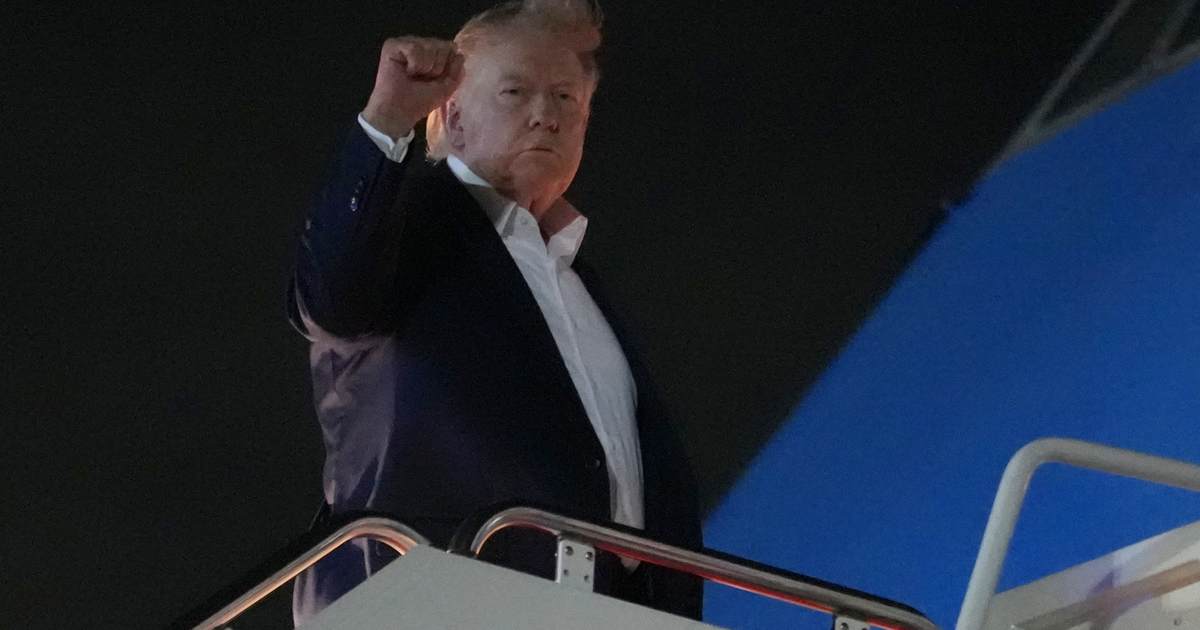
Trump called out the outlets he says mischaracterized the agreement and told reporters at the G7 summit in France that transparency would be the antidote to bad reporting. He even suggested a straightforward fix to the spin: put the text into the open so reporters cannot twist it. “I’ll not only release it, I’ll probably have a press conference and read it to you word by word so that the press covers it accurately, because it’s a— it’s a very important document. And unlike Obama, who could have destroyed the Middle East with a horrible JCPOA. It is the worst agreement. That was a road to a nuclear weapon.”
Trump framed the pact as defensive and practical rather than permissive toward Tehran’s ambitions. He told audiences the agreement should be judged on its results, not on headlines spun by opponents of the deal. He summed up his view in plain terms, calling the arrangement “a wall against a nuclear weapon.”
The president also addressed the $300 billion figure head-on, demolishing the idea that the U.S. had committed to an enormous reconstruction package. “‘We’re going to spend $300 billion.’ No, we’re not. We’re allowed to go and invest if we wanted to someday in the future. No, we’re not. We have no obligation whatsoever. It could be that Iran will turn out to be successful when they have oil.”
That line of attack reflects a wider frustration from the Republican side that legacy media often prefer sensationalism to accuracy. Trump signaled he will use direct communication to control the narrative rather than letting reporters guess or push misleading takes. For his team, reading the agreement aloud to the press is a blunt, effective way to limit distortion and force coverage back onto verifiable language.
There is also the enforcement angle. The president made clear that the deal comes with strict limits and an unmistakable deterrent if Iran steps out of line.
“And if they do, they suffer unbelievable consequences,” Trump said. “Not just a little bit, like— I won’t even tell you the consequences. But the consequences are the ultimate consequences. And with that being said, I hope we have a very good relationship. But the biggest thing is they will not have a nuclear weapon.”
Beyond media strategy and deterrence, the administration moved fast to lock in the basics of de-escalation. Trump and Vice President JD Vance completed a virtual memorandum of understanding with Iranian representatives aimed at stopping military action, reopening key shipping lanes, and launching a 60-day negotiating window on Tehran’s nuclear program. Officials say a formal signing ceremony is planned in Switzerland this coming Friday.
https://x.com/EricLDaugh/status/2066863370607690203
The political fight over coverage may be just as important as the deal itself, because public opinion will shape how strictly the U.S. follows through. Trump’s approach is unapologetically direct: publish the document, read it aloud, and let the facts stand without interpretation. For supporters, that method swaps guesswork and leaks for clarity, and keeps the power of the story in the hands of elected leaders rather than friendly or hostile pundits.