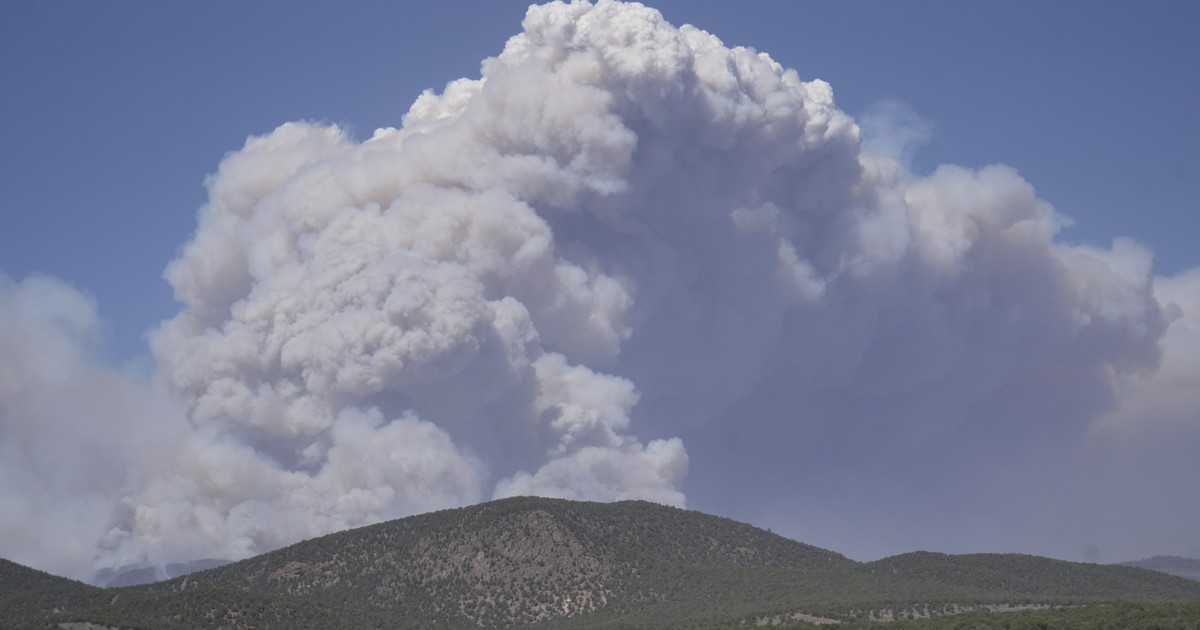
Three firefighters were killed and two were seriously hurt while battling the Knowles and Gore fires along the Colorado-Utah line, triggering an interagency response and an active investigation into the fatal incident.
Three firefighters died on Saturday, and two were injured during an interagency response to the Knowles and Gore fires near the Colorado-Utah border. The crews were part of multiple federal, state and local agencies working under difficult wildfire conditions when the fatal event occurred. Officials have confirmed the numbers but continue to withhold some operational details while families are notified.
Both fires have been burning in rugged, high-elevation country that makes moving people and equipment slow and dangerous. Dry fuels and steep slopes can create unpredictable fire behavior that can trap crews even when they follow established safety procedures. Fire managers say they were using standard containment tactics, but extreme conditions forced rapid shifts in strategy.
https://x.com/USWFS/status/2071116922322665636
Local incident commanders called in reinforcements from neighboring jurisdictions and federal teams as the situation intensified, which is why the response was described as interagency. That cooperation brings experience and resources, but it also means multiple chains of command and communication systems must mesh in real time. Investigators will look at how coordination, situational awareness and safety protocols unfolded before, during and after the entrapment.
Weather played a role, with gusty winds and low humidity driving spot fires and rapid runs. Winds can change direction and strength without much warning in mountain passes and drainages, turning a controlled assignment into a life-threatening emergency. Forecasts remain a crucial part of daily briefings, but conditions on the ground often diverge from model expectations.
Firefighters use lookouts, escape routes and safety zones to manage risk, and those systems will be a focus of the post-incident review. Crews are trained to call for urgent evacuation if they perceive imminent danger, yet on active wildfires seconds matter and judgment calls can be costly. The review will examine radio traffic, dispatch records and witness statements to reconstruct the sequence of events.
Communities in the region have been on alert, with some pre-evacuation notices and road closures to keep residents clear of firefighting operations. Officials stress that public safety around active fires depends on residents following local evacuation guidance and avoiding areas where air tankers and helicopters are staging. Power lines, recreation traffic and smoke can all complicate suppression efforts and put civilians at risk.
Emergency medical teams treated two injured firefighters who were taken to higher-level care; local authorities said they were stable but recovering from serious trauma. Medical evacuation capabilities are part of large wildfire responses, but transporting a patient from a steep, smoke-filled slope to a landing zone is logistically complex. Those operations require coordination between ground crews, medics and aviation units under time pressure.
Federal and state fire investigators will review operational plans, resource orders and safety briefings as they piece together what happened. The National Wildfire Coordinating Group and other agencies maintain rigorous procedures for post-incident analysis to learn and improve. Families of the fallen and injured will be supported by agency liaison teams while the technical investigation proceeds.
Editor’s Note: Do you enjoy Townhall’s conservative reporting that takes on the radical Left and woke media? Support our work so that we can continue to bring you the truth.
Join Townhall VIP and use promo code FIGHT to receive 60% off your membership.